
Idea 1
Loving When You Feel Like Leaving: The Power of Reality Living
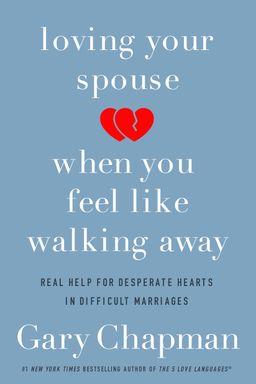
What do you do when your marriage feels unbearable, but you can’t walk away? Gary Chapman’s Loving Your Spouse When You Feel Like Walking Away offers a compassionate and practical roadmap for those in “desperate marriages”—relationships filled with distance, conflict, or pain. Chapman argues that even in the hardest marriages, there is hope for transformation. The path forward, however, isn’t about waiting for your spouse to change. It’s about what Chapman calls “reality living”—a life philosophy that begins with taking responsibility for your own attitudes and actions, even when your circumstances seem hopeless.
Across these pages, Chapman draws from decades of marriage counseling to show that love is not primarily an emotion but a series of actions rooted in deliberate choice. Whether your spouse is irresponsible, narcissistic, abusive, unfaithful, or emotionally unavailable, the book argues that one partner, acting with maturity and courage, can often redirect the marriage’s trajectory. The journey is not easy, but it offers profound spiritual and personal rewards.
Why Desperate Marriages Matter
Chapman begins by confronting the pain of readers who live in what he calls the “valley of frustration.” These couples entered marriage expecting joy and companionship, but found emptiness, distance, or betrayal instead. Some maintain the relationship because of children or faith, but many feel emotionally dead. Chapman’s opening chapters resemble a soft-spoken intervention: he names the hurt while also declaring that your life and happiness do not have to be controlled by your spouse’s behavior.
He identifies four myths that keep couples trapped in despair: believing the environment controls your happiness, thinking people cannot change, assuming the only options are misery or divorce, and labeling the situation as hopeless. Chapman firmly challenges each one, anchoring his argument in psychological research and Christian faith. He reminds the reader, “Your environment may influence you, but it does not determine you.” This theme echoes Viktor Frankl’s notion that between stimulus and response lies the freedom to choose (as found in Man’s Search for Meaning).
The Essence of Reality Living
Reality living, Chapman’s defining framework, offers six guiding truths that become the lifeline for transformation: you are responsible for your attitude; your attitude affects your actions; you can influence (but not change) others; emotions need not control behavior; acknowledging imperfections doesn’t mean failure; and love is the most powerful force for good in marriage. Though these principles sound simple, each challenges the most common relational habits—blame, manipulation, and emotional reactivity.
For instance, Chapman recounts the story of two wives—Wendy and Lou Ann—whose husbands lost their jobs. Wendy reframed the crisis as an opportunity for closeness, while Lou Ann spiraled into criticism and despair. The key difference was attitude, not circumstance. For readers, this story becomes a mirror: are you aligning your thoughts toward what can grow, or toward resentment?
Love Beyond Emotion
Central to Chapman’s message is the belief that love is an action-oriented commitment, not a fleeting feeling. Drawing from his best-known framework, The 5 Love Languages—words of affirmation, quality time, receiving gifts, acts of service, and physical touch—he encourages readers to intentionally express love in their spouse’s primary language, even when it feels unnatural. Love as a deliberate choice creates emotional shifts that simple emotion cannot achieve.
Chapman’s anecdotes add both realism and hope. From the unfaithful Joanna who rebuilds her marriage through honest confession and forgiveness, to the verbally abused Dale who transforms his marriage by learning his wife’s love language, each narrative reminds readers that every marriage, even a painful one, can be a setting for growth, not just suffering.
Faith, Responsibility, and Transformation
Ultimately, Chapman’s philosophy rests on a blend of spiritual conviction and practical psychology. You cannot force someone else to repent, but you can become an agent of integrity, compassion, and strength. By living from principles rather than pain, you model the kind of maturity that can awaken conscience and trust. The spiritual thread in Chapman’s message parallels themes in works like Boundaries by Henry Cloud and John Townsend, emphasizing self-respect as a precondition for true love. What makes Loving Your Spouse When You Feel Like Walking Away distinctive is its compassion for real-world suffering and its insistence that love—rooted in faith, truth, and action—can still redeem what seems lost. Through “reality living,” you learn not simply to survive your marriage, but to become more whole in the process.