
Idea 1
Loving Your Business: Transforming Mindset to Freedom
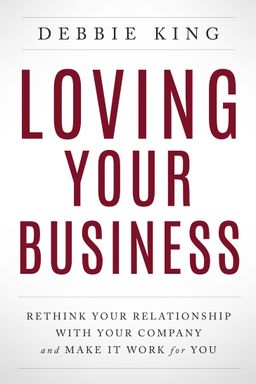
Have you ever caught yourself thinking, “I hate my business”? You're not alone. Debbie King, author of Loving Your Business: Rethink Your Relationship with Your Company and Make It Work for You, did too—until she realized that her misery wasn’t rooted in her company itself but in her mindset. This realization became a turning point and the foundation of a deeply transformative philosophy: that you can’t grow a business you secretly resent. To scale, thrive, and reclaim freedom, you must first learn to love your business.
King argues that many entrepreneurs unknowingly fall into a trap. They start their companies with excitement and ambition, only to become overworked, overwhelmed, and disillusioned. Their sense of self-worth fuses with their company’s performance—when business falters, so does their self-esteem. Loving Your Business contends that the key to lasting success is breaking that link. By managing your mind and treating your business like an asset rather than a burden, you can turn it into something that works for you, not against you.
From Resentment to Renewal
The book opens with King’s striking confession: while driving one day, she suddenly thought, “I hate my business.” That single thought encapsulated years of exhaustion and anxiety. Her once-beloved company had become a source of stress, crowding out health, relationships, and joy. But instead of walking away, King decided to explore the root cause. She found that the problem wasn’t her company’s workload but her thoughts and beliefs about success, control, and worth. She was running her company as a reflection of her value rather than as an asset designed to serve her life.
That insight became her north star: “Just like you can’t hate yourself thin, you can’t resent your business and grow it.” The emotional energy you put into your business directly influences its growth. Love isn’t just a poetic metaphor here—it’s a strategic stance. When you love your business, you nurture its growth through clarity, focus, and intentional action. When you resent it, you sabotage it with fear, micromanagement, and burnout.
The Core Framework
King’s philosophy rests on two interwoven pillars: mindset and strategy. The first half of the book focuses on what she calls “managing your mind”—developing awareness of your thoughts, learning how emotions drive your actions, and recognizing how the primitive brain tries to keep you safe by avoiding change. She introduces a powerful cognitive-behavioral tool called the Model—a simple yet profound formula linking circumstances, thoughts, feelings, actions, and results. By learning to identify facts versus interpretations and replacing unhelpful thoughts, readers can remake their inner world and by extension, their businesses.
The second pillar turns to strategy, where mindset is put into practice. King teaches entrepreneurs how to build scalable, valuable companies by shifting from service-oriented “lifestyle businesses” to asset-driven enterprises. Her six-step framework—Mindset, Focus, Strategy, Money, Numbers, and Freedom—guides readers in treating their business like an investment. The goal isn’t just profit; it’s freedom—financial, emotional, and temporal.
Why Loving Matters
Loving your business, King insists, is not a fluffy sentiment but the foundation of effective decision-making. When you love your business, you stop fighting it. You see challenges as opportunities to build value, not as evidence of failure. This shift from fear to curiosity, from control to creation, allows you to think strategically instead of reactively. For instance, rather than worrying about losing a major client, a “loving” mindset asks: How can I use this to diversify my revenue or strengthen my systems?
King’s concept echoes teachings from Michael Gerber’s The E-Myth Revisited and Dan Sullivan’s “Strategic Coach” philosophy, but she fuses them with psychological insight. She emphasizes that systems, habits, and productivity tools work only when aligned with healthy thoughts. As she puts it, “No system will save you if your mindset and strategy aren’t aligned.”
Transforming Thought Into Value
King maps how love translates into tangible business growth. By cultivating gratitude and curiosity, you channel your energy into building reusable solutions, scalable offers, and recurring revenue—foundations of a sellable business. Loving your business means making conscious choices: narrowing your niche to serve customers deeply, converting labor-intensive services into products, replacing yourself with a capable leadership team, and designing systems that run without you. When you build an asset that others would buy, you gain freedom whether you sell it or not.
The Stakes
What’s at stake, King reminds us, is not just financial success but our quality of life. Entrepreneurs often sacrifice everything—health, family, joy—for “freedom” that never comes. Loving Your Business is about reclaiming that freedom without giving up ambition. Through vivid stories—clients like “Sally,” who ran her $2 million company from exhaustion, and “Melissa,” who turned setbacks into strategy—King demonstrates that every problem contains a gift if approached with awareness. In the end, when you learn to love your business, you not only build an asset worth selling—you build a life worth living.