
Idea 1
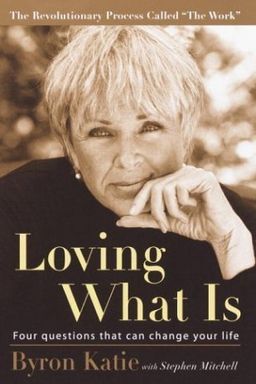
Loving What Is: Ending the War with Reality
Have you ever caught yourself mentally arguing with the world—thinking that someone should be different, that life should be fairer, or that things shouldn’t be as they are? In Loving What Is, Byron Katie offers a radical and remarkably clear invitation: stop fighting reality and start questioning your thoughts instead. What she calls “The Work” is a method of self-inquiry that dismantles stressful thinking and restores peace, clarity, and love.
Katie contends that all human suffering stems from believing untrue thoughts. We cause our own pain not because the world is inherently cruel, but because we insist that it be different from what it is. Her message is deceptively simple: when we believe that someone, something, or even we ourselves ‘should’ be different, we create tension and despair. But when we investigate those thoughts through the four questions of The Work, we return to sanity—a place of open acceptance she calls “loving what is.”
The Genesis of The Work
The book opens with Byron Katie’s extraordinary story. Once a deeply depressed, angry woman, she describes waking up on the floor of a halfway house with no sense of who she was—and suddenly realizing that all her suffering had come from believing her thoughts. From that moment on, she found that she could no longer believe the stressful stories her mind told her. Out of that awakening came a process anyone could use, distilled into four simple questions and a turnaround. It spread organically: people came to her living room, curious about the peace she radiated, and through her questioning, they began to experience their own awakenings.
The Four Questions and the Turnaround
Katie introduces “The Work” as four questions to apply to any painful thought:
- Is it true?
- Can you absolutely know that it’s true?
- How do you react—what happens—when you believe that thought?
- Who would you be without the thought?
After answering them honestly, you “turn around” the thought—to yourself, to the other, and to its opposite—and find genuine examples where these new perspectives feel true. The turnaround doesn’t force positivity; rather, it reflects the freedom that comes from seeing beyond your habitual stories. In countless dialogues throughout the book—between Katie and people struggling with infidelity, family conflict, illness, or self-hatred—readers witness how profoundly this simple process can dissolve suffering.
The Power of Inquiry
By questioning the mind, The Work reveals not only the falseness of stressful beliefs but also the inner peace that’s been obscured by them. Katie shows this through real dialogues: a woman furious at her husband’s breathing discovers that it’s not the sound but her thoughts about it that torment her; a man grieving his uncle’s betrayal learns his pain comes from the story of blame, not from reality. The book moves from the domestic to the existential, addressing love, money, death, abuse, and war, and demonstrating that the same uninvestigated mind creates chaos at every level.
Stephen Mitchell’s introduction situates The Work in a lineage of spiritual inquiry that includes Buddhist koans, Socratic questioning, and Stoic philosophy. Like Epictetus (“We are disturbed not by what happens, but by our thoughts about what happens”), Katie’s method cuts through self-created narratives to the truth of what is.
Why “Loving What Is” Matters
Katie’s insight—that suffering ends when we stop arguing with reality—is not merely spiritual poetry but a practical psychological intervention. It echoes cognitive-behavioral therapy (CBT) and mindfulness teachings popularized in works like Eckhart Tolle’s The Power of Now or Tara Brach’s Radical Acceptance, but it is more radical in its simplicity. Instead of replacing negative thoughts with positive ones, The Work investigates whether our negative thoughts are even real. In the end, they dissolve naturally, leaving what’s always been there: peace, clarity, and love.
As you move through this summary, you’ll explore the foundations of Byron Katie’s teaching: accepting reality without resistance, identifying the three kinds of “business” in the universe, meeting thoughts with understanding, and learning to question every belief that brings you pain. Each principle offers a doorway back to freedom—because, as Katie writes, “It’s not the world that’s cruel, it’s your belief about the world that hurts.”