
Idea 1
Finding the Love That Makes Work Worth It
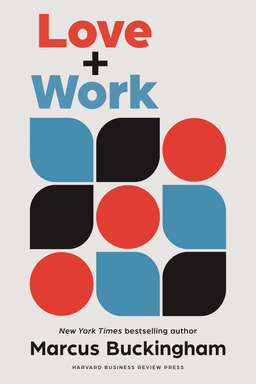
When was the last time you truly felt alive doing your work—so absorbed that time disappeared? In Love + Work, Marcus Buckingham argues that this sense of aliveness is not a luxury; it's the key to thriving. For decades, we've been told to balance personal life and professional ambition, to fix our weaknesses, and to treat work as separate from passion. Buckingham flips this script: love isn’t just nice to have—it’s the source of excellence, resilience, and purpose. He insists that understanding what you love, and weaving it into what you do, is the foundation of a full, meaningful life.
Drawing on thirty years of research at Gallup and the ADP Research Institute, Buckingham blends data and storytelling to reveal the psychological and practical importance of aligning our work with our inner loves. He helps readers decode what he calls their Wyrd—the utterly unique pattern of attention, instinct, and joy that defines who they are. This isn’t a call to quit your job and chase passion; rather, it's about learning to find love in what you do every day, no matter where you are.
The Epidemic of Disconnection
Buckingham begins by diagnosing a deep cultural illness: most people are lost to themselves. Schools, workplaces, and even families unintentionally train us to ignore what we love and focus instead on what's wrong with us. We’re taught to fix weaknesses, fit expectations, and measure worth through standardized metrics—grades, performance reviews, and job titles. The result, he explains, is an epidemic of disconnection and anxiety. Using moving interviews—like Donnie Fitzpatrick’s students who tear up when asked to describe what makes time fly—Buckingham shows the emotional toll of never being asked: What do you love?
Even success doesn’t protect us. Buckingham shares his own panic attacks as a young consultant, realizing that external achievements—speeches, books, even an appearance on Oprah—didn’t bring real joy. He and his partner Myshel both spent years chasing approval and performing ideals, only to end up hollow. These moments of personal and collective crisis serve as a mirror for readers: our systems are designed to produce competence, not connectedness.
The Wyrd: Your Inner Pattern of Loves
To rebuild that connection, Buckingham introduces the concept of the Wyrd—an Old Norse term for one’s personal spirit or destiny. In his hands, it becomes a scientific metaphor for individuality. Every person, he writes, is born with a distinctive neural signature—a galaxy of one hundred trillion synaptic connections that makes your way of perceiving and loving the world literally inimitable. This is your Wyrd. It shapes what captures your attention, what feels effortless, and what fills you with joy. And unlike the growth-mindset clichés about becoming anyone you want to be, Buckingham emphasizes that your Wyrd’s shape doesn’t change—it becomes more precise as you grow.
In practical terms, this means self-awareness isn’t about fixing flaws but discovering patterns of love. Your brain expands where it’s already strong—just as a plant grows toward sunlight. Trying to force growth in what depletes you wastes energy. So, Buckingham invites readers to become curious scientists of their own delight. Notice where instinct pulls you, when time bends, when something just “clicks.” These are not coincidences; they are your love’s breadcrumbs.
Love as the Energy of Great Work
Buckingham dismantles the false divide between work and love. Drawing from neuroscience and positive psychology (such as Barbara Fredrickson’s research on love as an expansive state), he argues that love literally changes your brain chemistry—boosting creativity, resilience, empathy, and speed of learning. Great work, he says, is love made visible. Every thriving professional—doctor, teacher, leader, artist—shares two traits: they play to their strengths every day and feel excitement about their work. They don’t necessarily “do what they love” in every moment; rather, they find the love in what they do daily.
The book is both philosophical and pragmatic. Through stories of housekeepers who find creative joy in arranging guests’ toys and teachers who design self-discovery projects, Buckingham proves that love isn’t a privilege of dream jobs; it’s a discipline of attention. His research even quantifies it: spending just 20% of your workweek doing things you love dramatically reduces burnout and increases resilience. Love, then, isn’t sentimental—it’s strategic.
The Journey to Love and Work
Structurally, Love + Work follows a progression from inner discovery to outer contribution. Part One helps you identify your signs of love—instinct, flow, rapid learning, and attention to detail. Part Two exposes the “seven devils” that derail self-trust—like Group-Think, Fear-Fighting, and Suckitup. And Part Three guides you in bringing love into relationships, careers, teams, leadership, and education. Through all of it runs a central message: learning to love yourself at your most alive is a life skill as essential as literacy or math.
In the final chapters, Buckingham extends this philosophy beyond the workplace—to parenting and learning itself. His moving story of releasing control as a father echoes his entire thesis: you help others thrive not by molding them to your image but by creating the space where their loves can light the way. Love, he concludes, is not balance or harmony; it’s motion. It must flow between who you are and what you contribute—or it curdles into anxiety and despair. When you bring forth what’s within you, it saves you. When you don’t, it destroys you.
The Core of Love + Work
You are not an empty vessel to be filled. You are a galaxy of gifts waiting to be seen. The purpose of life, school, work, and parenting is to channel what you love into contribution—and to create environments where others can do the same. That is the infinite loop of Love + Work.