
Idea 1
Restoring a Hidden Founder
What does it take to change a story the world thinks it already knows? In Love & Whiskey, Fawn Weaver argues that you can rewrite cultural memory when you blend rigorous research, relational trust, and entrepreneurial stewardship. She shows that Nathan “Nearest” Green—a formerly enslaved distiller who mastered the Lincoln County Process and taught Jack Daniel—belongs at the center of America’s most famous whiskey story. But to restore him, you must learn to work across archives and porches, past violence and kindness, and inside a modern industry designed to keep newcomers out.
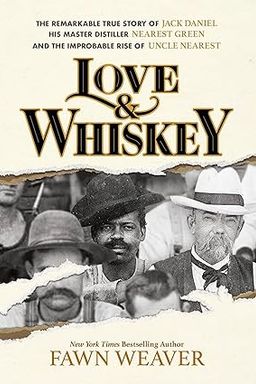
You follow a clear arc: a single circa-1904 photograph of Jack Daniel with a Black man (George Green) in the place of honor prompts Weaver to investigate. That curiosity becomes a mission: prove Nearest existed and led the still house, protect his legacy in law and on land, launch a brand that operationalizes truth-telling, and channel its success into education, industry pipelines, and restorative ownership for the Green family. Along the way, Weaver navigates Lynchburg’s contradictions—everyday interracial warmth alongside episodes of terror like the 1894 Waggoner murders—and the modern spirits market’s gatekeepers (IP threats, distributors, and gendered exclusion).
The spark that becomes a mandate
Weaver studies the photo’s composition: Jack stands small and upright on lifts; George Green, son of Nearest, sits centered, dignified. Why is a Black man granted visual primacy in Lynchburg, Tennessee, a generation after slavery? That question leads her into Ben A. Green’s 1967 Jack Daniel’s Legacy, town archives, and living descendants like Annie Bell “Mammie” Green Eady, Claude and Miss Dot Eady, and Miss Helen. Oral recollections—“Daddy George” in the photo—converge with material traces from the Dan Call Farm to suggest a story hiding in plain sight.
A photograph can reframe history
“The man’s central position in the photograph was a statement in itself.” That visual claim sends Weaver to porches, deed books, and tax ledgers until the man behind the seat—Nearest—emerges as master of the still house.
Method: blend people, paper, and place
You watch Weaver combine three research modes. First, people: elders and descendants like Mammie, Miss Neat (Juanita Dunlap), Claude and Miss Dot, and Judy Boyd Terjen (a Motlow descendant) become primary sources and gatekeepers. Second, paper: unconventional records—Treasury assessment books, Moore County tax ledgers penciling “Nearest Green,” Masonic rosters, and church minutes—fill gaps left by the destroyed 1890 census and pre-1850 slave schedules that named numbers, not people. Third, place: artifacts at the Call Farm (a bottle jug stencil, foundation stones, gristmill ruins, the spring) and a crucial lease discovery by archivist Christine Pyrdom prove that Distillery No. 7 started on Dan Call’s property, with Nearest as the master distiller.
From truth-telling to institution-building
Weaver treats truth like a fragile asset you must secure. She files trademarks for “Uncle Nearest” and “Nearest Green” (June–July 2016) and secures domains to prevent appropriation without the family’s say. She and her husband Keith buy the Dan Call Farm to stop looting and create a research center. When making whiskey proves legally and financially complex, she pivots toward scholarships and a foundation, then returns with a brand strategy: launch quickly with mature, sourced Tennessee whiskey; build demand via PR and narrative; and hold distributors accountable with hard metrics.
Operational authenticity
Weaver’s rule: every commercial move must uplift the Greens and their community—scholarships, leadership roles (e.g., master blender Victoria Eady Butler), and physical memorials (Nearest Green Memorial Park, Highview Cemetery monument).
Negotiating power and building pipelines
The book shows how to defend a mission inside realpolitik. Weaver refuses a “coexistence” IP deal with Brown‑Forman that would dilute Uncle Nearest’s identity, yet co-launches the Nearest & Jack Advancement Initiative to advance apprenticeships, incubate BIPOC-owned spirits brands (e.g., Du Nord with Chris and Shanelle Montana), and establish the Nearest Green Academy of Distilling at Motlow State. You see a blueprint for principled independence coupled with pragmatic coalition-building (compare to Patagonia’s purpose trust model for values-led governance).
Why it matters now
Restoring Nearest doesn’t just correct a footnote; it reassigns credit for America’s signature whiskey style to a Black master distiller and his descendants. It also models how you transform discovery into durable change: legal foresight, place-based preservation, a brand that funds public good, and a succession plan that transfers non-investor shares to the family that created the value. If you care about repairing history, Weaver’s path offers you a practical, repeatable method—tell the truth, anchor it in evidence and relationships, and build institutions so the memory can’t be erased again.