
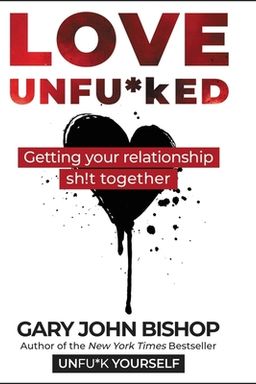
Love Unfuked cover

Love Unfuked

by Gary John Bishop

Love Unfuked is a candid and empowering guide to transforming your relationships by focusing on self-improvement. Gary John Bishop challenges you to confront your habits, take responsibility for your actions, and live by your values to create meaningful connections. This book offers practical advice for anyone ready to revolutionize their love life.

Getting Real About Love: The Core of Love Unfu*ked

Why do so many of us long for deep connection yet keep getting love wrong? Gary John Bishop, in Love Unfu*ked, argues that genuine, fulfilling relationships aren’t found – they’re created through brutal self-honesty, personal responsibility, and integrity with our words. He insists that most people don’t actually understand what love requires, because they’ve been sold a romantic illusion while never confronting the hard truths of who they are in relationships. His thesis is radical yet grounded: you don't need to fix your partner; you need to unfu*k yourself.

Bishop, known for his no-bullshit style in books like Unfu*k Yourself and Stop Doing That Sh*t, brings that same raw honesty to the world of love and marriage. He doesn’t offer quick-fix communication tips or compatibility tests. Instead, he digs deep into the psychological and philosophical foundations of how people relate to one another — and more importantly, why we relate the way we do. His argument: your relationships are a mirror of your relationship with yourself. When you say your marriage is broken, what’s usually broken is the way you relate to being human.

You Don’t Know What Real Love Is

The book begins with a challenge: admit you don’t know sh*t about having a genuinely great relationship. According to Bishop, most people imitate their parents’ dynamic or run away from it, both of which are doomed strategies. Real love demands active creation, not imitation. He compares the average relationship to driving around on a leaky tire — you keep pumping air into something that obviously isn’t working, yet you convince yourself it’s fine. And while you’re tolerating a little leak in the tire, your capacity for joy slowly deflates too.

Through this lens, Bishop reframes love entirely. It’s not a feeling you have; it’s a practice of being. He reminds readers that every relationship in life — with people, pets, money, work, even one’s own body — reflects your inner philosophy. The state of those relationships determines the quality of your life. If love feels messy, inconsistent, or painful, that’s not an accident. It’s an expression of how you operate internally. The goal, then, isn’t to fix the relationship but to take on the self.

Facing the Real Problem: You

The second major idea of the book is confronting self-deception. Bishop says most people live inside a haze of denial – they lie to themselves about how well their relationships are going. He draws on philosophy (quoting Kierkegaard and Dostoevsky) to show that people routinely settle for a level of misery they can tolerate and call it happiness. The first step to transformation is to stop pretending things are fine and tell yourself the truth: it’s not working.

Once you face yourself honestly, you begin to see that relationships are not places to hide from your inadequacies. Instead, they’re crucibles — pressure chambers that reveal every unresolved pattern you carry. If you find yourself repeating painful cycles, Bishop explains it’s because you’re driven by what he calls the “identity relationship.” You’re subconsciously looking for someone who will fix the hole inside you, just as they’re doing with you. It’s a perfect storm of unconscious needs masquerading as romance. Only by managing yourself — your moods, your triggers, and your destructive habits — can you be available for real connection.

Words, Promises, and Power

Bishop’s core principle revolves around a forgotten power: the strength of your word. He contends that we’ve collectively lost respect for language. People say one thing and do another, and that erodes integrity from the inside out. In relationships, that means we rely on what others say but they (and we) act based on fleeting emotions. He urges readers to restore the sacred link between word and action — to treat promises as binding not because society says so, but because your own self-respect depends on it. “Weak words, weak you,” he declares. The alternative? A life where your words inspire you because you live by them.

From Feelings to Commitments

Modern people are ruled by feelings, Bishop says, and it’s wrecking our ability to sustain love. We’ve traded vows for vibes. Through chapters like “You Don’t Know Your Vows from a Hole in the Ground” and “All In or Nothing at All,” he contrasts past generations — who built marriages on solemn promises — with today’s culture, which organizes life around comfort and feeling good in the moment. Instead of letting emotions dictate behavior, he teaches readers to build their relationships around values and commitments. Love isn’t about how you feel today; it’s about who you choose to be every day.

Loving the Struggle

By the final chapters, Bishop has flipped the script entirely. He argues that love is inherently messy and that progress comes from embracing — not escaping — that mess. His advice to “love the struggle” isn’t masochistic; it’s deeply practical. Couples argue, falter, and fail not because something’s wrong but because growth is demanding. You can’t build strength without friction. The art of relationship is to choose creation over reaction — to make something new instead of recycling grievances. Whether that leads you to rebuild your marriage or walk away with honor, the test is the same: can you act from your values rather than from fear or ego?

In short, Love Unfu*ked is less a relationship manual and more a manifesto for personal evolution. Bishop invites you to throw away your fantasies, pick up responsibility, and embody what you want love to be. Because when you do, the entire game changes. Relationships stop being emotional minefields and start becoming arenas for awakening. The call is clear: stop waiting for love to fix you. Love is what you create when you finally fix your relationship with yourself.


Telling Yourself the Truth

Bishop starts with the unglamorous but liberating premise that your relationship isn’t working. Maybe it looks okay, or even good, from the outside — but if it’s powered by tolerance, resentment, or quiet despair, it’s not healthy. The first rule of Love Unfu*ked is that you can only transform what you’re willing to tell the truth about. And as he reminds us, truth-telling begins at home: stop lying to yourself.

Facing What’s Actually Broken

Using the image of a slow-leaking tire, Bishop illustrates how people live with dysfunction. You keep topping it off just enough to get through the day — an argument smoothed over, intimacy replaced by routine, a family event that “looks fine.” You convince yourself this is normal, that it’s what love looks like after the honeymoon fades. But as he quotes Kierkegaard: people settle for a level of despair they can tolerate and call it happiness. It’s not the size of the problem that matters; it’s your tolerance for tolerating it.

Stop Measuring Success by Staying Together

Bishop demolishes the cultural worship of longevity. A long marriage isn’t necessarily a good one, he argues; endurance isn’t the same as connection. “People applaud when I tell them I’ve been married for twenty years,” he says, “but for all they know, my marriage could be terrible.” Staying married doesn’t mean it’s working — not if love has been replaced with bitterness, control, or quiet suffocation. What counts is vitality, not duration. He challenges you to hold your relationships to a higher bar: joy, honesty, and growth.

Identity and the Illusion of Compatibility

At the root of relational misery is an illusion Bishop calls the identity relationship. You subconsciously look for a partner who compensates for what you lack — confidence, safety, approval — and they do the same with you. Early attraction feels electric because it seems to “complete” you. But the same traits that captivated you become the ones that trigger your deepest wounds. That’s not a flaw in your partner; it’s a mirror of your unfinished business. The key insight: a relationship doesn’t heal your past – it amplifies it.

Instead of chasing or avoiding pain, Bishop insists you treat relationships as spiritual project spaces for growth. They show you where you’re reactive, controlling, or addicted to being right. Pain becomes a teacher. Love stops being about compatibility and becomes about capacity — your ability to manage yourself when things don’t go your way.

Work on You, Not Them

It’s tempting to use self-development as a strategy to fix your partner. Bishop forbids it. The moment you read a relationship book and start diagnosing your spouse, you’ve lost the plot. Change yourself for yourself. Growth isn’t a weapon; it’s a responsibility. “When you put that on someone else,” he warns, “there are always problems. When you put it on you, there are always solutions.” Your partner might change as a byproduct — fine. But the primary purpose is to increase your range as a human being.

This shift — from fixing others to managing self — is the heart of Bishop’s method. It dissolves the helplessness that drives blame cycles. You stop asking, “Why won’t they change?” and start asking, “Who am I being that keeps this dynamic alive?” The relationship becomes a mirror, not a complaint department. From that awareness, real choice begins. You can leave consciously or re-engage with integrity, but you can no longer claim ignorance or powerlessness. Truth has replaced pretense, and that’s where love begins.


Being Right Is the Enemy of Love

According to Bishop, your addiction to being right is quietly sabotaging every relationship in your life. Whether you’re aware of it or not, you’ve built your identity around certain beliefs — about how relationships should be, about who you are, about who the other person is. Those beliefs are like invisible anchors that hold you in conflict. More often than not, you’d rather have your opinion than have love.

The Prison of Belief

Beliefs feel like truth because they shape how you see the world, but Bishop argues they’re actually cages. When you insist, “I know I’m right,” you’re defending your prison walls. Every argument becomes a battle to preserve that identity. “When it comes to relationships,” he writes, “you’d rather have your view over having love.” That insight alone, he says, explains countless trails of broken hearts.

This dynamic shows up everywhere — the couple that rehashes the same fight for ten years, the parent estranged from their adult child, the coworker feud that never dies. The energy underneath it is always the same: the fear of being wrong. Bishop dismantles the notion that being right equals strength. Actually, it’s fragility disguised as pride. Love, by contrast, requires surrender.

Openness Over Certainty

Bishop invites readers to replace righteousness with curiosity. Ask yourself, “What if I’m wrong?” not as a defeat but as liberation. When you question your certainty, you make room for connection. He links this shift to ontological philosophy — particularly Heidegger’s idea of “being-in-the-world” — showing that transformation starts when you begin relating to your beliefs as interpretations, not facts. You stop being imprisoned by your perspective and start being in conversation with reality.

The Courage to Admit: It’s Me

From this humility arises Bishop’s core refrain: “It’s not them; it’s you.” He mocks the modern obsession with “compatibility” — as if relationships fail because you didn’t find the perfect algorithmic match. Truthfully, “you’re not up to love,” he writes. Love asks you to expand, not to be comfortable. When you say someone is incompatible, often what you mean is that they challenge the limits of your growth. The lesson: stop making your world smaller so you can cope. Get bigger instead.

Growth Over Protection

You can’t grow if your first goal is to avoid pain. Bishop calls out the tendency to withdraw or wall off parts of yourself in the name of “self-care” or independence. That’s not healing — that’s hiding. Life’s purpose, he insists, is to stretch, evolve, and keep engaging with people even when it’s hard. Real love is messy, sometimes infuriating, but always expansive. You don’t have to make the world smaller to feel safe; you have to become larger to hold it all.

The greatest danger of being right is that it makes love conditional: “I’ll connect with you if you agree with me.” The cure is to choose connection regardless of agreement. Stop seeking righteousness and start living in responsibility. The moment you can say, “I might be wrong, and I’m willing to see,” you’ve made space for love to re-enter. And perhaps, that’s where real strength begins.


Mastering the Self: Managing Your Inner Chaos

In one of the most practical chapters, Bishop teaches what he calls taking on the self — the art of managing your own tendencies, moods, and destructive behaviors before they burn your relationship down. This is the backbone of Love Unfu*ked: mastering your internal world so that love has space to breathe. Without self-management, every relationship turns into emotional ping-pong, where partners bounce their unhealed traumas off each other until they both collapse.

Knowing Your Triggers

Bishop lists the usual suspects: jealousy, anger, self-righteousness, resentment, withdrawal, and passive aggression. Each time you indulge one of these patterns, you erode trust. The first task is radical awareness — noticing when a familiar emotional “hook” gets pulled. Awareness itself interrupts the pattern. Like a gardener tending soil, you must catch weeds before they overrun the garden. He puts it bluntly: you can love the idea of the garden, but if you don’t do the watering and weeding, the thing dies.

Making a Deal With Yourself

The discipline of love begins with what Bishop calls a contract with yourself. It’s a daily promise to “diligently manage myself and my commitments.” He dissects the words: willing means open and consenting; diligently means consistently, with effort. This commitment doesn’t mean perfection or emotional numbness — it means being responsible for cleanup when you screw up. Instead of sulking or stonewalling, you repair. Instead of defending your behavior, you own it. When that becomes your default, you stop being a reactive partner and start being a conscious one.

Self-Control Equals Freedom

Bishop argues that real freedom in love doesn’t come from self-expression; it comes from self-regulation. You can express fury, but you can also choose not to. Every emotional outburst is a decision, not destiny. By reclaiming that power of choice, you stop being ruled by moods. He links this principle to Stoic philosophy (echoing Marcus Aurelius): emotions are data, not commands. You don’t have to obey them.

The Courage to See Yourself as the Problem

Few things are as freeing as realizing, “I’m the asshole here.” Bishop calls that moment the birth of true humility. You don’t have to like what you see — just stop pretending it isn’t you. Without that honesty, no tool or technique will save you. The person you are in conflict with most often isn’t your spouse — it’s the unexamined version of yourself.

“Managing yourself,” Bishop writes, “isn’t about being a doormat or a robot; it’s about being a grounded adult.” You can have feelings without feeding them. You can have upsets without unloading them. When you hold yourself that way, love has a fighting chance. You stop demanding your partner change and instead become the kind of person who naturally inspires change in others just by your presence.


Words, Trust, and the Lost Power of Vows

At the heart of Bishop’s philosophy lies a surprisingly ancient idea: your word is sacred. Over centuries, society has weakened that connection, turning vows — once solemn promises — into ceremonial placeholders. Whether you’re married or not, relationships crumble when words lose weight. Bishop resurrects the vow as a living commitment, not a performance for guests or Instagram.

Vows as Living Contracts

When you said, “I promise to love, honor, and cherish,” did you realize you were making a public declaration to the universe? Probably not. Bishop admits he didn’t either when he married. He saw vows as tradition, not transformation. But historically, vows were binding covenants made before your community. Breaking one wasn’t just disappointing — it degraded your honor. Today, we still say the words but have lost the reverence that made them powerful. The result: vows that sound poetic but feel irrelevant by Monday morning.

Words That Build or Destroy

Bishop argues that how you relate to your words determines how powerful you are. When you casually break promises to yourself — “I’ll start exercising,” “I’ll be kinder,” “I’ll stop yelling” — you train your brain to treat your language as meaningless. In love, that’s poison. Trust dies not only from lies but from repeated micro-betrayals between word and behavior. You are as strong as your promises. Weak words, weak you — it’s that simple.

Feelings Are Not the Compass

Modern relationships, Bishop observes, are guided not by vows but by feelings — and feelings are notoriously unreliable. In earlier generations, both partners used their word as a compass. Today, we follow our moods. He rejects the idea of a moral “gut sense,” noting that intuition is often just emotion dressed up as spirituality. “Why do you think people call it a moment of weakness?” he quips. If love depends on how you feel, your relationship is only as stable as your hormones. Real love flows from commitments, not chemistry.

Arguing Without Ruining Everything

Since words hold power, arguing responsibly becomes sacred work. Bishop introduces his 90–10 rule: keep arguments to no more than 10 percent of your total conversations. The principle isn’t about avoidance; it’s about proportion. If you’re fighting more than you’re connecting, something’s off. He illustrates with humor: given how much couples actually talk in a day, that means maybe nine minutes of argument time. Anything beyond that? You’re milking your addiction to drama. “More love, less arguing,” he writes. The ratio reveals whether your relationship is creative or corrosive.

For Bishop, language creates worlds. Every conversation weaves the fabric of your shared life. If you “talk shit,” you’ll feel like shit. But when your words align with truth — even harsh truth — you restore integrity. And in that state, love becomes dependable again because you are.


Building Love on Values, Not Emotion

After dismantling the emotional chaos that drives most modern relationships, Bishop offers a replacement: a values-based framework for love. He asks, “What actually guides you day to day?” because without a personal compass, you’re blown around by moods, expectations, and media-fed fantasies. The key is to create relationship values — conscious principles that define how you want to show up, not what you want to get.

What Are You Really Living By?

Most people say they value things like family, honesty, or love, but Bishop doubts the follow-through. He challenges you to test your actual life against those claims. If you say you value adventure but live in predictable routines, or preach compassion but gossip daily, you’re out of alignment. Anywhere you’re resentful or unfulfilled, your values and behavior are clashing. Happiness isn’t random; it’s the by-product of congruence between what you claim to value and what you do.

Inventing New Values

Bishop rejects the idea that values are inherited. They can be consciously chosen. Just as Nietzsche described “revaluing values,” Bishop teaches you to create ones that empower love rather than limit it. If your dominant inherited value is “hard work,” you might excel at your job yet destroy intimacy by never resting. Choosing new values — perhaps “presence” or “joy” — allows love to flourish in new ways. You rewrite your personal rulebook instead of unconsciously repeating family scripts.

The Relationship as a Third Entity

A revolutionary insight emerges here: there are three parts to every relationship — you, your partner, and the relationship itself. Your job isn’t to fix your partner or demand reciprocity; it’s to nurture the relationship as an independent entity. Imagine it like a garden requiring both partners’ contribution. “Everything you do,” Bishop explains, “is in service of the relationship.” Acts of kindness, communication, even doing the dishes — they serve that third being. When you act on behalf of the relationship, resentment dissolves and connection expands.

Giving Up the 50/50 Myth

One of Bishop’s most controversial points is that healthy relationships are not 50/50. That model fosters scorekeeping and passive observation — who owes whom, who’s pulling their weight. True love is all on you. You go all in regardless of whether they do. That’s not masochistic servitude; it’s self-leadership. Because when you live from your values, you’re not dependent on their reaction. You’re free. Paradoxically, this level of ownership often inspires reciprocity naturally — but it’s never the motive. As Bishop says, “There’s nothing to get; there’s only what you give to the relationship.”

When you treat values as guiding lights rather than emotional weather, love stabilizes. You stop waiting to feel passion; instead, you become passion in action. That’s the kind of love that lasts — not because it’s free from conflict, but because it’s anchored in who you’ve chosen to be.


Commitment: Going All In or Not at All

Bishop says bluntly: you can’t half-ass love. Once you’ve named your values, they must graduate into commitments — promises that actually guide your daily behavior. Otherwise, your values are just wall art. The difference between inspiration and transformation is commitment.

The Skin in the Game Principle

When life gets tough, your untested values collapse unless you have what Bishop calls "skin in the game." Commitment is that skin. It’s the glue between what you believe and what you do. He reminds readers how easily we revert to old habits: blaming, checking out, withdrawing. Without steady commitment, even noble values bend to convenience. The solution is to make your commitments public and personal — they’re not ideals; they’re compasses you consult when things get hard.

Choosing the Right Path at the Fork

Every argument or tough moment is a crossroads. Your body wants to take the well-worn path — to react defensively, sulk, yell, or shut down. Bishop urges you to pause and take the new, uncomfortable path: the one aligned with your values. If you value love, act lovingly, especially when you don’t feel it. If you value patience, practice it when you’re most irritated. Each moment is a rehearsal of who you’re becoming. “You make that choice instant by instant,” he says, “and that’s the whole game.”

Dancing, Not Fighting

To shift your mindset, Bishop replaces the metaphor of battle with one of dance. A dance requires timing, grace, and self-awareness. You can’t control your partner’s steps; you can only perfect your own. One clumsy dancer doesn’t mean the dance is doomed. You simply adjust. This metaphor transforms relationship tension from a win-lose dynamic into a growth practice. As long as you’re dancing consciously — not swinging fists — there’s progress.

When It’s Time to Walk Away

None of this means you stay in toxic or abusive situations. Bishop is clear: where there’s abuse or danger, your first commitment is to your safety. But short of that, commitment means persistence — staying engaged through discomfort until you can say with integrity, “I honored my word.” Going all in is never about blind loyalty; it’s about living up to who you said you would be. The paradox is that full commitment often gives you the strength to leave honorably if needed — without blame, shame, or regret. That’s the power of integrity in motion.


Breakups, Boundaries, and Honor

Halfway through the book, Bishop surprises readers with a chapter on breaking up. At first glance, it seems cynical in a guide to love, but his logic is sharp: to love fully, you must also know how to leave with honor. Just as airlines teach safety before takeoff, he says, you must prepare for emotional turbulence before it hits. The way you exit a relationship reveals more about your integrity than how you entered it.

Fairness Is a Trap

Bishop shares stories of divorce clients obsessed with getting a “fair” split. But “fair” is just code for revenge. You want them to feel what you felt, to suffer equally. That mindset keeps you emotionally locked to the past. The real question isn’t, “How do I make it fair?” but “How do I leave as the person I said I would be?” Holding onto dignity and clarity transforms breakups from wars into transitions. The goal is peace, not payback.

Redefining Deal Breakers

Bishop also reframes deal breakers — those non-negotiables like infidelity or dishonesty. Instead of viewing them as automatic termination clauses, see them as points that require reevaluation. When a boundary is crossed, it triggers reflection: Do I still choose this relationship? The key is clarity. Don’t keep “invisible fences” and expect your partner to guess where they are. Name your limits early, calmly, and concretely. Otherwise, resentment and confusion breed chaos.

Honor as Your North Star

Perhaps Bishop’s most profound contribution is his revival of the word honor. In a cynical age, he defines honor as the alignment between your words and actions, especially under pressure. Being honorable doesn’t mean being perfect—it means staying truthful to your commitments even when your emotions rebel. Whether you end a relationship or repair it, your task is the same: never abandon who you are. “When you operate with honor,” he writes, “you become unshakable.”

This philosophy redefines maturity. It’s not measured by how long you’ve stayed, but by how you handle endings, disagreements, and disappointments. When you act with honor, there are no losers in love—only people who learned to live with integrity. That, Bishop insists, is where true wholeness begins.


Loving the Struggle: Creating Instead of Reacting

Bishop closes the book with one of his most counterintuitive principles: love the struggle. This is not masochism; it’s mastery. Every relationship involves tension, frustration, and unmet expectations. Trying to avoid those struggles is like going to Starbucks and being shocked it smells like coffee. Struggle is part of the deal. The secret isn’t to escape it — it’s to embrace it consciously and use it as fuel for creation.

Accept That Conflict Is Normal

Bishop’s coffee shop metaphor is classic: sometimes the line is long, sometimes your drink is wrong, but you keep going back because it’s part of the experience. The same goes for your relationship. If every argument feels like a catastrophe, your expectations are the problem. Accepting struggle as natural frees you from disappointment. You stop stockpiling irritations like a squirrel hoarding grievances for winter. Instead, you handle issues in real time, then return to creation.

Create, Don’t Correct

Bishop rails against the obsession with “fixing” relationships. You don’t repair love; you recreate it. Each day is a blank canvas. The constant backward gaze — analyzing old arguments, demanding closure — just adds salt to the cake, as he jokes. Instead, put new ingredients in the bowl. Want more intimacy? Be more intimate. Want more laughter? Start laughing. The formula is breathtakingly simple but rarely practiced.

Be the Commitment, Not the Complaint

Life, Bishop reminds us, is built on commitments, not conditions. You don’t need to feel love to act lovingly. You don’t wait for inspiration to behave honorably. Do what your values demand, not what your mood dictates. Every day you recommit to being the kind of partner your principles describe — loving, passionate, loyal, creative — until either you run out of “todays” or you genuinely outgrow the vow. Both outcomes are fine; both are expressions of integrity.

In the end, loving the struggle is about choosing evolution over comfort. You can be ordinary — a “me” trapped in endless cycles of blame and boredom — or you can be extraordinary, leading with compassion, humor, and courage. Bishop leaves readers with one last charge: “Be love, be connection, be us.” To live that way is to be unfu*ked — not because life gets easier, but because you finally get real.

Dig Deeper

Get personalized prompts to apply these lessons to your life and deepen your understanding.

Go Deeper

Get the Full Experience

Download Insight Books for AI-powered reflections, quizzes, and more.