
Idea 1
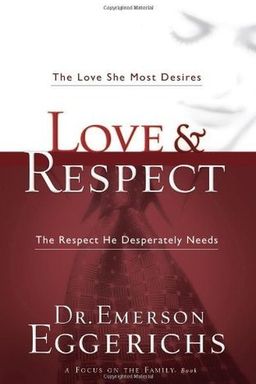
Love and Respect: The Core Marriage Design
What if most marital conflict stems not from personality differences or finances but from misunderstanding the other person’s deepest need? In Love and Respect, Emerson Eggerichs argues that the hidden key to lasting connection lies in a biblical formula: husbands crave respect, and wives crave love. When either of those needs goes unmet, relationships spin into a destructive loop he calls the Crazy Cycle. When they are met, couples enter two healing alternatives—the Energizing Cycle and the Rewarded Cycle.
Eggerichs roots his model in Ephesians 5:33: “Each one of you also must love his wife as he loves himself, and the wife must respect her husband.” This verse forms the axis of the book, and every story, study, and acronym serves as a practical decoding of what love and respect look like every day. The author defines love and respect not as feelings but as disciplines and choices that create goodwill even when emotions run cold.
The Crazy Cycle: Misinterpreted Needs
When a wife feels unloved, she often reacts with criticism that sounds disrespectful; when a husband feels disrespected, he withdraws or grows angry, which sounds unloving. The loop then feeds on itself: without love, she reacts without respect; without respect, he reacts without love. Eggerichs calls this spiral the Crazy Cycle. It is tragic because most couples are not malicious—they simply misread the signal. Sarah, Eggerichs’s wife, once felt unseen over a simple jean jacket gift. Emerson interpreted her reaction as contempt. Both had goodwill, but they were reacting through different lenses.
Pink and Blue Communication Codes
Eggerichs illustrates gendered misunderstanding with the “pink and blue lenses” metaphor. Wives listen through pink hearing aids tuned to affection and closeness; husbands hear through blue hearing aids tuned to honor and problem-solving. A phrase like “We never talk anymore” means “I need love” in pink but sounds like “You’re failing as a husband” in blue. Learning to decode these lenses helps you translate rather than judge. (Note: Eggerichs’s approach resembles John Gray’s Men Are from Mars, Women Are from Venus but grounds the difference directly in Scripture rather than pure psychology.)
Unconditional Behavior: Biblical and Cultural Context
Eggerichs claims love and respect are unconditional duties: husbands must love even when they feel disrespected; wives must respect even when they feel unloved. 1 Peter 3 and Titus 2 reinforce this call as spiritual obedience, not emotional reciprocity. He anticipates cultural objections—especially the idea that unconditional respect enables abuse—and clarifies that respect never means condoning sin. It means choosing tone, demeanor, and language that honor the husband’s dignity as a person while still holding boundaries. Decision Analysts data show over 80% of men interpret conflict as disrespect rather than lack of love; this cultural insight underscores that honor is a male emotional oxygen.
Breaking and Replacing the Cycle
The path out of the Crazy Cycle begins when one partner—often the more mature—makes the first move. That act of grace interrupts reactivity. Eggerichs gives simple scripts: “Honey, that felt disrespectful. Did I just come across as unloving?” Such questions identify emotion without accusation and invite empathy. Couples learn that giving what the other needs first restores both sides. When this principle is practiced daily, it activates the Energizing Cycle: his love motivates her respect; her respect motivates his love.
The Spiritual Vision: Reward Through Obedience
Ultimately, Love and Respect is not just a communication manual—it is a theology of marriage. Eggerichs’s Rewarded Cycle reminds you that love and respect are acts of obedience offered to Christ, even if your spouse doesn’t reciprocate. “His love blesses regardless of her respect; her respect blesses regardless of his love.” You respond not for manipulation but for spiritual maturity. Over time, this obedience produces inner freedom, character growth, and a marriage that demonstrates grace rather than scorekeeping.
Core Insight
When you choose to love or respect unconditionally, you model divine grace. That grace resets the emotional economy of your marriage, turning reaction into redemption. Eggerichs’s message is not only relational—it is spiritual: changing how you see your spouse changes how you live before God.
Across the book’s memorable acronyms, anecdotes, and principles, Eggerichs gives a single unifying message: couples thrive not by fixing each other but by decoding and meeting the other’s primary need. If you adopt love and respect as daily discipline, you replace the Crazy Cycle with the Energizing Cycle and move toward the Rewarded Cycle—where genuine faith and wisdom transform not only your marriage but your heart.