
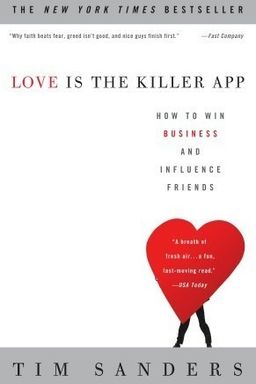
Love is the Killer App cover

Love is the Killer App

by Tim Sanders

Love is the Killer App reveals how integrating love, compassion, and generosity into your professional life can unlock true success. Learn to build valuable networks, share knowledge, and foster meaningful relationships to achieve your goals and transform your career in today''s competitive world.

Love Is the Killer App: Success Through Kindness

What if being nice—truly, intelligently compassionate—wasn’t just good karma but the most effective business strategy? In Love Is the Killer App, Tim Sanders argues that love, defined as the selfless promotion of another’s growth, is the ultimate competitive advantage in the modern economy. In a fast-paced, knowledge-driven world, where ideas and relationships decide success faster than titles or tenure, Sanders contends that those who share generously—not hoard selfishly—will thrive.

Sanders, a former Yahoo! executive and professional speaker, writes from experience in Silicon Valley’s startup frenzy, presenting the idea that to win business and influence friends, you must become a lovecat—someone who combines intelligence, network-building, and genuine compassion to lift others. He insists that success now flows through human connection and generosity rather than predatory competition, replacing the logic of the old “swim with the sharks” era with a message of caring and service.

The Shift in Business Values

Before the information revolution, Sanders explains, business rewarded longevity and control. Knowledge was power precisely because it was scarce. But today, abundance reigns—ideas flow freely, technology spreads instantly, and reputation travels faster than any corporate memo. Companies like Cisco thrive not by crushing rivals but by perfecting relationships and measuring customer satisfaction over market domination. Sanders positions this new landscape as the reason love—not aggression—is now the killer app that “devastates outdated models” just as disruptive technology once did.

The Three Intangibles of Bizlove

To practice love intelligently in business, Sanders introduces three core intangibles: knowledge, network, and compassion. These form the pillars of his “Lovecat Way.”

  • Knowledge: The accumulated wisdom from books, observation, and conversation—and crucially, the practice of sharing it freely. Sanders calls books the most potent food for thought; reading becomes a personal brand asset.
  • Network: Your web of authentic relationships. It’s where collective value multiplies through connection. Networking isn’t mere collecting—it’s proactive matchmaking between people who can add value to one another.
  • Compassion: The human warmth that machines and metrics can never replicate. Compassion reveals character and drives emotional loyalty in business—a hug, encouragement, or simple genuine care often outperform spreadsheets.

Love in business, contrary to caricature, isn’t naïve or sentimental—it’s strategic generosity. Sanders insists that smart, nice people will replace the “barracudas, sharks, and piranhas” that dominated corporate lore. Love scales precisely because it isn’t based on tangibles like money or favoritism; it’s powered by ideas, relationships, and empathy—resources that grow when you give more of them away.

The Lovecat Transformation

Sanders opens with a story about Chris “Mad Dog,” a talented but unlikeable colleague who treats business as warfare, believing success comes from crushing others. Disconnected and miserable, Chris epitomizes an outdated mindset. Under Sanders’ mentorship, he learns to share wisdom, make introductions, and show humanity—and transforms into a “lovecat,” gaining respect, influence, and joy. His journey exemplifies Sanders’s thesis: success and happiness arrive when competence meets kindness.

Why It Matters

The core lesson is that business is now human-scale again. Technology may accelerate transactions, but relationships and reputation still define the winners. When you offer love intelligently—through knowledge, network, and compassion—you create an ecosystem that thrives on trust and positive reciprocity. Sanders aligns this with philosophers like Milton Mayeroff (On Caring) and psychologists like Abraham Maslow, showing that our deepest professional fulfillment stems from helping others grow.

“Love is the selfless promotion of the growth of the other.” —Milton Mayeroff, as quoted by Tim Sanders.

Reading Love Is the Killer App, you’re reminded that professional achievement is inseparable from human decency. Across its pages, Sanders offers a blueprint for prosperity grounded in kindness: share your wisdom, expand your network selflessly, act with compassion, and you’ll not just win business—you’ll build a world worth working in.


The Lovecat Way: Smart Nice People Win

Sanders formalizes the concept of the Lovecat Way—a professional philosophy built on three pillars: knowledge, network, and compassion. He contrasts this approach with the old corporate playbook obsessed with market share, dominance, and cutthroat tactics. In his world, lovecats represent the new breed of smart, kind, selfless professionals who add value everywhere they go.

From Fear to Value Creation

Throughout business history, fear and aggression shaped work culture. Sanders recounts how employees once stayed in miserable jobs because alternatives were scarce. Today, technology and transparency—the “New Telegraph”—spread reputation instantly. A mean boss or toxic colleague can’t hide behind closed doors. In this era of choice, kindness becomes not just moral but practical—it’s the only way to sustain meaningful collaboration.

Knowledge as Emotional Currency

Sanders calls books “potent fuel” for personal brand growth. By devouring information and sharing it, you become indispensable. His own career skyrocketed because of relentless reading and evangelizing new ideas (he cites works such as Clayton Christensen’s Innovation’s Dilemma and Kevin Kelly’s New Rules for the New Economy). Knowledge makes you relevant—not because you hoard expertise, but because you distribute understanding generously.

Networking Through Generosity

In the Lovecat system, the network isn’t a trophy collection—it’s an ecosystem. “Give away your address book,” Sanders insists. By connecting others with no expectation of return, you multiply your influence. Example: his introductions between Broadcast.com, Victoria’s Secret, Microsoft, and AOL forged unprecedented cooperation (“co-opetition”) that benefited all. Like Metcalfe’s Law, network value grows exponentially with generosity.

Compassion Is the Competitive Edge

Finally, compassion is the emotional infrastructure of business. Sanders argues that the digital age stripped workplaces of humanity—cubicles, automation, and endless emails turned people into isolated “prairie dogs.” By restoring empathy and warmth—through eye contact, appreciation, or a simple hug—professionals humanize organizations and earn deep trust. He cites Herb Kelleher of Southwest Airlines as a prime Lovecat CEO who led with love, literally branding his stock under ticker symbol “LUV.”

Sanders’s Lovecat Way proposes that combining knowledge, relationships, and humanity amplifies everyone’s value. When you give freely, you gain power—and when you show respect instead of rivalry, you win loyalty instead of fleeting victories.


Knowledge: Becoming a Walking Encyclopedia

Sanders dedicates an entire section to the first Lovecat pillar: knowledge. It’s your professional currency, but only if you share it. He encourages building a foundation of wisdom through constant reading and reflection. His message: stop consuming gossip and trivialities, and start feeding your mind with books that transform how you think and act in business.

The 4-Step Knowledge Process

  • Aggregation: Find the best books that sharpen your expertise. Identify key words relevant to your field and seek titles around them.
  • Encoding: Don’t just read—tag, underline, and annotate. Sanders’s mother taught him “cliffing” (writing key ideas inside the cover). Reading actively embeds information deeply.
  • Processing: Review and reflect. Revisit notes, write summaries, discuss with peers, and join book clubs. Surfacing insight transforms raw data into wisdom.
  • Application: Share what you learn through conversation, email, or gifts. Evangelize ideas and prescribe books to others as a doctor prescribes medicine.

Books as Career Fuel

He recounts how his extensive reading led to a breakthrough with Victoria’s Secret’s online fashion show—a pioneering webcast in 1999. Sanders used ideas from John Hagel’s Net Gain to articulate how data equals customer value, winning the contract despite competitors bidding lower. The lesson: knowledge multiplies opportunity if shared.

The Joy of Giving Insight

True Lovecats give knowledge away without fear. Recommending book titles, visualizing big ideas, and labeling principles make you memorable. Sanders compares prescribing books to healing others—you help colleagues grow intellectually, which strengthens your brand. When knowledge leads, everything else follows.

In short, manage your reading like an asset portfolio. Books are plutonium for the mind. If you constantly fuel your intellect and distribute wisdom freely, you’ll become the go-to problem solver everyone trusts.


Network: Multiply Your Relationships

The second pillar of Sanders’s system is network—your universe of relationships and connections. He argues that success is no longer about what you control but who you connect. In business, isolation equals irrelevance. Relationships are the real infrastructure of modern value creation.

The Three Stages of Networking

  • Collecting: Build your address book consciously. Sanders emphasizes systemizing contacts—whether via Palm Pilot (the 1990s tech symbol), software like ACT, or modern CRM tools. Enter details, note context, and follow up promptly.
  • Connecting: Proactively match contacts who can benefit from knowing each other. Listen for clues in conversations (“need,” “wish,” “aspire”) and act fast—real matchmaking thrives on speed and sincerity.
  • Disappearing: After establishing introductions, step back. Let relationships grow on their own. By reducing friction—no finder’s fees or agendas—you scale trust exponentially.

Why Generosity Scales

Sanders likens networking to Metcalf’s Law: network value grows with the square of its members. Introducing people freely makes your influence multiply faster than any currency exchange. When you create connections without taking credit or compensation, others begin to see you as the trustworthy hub of opportunity.

Stories of Connection

Sanders’s own rise began with “Node Zero,” Kyle Smith, a colleague who shared contacts that led him from Broadcast.com to literary agent Jan Miller—and ultimately to writing this book. Later introductions—from Tom Peters to Wyncom—expanded his network beyond imagination. Each link, freely given, unlocked whole new webs of mutual benefit.

For Sanders, networking isn’t schmoozing; it’s service. Each connection is an act of love. The less you demand in return, the more people seek your presence—and the richer your professional ecosystem becomes.


Compassion: Humanity as Business Strategy

The third intangible—compassion—is Sanders’s most heartfelt. It’s the emotional glue that turns smart, networked professionals into trusted leaders. Compassion means genuinely caring for others’ success and wellbeing, even when it feels uncomfortable in the workplace. Sanders argues that compassion makes business personal again—and transforms productivity into happiness.

Why Compassion Matters

Sanders laments the rise of impersonal cubicle farms and email cultures that stripped humanity from work. People now communicate through screens instead of faces. Yet, as Mother Teresa said, “The greatest disease in the West is being unwanted.” Businesses starving for heart inevitably lose morale and innovation. Compassion reintroduces the human touch—eye contact, empathy, encouragement—that machines can’t supply.

How to Practice Compassion

  • Notice body language and timing. Read cues and listen deeply—every gesture signals an opportunity to care.
  • Use warm words and genuine smiles. Replace critique (“I hate late projects”) with affirmations (“I love when teams communicate early”).
  • Employ appropriate touch—whether handshakes, pats, or hugs—and do so with sensitivity and permission.
  • Frame conversations around others’ happiness. Reinforce their value publicly and privately.

The Power of Positive Feedback

Sanders shows that compassion creates invisible ROI. People forgive mistakes more easily, stay loyal longer, and improve performance when they feel cared for. Southwest Airlines embodies this principle by promoting employees who spread positivity. Compassion fuels commitment—when you say “I’m dedicated to your success,” you raise the stakes and force yourself to deliver.

In the end, business love means business growth. Compassion turns coworkers into collaborators, customers into advocates, and ordinary workplaces into communities of humanity.


Personal Branding Through Bizlove

Sanders explains that sharing love—through knowledge, network, and compassion—builds a powerful personal brand. In the age of automation and commoditization, the best safeguard against obsolescence is being distinctly human. He outlines five dimensions of branding under the acronym DREAM: Differentiation, Relevance, Esteem, Awareness, and Mind’s Eye.

DREAM: The Five Steps to a Lovecat Brand

  • Differentiate: Stand out by being generous and wise—not merely flashy. Lovecats are remembered because they give value that lasts.
  • Relevance: Build relationships that matter daily. Offer insights and connections that make others’ work easier.
  • Esteem: Earn trust through selfless giving. People hold generous professionals in high esteem because kindness signals integrity.
  • Awareness: When you help others consistently, word spreads. Reputation becomes viral marketing—others promote you by telling your story.
  • Mind’s Eye: Occupy mental space as the go-to person. Just as customers instinctively reach for their favorite brand, colleagues turn to you first when opportunity arises.

Brand as Emotional Equity

Sanders quotes Tom Peters’s dictum “Be distinct or be extinct.” By channeling love into every professional interaction, you move from commodity to icon. Your brand is no longer about job title—it’s about who you are: reliable, knowledgeable, and compassionate. People remember how you make them feel, not what you sell.

Becoming Top-of-Wallet

Just as 80% of credit card purchases occur with the card on top of the wallet, Sanders argues that Lovecats stay “top-of-wallet” in colleagues’ minds—they’re the first call when help or partnership is needed. Through sustained generosity, you embed yourself in others’ “mind’s eye.”

Personal branding through bizlove turns professional success into emotional resonance. You don’t just climb the ladder—you become the ladder others climb.


The Benefits of Bizlove

Sanders outlines six concrete benefits of practicing Lovecat principles in business. Each one transforms ordinary professionalism into extraordinary impact, proving that kindness pays—in reputation, influence, and joy.

1. You Build an Outstanding Brand

Your generosity becomes your calling card. People know you as the person who connects, supports, and enlightens. That recognition broadens opportunity far beyond traditional advancement.

2. You Create an Experience

Drawing from The Experience Economy (Joseph Pine and James Gilmore), Sanders explains that experiences, not products, define modern value. By making interactions memorable—like sharing a life-changing book or empowering insight—you become the human equivalent of a theme park.

3. You Gain Access to Attention

Attention is the scarcest resource. Sanders borrows from Seth Godin’s Permission Marketing to argue that Lovecats earn genuine attention because people trust their motives. When you’re kind and smart, busy executives pause and listen.

4. You Harness Positive Presumption

Contracts and persuasion become easier when trust layers presumption in your favor. When people assume you mean well, risk aversion disappears—and collaboration flourishes.

5. You Receive Exceptional Feedback

People repay generosity with honesty. When Sanders freely shares advice, clients tell him candidly what worked and what failed. Real feedback accelerates learning faster than any management metric.

6. You Gain Personal Satisfaction

Most importantly, love makes work meaningful. Sanders compares lovecats to ministers and musicians—people who wake up inspired because their work upgrades others' lives. Love bridges the gap between career and purpose, replacing burnout with joy.

Bizlove, as Sanders sums up, transforms business from a battlefield into a garden. The more you give, the more you grow.

Dig Deeper

Get personalized prompts to apply these lessons to your life and deepen your understanding.

Go Deeper

Get the Full Experience

Download Insight Books for AI-powered reflections, quizzes, and more.