
Idea 1
The Painfully Honest Truth About Startups
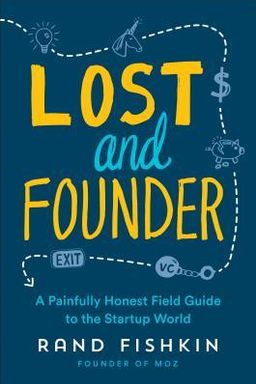
Have you ever wondered why so many people start businesses believing they'll be the next Zuckerberg or Musk, yet end up exhausted, broke, and disillusioned? In Lost and Founder, Rand Fishkin turns the glossy myth of Silicon Valley inside out, revealing the messy, emotional, and often disappointing reality of startup life. Fishkin, best known as the founder of Moz, argues that the mainstream narrative of entrepreneurship—where daring geniuses raise millions, disrupt markets, and retire rich—is both misleading and harmful. The result is a generation of founders who chase the wrong goals, raise money for the wrong reasons, and burn out before they’ve built something meaningful.
Fishkin’s core contention is that success in startups is less about risk-taking brilliance and more about empathy, focus, self-awareness, and transparent leadership. He insists that most founders must rethink their assumptions about money, management, and growth. Rather than following Silicon Valley’s toxic playbook of “move fast and break things,” Fishkin offers what he calls “cheat codes”—hard-earned lessons that make surviving and succeeding in startup life not easy, but realistic.
In this guide, you’ll explore what Fishkin discovered by building and stumbling through Moz’s evolution from a tiny family business to a $45-million software company. You’ll learn why transparency beats secrecy, how focusing on your customers’ real lives gives you an unfair advantage, and why scaling too fast or chasing venture capital often does more harm than good. You’ll see how founders project their own personalities onto their startups—creating cultures that mirror their insecurities—and why empathy and psychological safety create stronger teams than rigid hierarchies ever could.
The Broken Myth of Silicon Valley
Fishkin opens with his own rocky start as a web designer who fell into $500,000 worth of debt before Moz became profitable. He debunks the myth that startups are glamorous paths reserved for elite tech geniuses attending Stanford or Harvard. In truth, he shows how entrepreneurship favors privilege and luck far more than raw talent. The data in his introduction—90 percent of venture-backed startups fail, founders are usually middle-aged, and only a handful make real profits—highlights how distorted popular perceptions are.
Instead of glorifying the few unicorns, Fishkin advocates learning from the thousands of founders who built modest but sustainable companies. Like Jason Fried of Basecamp or Paul Jarvis of Company of One (a similar anti-growth manifesto), Fishkin suggests that slow, profitable growth often leads to more satisfying outcomes—both financially and psychologically.
Startup “Cheat Codes” and the Real Game
Throughout the book, Fishkin recasts the startup journey as a game where most players start without instructions. He introduces his idea of “cheat codes”—lessons learned through painful experience that help entrepreneurs avoid common traps. These include things like focusing on transparency instead of hype, validating your product through real customer experience, balancing ambition with empathy, and accepting that management and leadership are distinct skills that must be learned over time.
One of Fishkin’s biggest cheat codes is realizing that raising venture capital forces companies into high-risk patterns unsuitable for most business goals. He openly admits that Moz’s funding transformed the company’s expectations overnight—from a growing, profitable firm into a high-speed moonshot. The result? He gained investors, press, and a fancy office, but lost autonomy and peace of mind. It’s a pattern repeated across the industry, reinforcing his warning: “Don’t raise money for the wrong reasons or from the wrong people.”
Empathy, Vulnerability, and Transparency
One of the book’s most touching threads is Fishkin’s insistence that vulnerability is not weakness. After his wife Geraldine’s health scare and his own bout with depression, he realized that psychological safety—being able to admit failure, cry, or disagree openly—is a company’s greatest strength. Fishkin’s leadership at Moz emphasized openness: sharing financials, discussing failures publicly, and encouraging employees to bring their whole selves to work. This philosophy differs sharply from Silicon Valley’s macho, data-only management style and aligns more with Kim Scott’s Radical Candor and Amy Edmondson’s research on team psychological safety at Google.
Why This Book Matters
In a culture obsessed with billion-dollar valuations, Lost and Founder offers a profound counter-narrative. It’s not about winning the startup lottery—it’s about building with humanity, honesty, and perspective. Fishkin gives both aspiring founders and seasoned leaders a rare emotional roadmap through the rollercoaster of business creation. His lessons reshape what success means: not endless growth, but grounded, empathetic leadership. Whether you dream of launching a company, leading a team, or simply understanding the truth behind the tech hype, his story teaches you that transparency and focus—not hustle or hype—are the real cheat codes for lasting success.