
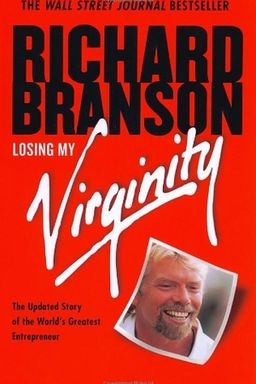
Losing My Virginity cover

Losing My Virginity

by Richard Branson

In ''Losing My Virginity,'' Richard Branson shares his extraordinary life story of transforming Virgin into a global brand. From daring business ventures to adventurous escapades, Branson reveals how ingenuity, resilience, and a passion for the unconventional led to groundbreaking success across various industries.

The Making of a Maverick: Risk, Rebellion and Purpose

What drives someone to build over 400 companies and turn rebellions into an empire? In Losing My Virginity, Richard Branson argues that entrepreneurship is not about perfect planning—it’s about fearless experimentation, empathy, and the courage to learn in public. His story moves from a dyslexic teenager selling records from a school basement to a global brand spanning airlines, finance and even spaceflight. Beneath the adventure lies a deeper argument: entrepreneurship is a way of seeing limits as invitations to reinvent.

The book unfolds chronologically—beginning with Branson’s tough and imaginative upbringing, then exploring the creation of Virgin Records, risky expansions into airlines and the sharp lessons of financial discipline. Later chapters track how business becomes a platform for social action, clean energy, and moral leadership. Taken together, these arcs reveal how personal character, brand philosophy, and social conscience evolve through adversity.

From Family Labs to Virgin Experiments

Branson’s childhood was a bootcamp in resilience. His mother, Eve, deliberately placed him in uncomfortable situations—sending him on long bike rides or challenging him to earn his pocket money through micro‑ventures. His father encouraged curiosity and humor. Dyslexia and mediocre school performance became creative gifts: they taught him to delegate, communicate by story rather than memo, and trust instinct over paperwork. He discovered early that if he couldn’t fit a system, he could build one.

Launching Student magazine in the 1960s carried those family lessons into the marketplace. The project began as protest and turned into a lesson in business modeling: cold‑calling advertisers while pretending to be established; learning how cash flow follows credibility. When ad revenue faltered, he turned distribution lists into a mail‑order record club—laying the foundation for Virgin. (Note: the name “Virgin” came jokingly from a colleague remarking they were all “virgins in business,” and it became a metaphor for freshness and boldness.)

Experiment over Expertise

Branson’s philosophy is that real learning happens through trial and survival. Failed early ventures (Christmas trees eaten by rabbits, lost budgerigars) formed a personal MBA: manage risk cheaply, fail fast, and stay optimistic. This bias for action—what he later calls “screw it, let’s do it”—recurs throughout his life, from record deals to aircraft leases. The Virgin ethos became an institutionalized version of that attitude: take bold bets, cushion downside, and treat each project as a prototype.

Virgin Records illustrates the method perfectly. Branson built synergy across retail, recording and publishing so that success in one area fueled another. The creation of The Manor studio gave artists freedom, while ownership of copyrights (secured through smart contracts) created long‑term wealth. Tubular Bells transformed Virgin from an experiment into an empire—but just as important, the studio culture reflected his management philosophy: informal, trusting, and purpose‑driven.

Risk and Redemption Cycles

Each phase of Virgin’s growth introduced new kinds of risk. Customs charges, fines under archaic morality laws, and later battles with British Airways or the City of London created existential crises. Instead of backing off, Branson developed a tactical playbook: respond fast, frame the narrative in public interest terms, and use transparency and moral courage as protection. His night in jail after the record export case transformed him from opportunist to strategist—he realized that reputation would become Virgin’s key currency.

When scaling to airlines, he applied experimentation again: lease planes for a year with return clauses, test markets, and build a service experience that reflected Virgin’s identity—music, fun and care. Partnerships, like those with Freddie Laker or later Fuji‑Sankei, balanced vision with operational realism. Branson’s emotional decision to sell Virgin Music decades later wasn’t failure—it was liquidity triage to save the airline. The move revealed that even mavericks must manage banks and cash flows ruthlessly.

From Profit to Purpose

The book’s second half evolves from commercial gambles to global impact. Branson repurposes his risk appetite toward social entrepreneurship and environmental innovation. Virgin Unite built clinics in Africa; the Branson School taught entrepreneurship as self‑reliance; Virgin Galactic and Virgin Fuels became technological and ecological moonshots. By connecting profits to purpose, Branson shows that business can scale compassion without turning into bureaucracy.

Finally, through projects like The Elders—a council including Nelson Mandela and Desmond Tutu—Branson reframes leadership as service. Instead of merely competing, he uses reputation and networks to convene cooperation. The entrepreneur becomes statesman. His central argument is timeless: adventure, integrity and imagination are not luxuries—they are the operating system of meaningful enterprise.


Learning by Doing

Branson’s early life confirms a truth most entrepreneurs rediscover: capability is built through lived experience, not abstract theory. Dyslexia barred him from academic success, but it trained him to simplify ideas and persuade verbally. His mother’s endurance tests turned into risk training, and his youthful experiments—selling holiday trees, breeding budgies—taught cost structure, supply risk and emotional resilience.

Building Student Magazine

At Stowe School, dissatisfied with the curriculum, Branson created Student, giving peers a voice. What began as critique became commerce. Cold‑calling advertisers taught negotiation under rejection; organizing print and distribution taught logistics. When the magazine faltered financially, pivoting to a mail‑order records list became his first scalable idea. This shift from content to commerce mirrors later patterns—spot demand, build minimal infrastructure, and learn by iterating quickly.

His “Student Advisory Centre,” providing sexual health advice via the magazine, blended empathy with entrepreneurship. When accused under indecency laws, Branson defended it publicly and legally, discovering a lifelong tool: turn controversy into brand story. Lessons that would underpin every Virgin venture followed—empathy sharpens brand trust, and public fights can be transformative if you occupy the moral high ground.

How Virgin Records Formed

The pivot to mail‑order records evolved into Virgin Records—built literally from the remains of lost ventures. Virgin’s retail shops emphasized friendliness over sales pressure, couches over counters. Simon Draper’s curation of rare imports created brand personality: the anti‑corporate record store. The alignment of shop, studio and label allowed tight feedback loops between consumer taste and creative production.

When Mike Oldfield’s Tubular Bells sold millions, Virgin’s vertical integration paid off. Branson’s team had refused to license the album away, ensuring royalties and creative control stayed inside. That decision transformed Virgin into a sustainable record empire and illustrated his recurring discipline: own the intellectual property, not just the distribution.

Taken together, these years show that youthful audacity combined with iterative learning forms a practical MBA. If you start, fail fast, and treat each misstep as curriculum rather than error, you can build momentum faster than traditional routes ever allow.


Risk, Failure and Resilience

Every major chapter of Branson’s career demonstrates that adversity, when handled transparently, becomes strategic capital. From customs charges to near‑death balloon flights, he repeatedly reframes crises as catalysts for innovation or credibility.

Crises that Taught Discipline

The Customs & Excise saga over export taxes taught that shortcuts have compounding costs: what looks like minor arbitrage can threaten entire firms once they scale. His arrest—and £60,000 settlement—forced him to professionalize Virgin’s legal and accounting systems. Later, the BA “dirty tricks” campaign pushed this lesson further: reputational defense must be proactive. By meticulously documenting evidence, leaning on whistleblowers, and suing for libel, Virgin turned victimhood into vindication.

Adventures in ballooning and speed‑boat racing served as metaphors for decision‑making under pressure. Losing altitude over the Atlas mountains mirrored cash‑flow freefalls: you jettison non‑core assets to survive. The disciplined courage to act fast and rebuild distinguishes Branson’s approach from reckless thrill‑seeking. Risk is engineered, not embraced blindly.

The Painful Sale that Saved the Whole

Selling Virgin Music to Thorn EMI in 1992 hurt Branson personally—staff wept, and journalists predicted the end of Virgin. Yet the sale repaid bank loans, secured Virgin Atlantic, and preserved entrepreneurial freedom. Liquidity management, not idealism, became survival skill. He realized that emotional attachment must never eclipse cash discipline. (Note: even great assets are worthless if they can’t keep the lights on.)

Across all these episodes you see a pattern: crises either break or brand you. The ability to learn publicly, admit mistakes, and translate pain into institutional wisdom is why Virgin survived where many peers vanished.


Scaling the Virgin Brand

Virgin’s growth from records to airlines, finance, and beyond rests on one scalable asset: trust built through experience. Branson understood that if customers associated Virgin with fairness and excitement, that reputation could cross industry boundaries.

Launching Virgin Atlantic

The airline began with a simple act—organizing a replacement flight for stranded passengers. That moment of empathy revealed latent demand for better service. Guidance from Freddie Laker helped Branson structure leases with exit clauses, limiting financial exposure. Partner disputes (notably with Randolph Fields) underscored that shared vision matters more than shared capital. The maiden flight’s glamour masked meticulous operational groundwork: regulatory compliance, pilot recruitment, and PR tactics that positioned Virgin as the fun, human alternative to bureaucratic British Airways.

Going Public and Staying Independent

The mid‑1980s flotation gave Virgin access to capital but introduced new bureaucratic expectations—boards, dividends, and investor scrutiny. The resulting culture clash pushed Branson to buy back the group and go private, valuing autonomy over valuation. Debt crises followed, yet disciplined partner choices and asset sales (such as the Seibu‑Saison stake) kept control internal. The message is precise: external money amplifies both potential and vulnerability; choose freedom when the two conflict.

Virgin’s scaling formula—modular brand, prudent financial architecture, and replicable culture—allowed it to seed dozens of ventures, each disciplined yet playful. This structure became the prototype for a “branded venture‑capital” model decades before the term was fashionable.


Diversification and the Branded Venture Model

Post‑1993, Branson deliberately transformed Virgin into an entrepreneurial ecosystem instead of a single firm. He sought oligopolies ripe for disruption and inserted small, incentivized teams under the Virgin umbrella. You see this pattern across Virgin Cola, Money, Trains, and Active—each began as a 50‑50 or low‑capital partnership, limiting risk while extending brand reach.

Virgin Cola exemplified the courage to challenge giants: launching a vending machine under Coca‑Cola’s Times Square sign symbolized defiance, but real insight lay in brand storytelling. Virgin Money scaled through partnership with Norwich Union by redesigning finance as consumer‑friendly and jargon‑free. Virgin Active and Trains applied the same formula—identify consumer pain points, supply better experience, and engineer enthusiasm through staff culture.

The Portfolio Philosophy

Instead of top‑down control, each Virgin company operated like a start‑up. Managers owned equity; Branson provided branding, mentoring, and sometimes capital. This decentralized network buffered risk: if an airline struggled, a financial unit or health club might thrive. The trade‑off was reputational contagion—Branson mitigated this by enforcing strict brand alignment (“can we make this sector more fun, fair, or human?”). Essentially, Virgin functioned as branded venture capital long before the label existed.

The enduring lesson: diversification without dilution demands cultural discipline. Shared values—not spreadsheets—keep a conglomerate coherent.


From Profit to Purpose

As Virgin matured, Branson redefined wealth as capacity to solve large problems. Combining philanthropic empathy with entrepreneurial design, he funneled business skills into social transformation. The trigger was personal—losing colleague Donald Makhubele to AIDS inspired a no‑AIDS‑death pledge across all Virgin companies. Virgin Unite evolved this into Africa‑wide health initiatives.

Social Entrepreneurship in Practice

Projects like the Bhubezi medical centre, delivering mixed free‑and‑paid care, and Heaven’s Angels, a motorbike delivery network for medicine, illustrate a new playbook: treat nonprofits as start‑ups with feedback loops and sustainability goals. The Branson School of Entrepreneurship applied the same model to education—teaching youth enterprise, not dependency, as the exit from poverty. Partnerships with governments and multinationals amplified reach without diluting mission.

Environmental Vision and the Earth Prize

Branson’s ventures into clean energy and space married bold imagination with tangible risk hedges. Virgin Galactic commercialized space tourism through safe testcraft; Virgin Fuels invested in bioethanol to protect airlines from oil volatility. The $25 million Virgin Earth Challenge with Al Gore leveraged competition to drive carbon capture innovation. (Note: this reflects his conviction that entrepreneurial prizes can outperform slow policy.) Publicly pledging billions towards these causes turned moral rhetoric into measurable capital flows.

The merging of adventure and activism culminates here: exploration that once sought new records now seeks planetary repair. Branson reframes capitalism as continuous reinvestment of imagination into human progress.


Leadership and Legacy

Branson’s leadership thread binds every story: keep teams small, empower them, and lead with empathy. He insists that happy staff create loyal customers, which in turn create resilient companies. This inverted stakeholder order explains Virgin’s longevity.

Culture by Design

Culture is engineered through fun and accessibility—managers own shares, failures are accepted as prototypes, and celebration is policy. Branson models servant leadership by remaining approachable and occasionally taking front‑line jobs himself. Decentralization is both management philosophy and moral stance: trust others and they will triple their effort. This reinforces Virgin’s informal yet disciplined DNA.

Global Citizenship and The Elders

With Peter Gabriel and Nelson Mandela, Branson co‑founded The Global Elders—an independent council of moral figures (including Archbishop Desmond Tutu and Jimmy Carter) aiming to resolve conflicts and advocate ethical governance. This initiative defines the final maturation of his leadership: from entrepreneur to convenor. He leverages reputation, networks and capital not merely to compete but to heal. The transition invites you to see leadership as accumulated credibility deployed for collective progress.

Ultimately, Losing My Virginity argues that success is not a finish line but a platform for stewardship. The courage to act, fail, forgive, and serve becomes Branson’s true legacy—a framework any modern leader can adapt.

Dig Deeper

Get personalized prompts to apply these lessons to your life and deepen your understanding.

Go Deeper

Get the Full Experience

Download Insight Books for AI-powered reflections, quizzes, and more.