
Idea 1
Our Fundamental Need for Nature
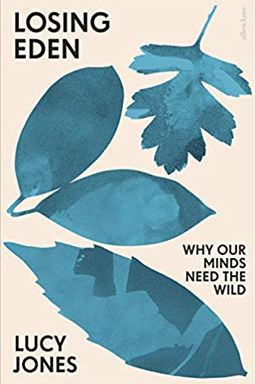
Have you ever noticed how a walk in a park can calm your mind or how a glimpse of sunlight through the trees can lift your mood? In Losing Eden, journalist and nature writer Lucy Jones argues that these moments are far more than poetic coincidences—they are evidence of our deep biological and emotional connection to the natural world. Jones contends that this connection, once instinctive and omnipresent, has been eroded by modern life, and that this growing disconnection is making us ill—psychologically, emotionally, and even physically.
Jones makes the case that our alienation from nature is one of the most pressing public health issues of our time. Drawing on decades of scientific research across immunology, neuroscience, psychology, and ecology, she demonstrates how contact with the natural world supports our immune system, sharpens our cognition, and provides existential grounding. Yet, paradoxically, as urbanization spreads and climate change accelerates, we are spending less time in nature than any previous generation.
The Central Argument: Losing Eden, Losing Ourselves
Jones’s central claim is simple but profound: our physical and mental health depend on our relationship with nature. She explores what happens when that relationship is severed and how reconnecting to the living world might heal both us and our planet. Drawing from her own story of addiction and recovery, she shows how returning to natural spaces helped rebuild her sense of meaning and peace. The “Eden” of the title represents not the biblical paradise, but the biological equilibrium humans once shared with ecosystems. To lose Eden is to lose that reciprocity—and ourselves in the process.
In the early chapters, Jones revisits scientific studies on soil bacteria like Mycobacterium vaccae that boost serotonin and modulate stress responses. She explores Edward O. Wilson’s theory of biophilia—the innate human affinity for nature—and the concept of “attention restoration” proposed by Rachel and Stephen Kaplan, which shows that exposure to wild environments restores our ability to focus. Later chapters examine how gardening, forest bathing, and green spaces can treat depression and anxiety. Each discovery reinforces what ancient wisdom long knew: being in nature is vital for mental health.
Why This Book Matters Now
Why does all this matter? Because, as Jones reminds us, our modern lifestyles are designed to exclude nature. By 2050, two-thirds of the world’s population will live in cities. Many children spend less time outdoors than prison inmates, switch natural play for screens, and grow up unfamiliar with birds, trees, and soil. This, Jones argues, is not only a cultural loss but a biological emergency. Without everyday contact with nature—what ecologist Robert Pyle called “the extinction of experience”—we risk losing empathy for the living world and, consequently, the motivation to protect it.
Yet Losing Eden is not just a lament; it’s a manifesto for reconnection. Jones introduces scientists, psychotherapists, and community leaders who are reimagining how we think about health and happiness. She describes ecotherapists who work outdoors, doctors prescribing forest walks in the Scottish isles, and prisoners whose behavior and mood improve when exposed to greenery. In Philadelphia, entire neighborhoods become safer and calmer after vacant lots are turned into green oases. Each story reflects Jones’s conviction that nature is more than a backdrop—it’s a co-therapist, a teacher, and a mirror of our inner lives.
A Blend of Science, Story, and Soul
Jones writes with both the precision of a journalist and the lyricism of a memoirist. She weaves together hard data with deeply personal experiences—planting potatoes while recovering from postpartum depression, discovering the scent of geosmin after rain, or watching her baby play in the dirt. These scenes bring intimacy to scientific findings, transforming them from abstract theory into lived truth. She also examines the growing field of ecopsychology, which explores the emotional consequences of environmental loss, and deep ecology, a philosophy that calls for seeing humans as part of—not apart from—the web of life.
The Broader Vision
Ultimately, Losing Eden asks you to consider what kind of future you want to build. If the “Eden” we’ve lost is the living world that sustains and shapes us, then regaining it requires more than individual self-care—it demands cultural change. Jones connects the environmental crisis to social justice, showing that poorer communities, deprived of parks and green areas, bear the heaviest mental health burdens. Her concept of “equigenesis,” inspired by Richard Mitchell’s research, suggests that access to nature can reduce health inequality by buffering the stresses of poverty. Nature, in this sense, is not a luxury but a right.
By blending science, spirituality, and activism, Jones offers a hopeful vision: a society that restores its relationship with soil, animals, forests, and rivers might restore its sanity too. Across its chapters, she argues that connecting to nature is not escapism—it’s reclamation. Through stories of resilience, from Svalbard’s seed vaults to Detroit’s urban farms, she asks us to “fall back in love” with the Earth while there is still time.
In the pages that follow, you’ll explore how microbes in the soil influence our mood, how green spaces transform urban life, how awe resets our nervous systems, and how grief for the planet points toward renewal. Together, these insights form a mind-body ecology—an invitation to rebuild the sacred bond between people and the planet. As Jones writes in her conclusion, “We would be happier and healthier with a richer, fuller, less destructive relationship with the rest of nature.”