
Idea 1
The Fragile Boundary Between Civilization and Savagery
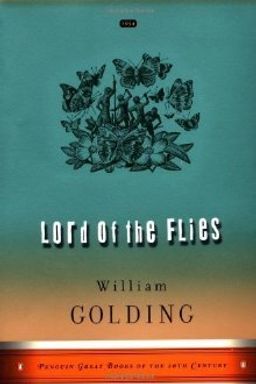
How thin is the line separating civilization from chaos? In Lord of the Flies, William Golding invites you to confront that unsettling question by imagining a group of well-mannered British schoolboys stranded on a deserted island. Free from adults and authority, they must govern themselves. At first, they dream of order, cooperation, and rescue. But as fear and power struggles grow, those dreams rot. The boys descend into savagery, revealing the darkness lurking inside every human being.
Golding—a World War II naval officer disillusioned by humanity’s brutality—wanted to explore what happens when civilization’s rules vanish. He contended that society’s flaws aren’t just structural; they are inner, bred into human nature. To him, civilization merely masks our primal impulses. When those masks slip, violence, fear, and domination surge forth. Through his symbolic narrative, Golding argues that the defects of society stem directly from the defects of the human heart.
A Microcosm of Society
The island becomes a miniature world where the boys’ loss of order mirrors humanity’s recurring collapse into barbarism. Ralph, the fair-haired boy elected as chief, represents rational leadership and democratic governance. Piggy, the intellectual with his shattered glasses, stands for science and logic. Jack, red-haired and power-hungry, embodies authoritarianism and primal aggression. Simon, the gentle mystic, symbolizes moral insight and human goodness. Each character is not merely a boy but an archetype of humanity’s internal conflicts between reason, instinct, and faith.
At first, the boys cling to structures of order. The conch—the shell used to call assemblies—symbolizes civilized discourse and shared rules. They decide to build shelters, maintain a signal fire for rescue, and follow democratic principles. But these systems fracture as fear of a mythical 'beast' seeps into their collective imagination. The conch loses its power, Piggy is mocked, and Jack forms a rival tribe obsessed with hunting, violence, and painted war masks. Slowly, the boys’ desire for order gives way to the seductive lure of savagery.
The Darkness Within
Golding’s most haunting idea is that evil isn’t an external force—it lives within each person. The “Lord of the Flies” itself, a pig’s head impaled on a stick, swarmed by flies, becomes a grotesque altar to this truth. When Simon confronts it in a hallucinatory moment, it taunts him: “Fancy thinking the beast was something you could hunt and kill… I’m part of you.” Golding’s allegory exposes how fear and chaos unmask humanity’s latent savagery, transforming civilized children into murderous tribesmen. Simon’s later death—mistaken for the beast and killed in a frenzied ritual dance—illustrates how mob psychology and collective fear override conscience.
By the time Piggy is murdered and the conch shattered, reason and morality have collapsed entirely. The signal fire—once a beacon of hope—becomes a weapon of destruction when Jack’s tribe sets the island ablaze trying to hunt Ralph. Their civilization has literally burned itself out. Ironically, that fire, symbol of chaos, finally attracts a naval officer who rescues them. Yet even rescue brings no catharsis—only shame. The officer’s polite disbelief mirrors our denial of human cruelty. He represents the adult world that wages wars under the same savage impulses.
Why It Matters
Golding’s analysis remains disturbingly relevant. From political polarization to war, you can see echoes of the island’s descent in how fear and scapegoating erode reason. His message is not merely that humans are capable of evil but that civilization’s ethics are fragile, maintained only by collective willingness. The moment moral restraint falters, power fills the vacuum. Lord of the Flies suggests that rescue—whether personal or societal—requires self-knowledge: acknowledging and mastering the darkness within.
In exploring the tension between order and chaos, individual conscience and collective frenzy, Golding uses a deceptively simple story to lay bare humanity’s timeless struggle. Each following idea in this summary elaborates how his characters, symbols, and events dramatize the hard truth that civilization is a thin, flickering flame—and the wilderness of our instincts is always waiting in the dark.