
Idea 1
Preparing for Jobs That Don’t Even Exist Yet
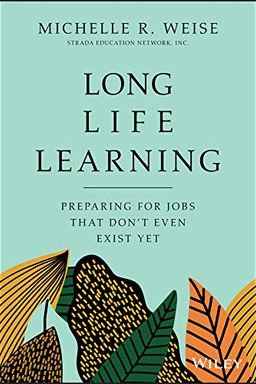
How can you prepare for a career that hasn’t been invented yet? In Long-Life Learning, Michelle R. Weise challenges the way we think about education, work, and human potential in an age of rapid technological disruption. Her central claim is that we’re entering an era of 100-year work lives—where careers will stretch, shift, and evolve across decades—and our education and employment systems are woefully unprepared for that reality.
Weise contends that everyone will need to become a “working learner”—someone continuously looping between earning and learning, not as an occasional event but as a lifelong rhythm. But to make that possible, we must radically redesign the architecture of learning to help adults navigate dozens of job transitions over their lifetimes. The old system, designed for young students and linear career paths, is broken; what we need instead is a dynamic, connected learning ecosystem built for resilience and adaptability.
The Great Disruption: From Fear to Hope
Drawing inspiration from her mentor Clayton Christensen’s theory of disruptive innovation, Weise flips the common narrative about automation and artificial intelligence. Rather than treating disruption as a doomsday threat, she invites us to see it as a call to design better systems that put workers at the center. Disruption, she writes, is not about decay but opportunity: it shines a light on neglected populations—the “nonconsumers” of education—whose alternative is nothing at all.
These nonconsumers are the millions of adults who fell through the cracks of higher education, who cannot drop everything to attend college, and who need seamless ways to upskill while earning. By listening to their experiences, we can uncover what has failed in the current system and design something new that makes learning accessible, navigable, and relevant.
The 100-Year Work Life
The foundation of Weise’s argument is simple but transformative: as life expectancy and career length extend, the three-stage model of life—learn, earn, retire—no longer works. Instead, our lives will become cyclical, consisting of continuous transitions between learning and working. Futurists predict that most people will hold 20 to 30 different jobs across multiple industries. Technological innovation (machine learning, AI, automation) will keep reshaping not just tasks but entire professions. As a result, learning cannot remain front-loaded in youth; it must become a lifelong infrastructure.
This future demands a mindset shift: to stop viewing education as something to complete and instead embrace it as a continuous process of adaptation. The challenge is not just adding more programs—it’s rethinking how people move in and out of learning without losing income, momentum, or confidence.
From a Rigged System to a Learning Ecosystem
In Part I of the book, Weise exposes the failures of America’s fragmented “rigged system.” Education, employment, and training operate in silos, leaving millions of adults unable to find clear pathways to advancement. In Part II, she reconstructs that picture, proposing a new framework for lifelong learning with five guiding principles: it must be navigable, supportive, targeted, integrated, and transparent. These principles serve as the blueprint for a connected learning ecosystem—one that enables learners to find their way, receive personalized support, acquire relevant skills, integrate learning into daily life, and access fairer hiring processes.
Imagine a world, she suggests, where someone like Steve—a 51-year-old IT specialist needing to pivot after decades of physical labor—could easily map his skills to new jobs, see exactly what training helps him bridge the gap, access funding without obstacles, and prove his competence to future employers through verifiable assessments. In this world, education becomes a lifelong GPS system guiding workers forward.
Why It Matters Now
The urgency of Weise’s vision became painfully clear during the COVID-19 pandemic, which exposed the fragility of our workforce systems and the need for universal retooling. Over 40 million Americans lost jobs as automation accelerated, and conventional education offered little help. To prepare for the next shock—economic, technological, or societal—we must invest in lifelong learning as national infrastructure, not a luxury.
The real lesson of Long-Life Learning is not technological but humanistic: our future will depend on empathy, adaptability, and creativity as much as on technical fluency. Weise envisions a future where automation makes us more human, not less; where education and work intertwine across decades; and where anyone can access the learning needed to thrive. In her words, “We have to move from the future we don’t want to the future we do want.” The question is whether we are ready to build that future—together.