
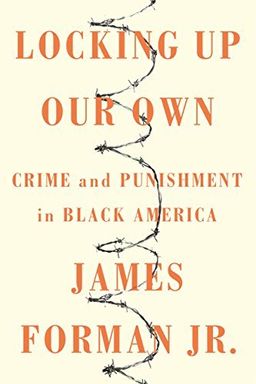
Locking Up Our Own cover

Locking Up Our Own

by James Forman Jr

Locking Up Our Own delves into the historical roots of the war on drugs in Washington, DC, and its profound impact on Black Americans. Through an exploration of drug and gun legislation from the 1970s to the 1990s, the book reveals how these policies entrenched racial disparities, fueling ongoing debates about justice and equality.

Locking Up Our Own: The Paradox of Protection

How can a movement born from the struggle for civil rights contribute to mass incarceration? In Locking Up Our Own, James Forman Jr. offers a deeply human answer to this paradox. He argues that African American leaders, driven by fear, moral urgency, and community protection, helped build policies that now imprison vast numbers of black citizens. Forman does not accuse these leaders of betrayal; instead, he reveals a more complicated truth—sometimes protecting your community means endorsing punishment that later harms it.

Civil Rights and the Turn Toward Punishment

You begin in a D.C. courtroom where Judge Curtis Walker quotes Martin Luther King before sentencing a teen named Brandon. This moment—half sermon, half sentencing—captures the book’s moral tension. The generation that fought for racial justice also became guardians of law and order. They did so in response to real danger: heroin ravaged neighborhoods in the 1970s; crack shattered them in the 1980s. Families begged for safety as homicide and addiction spread. To black judges, ministers, and councilmembers, demanding tougher penalties was not hypocrisy—it was self-defense for their communities.

Fear, Responsibility, and Class Divides

Forman shows black officials acting under complex pressures. Reverend Andrew Fowler warns the council during the marijuana hearings that decriminalization would expose poor children to harder drugs because “they have no guardian but you.” That phrase—no guardian—captures the politics of protection. Leaders like Walter Fauntroy and Doug Moore saw leniency as luxury for the rich. White suburban youth could experiment with marijuana and survive; poor black youth could not. These dynamics reveal a crucial fault line: middle-class black leaders sought respectability and moral reform, while poor blacks bore the brunt of enforcement. By 2000, a black high-school dropout was ten times more likely to be incarcerated than one with some college.

Incremental Choices and the Criminal Justice “Nonsystem”

Mass incarceration was not imposed by a single hand; it grew through thousands of small decisions. Police made more stops; prosecutors filed more charges; legislators added minimums; judges lengthened sentences. These separate actions formed what Forman calls the criminal justice “nonsystem.” Its fragmentation meant no one actor felt responsible for the overall result—and that diffuse accountability made escalation easy. In Washington, black police chiefs, prosecutors, and councilmembers incrementally toughened the system in the hope it would restore peace. Instead, it created a carceral spiral.

Protection Becomes Punishment

From marijuana debates to gun bans and mandatory minimums, you watch the same logic recur: safety justified coercion. David Clarke’s marijuana reform in 1975 collapsed amid fears of heroin relapse. John Wilson’s handgun ban passed to prevent “handgun funerals.” Burtell Jefferson’s police leadership embraced mandatory drug sentences. Marion Barry and John Ray promoted Initiative 9 to “protect our neighborhoods” but ended up swelling prison populations. Even as intentions were noble—shielding children, ending fear—the policies baked punishment into racial self-defense. Eventually, community stewardship turned into systemic incarceration.

The Human Cost and Moral Reckoning

You meet Tasha Willis, a woman crushed by mandatory sentencing, pleading “Tell them I need a drug program.” You meet Dante Highsmith, a teen saved from prison because a victim forgave him and a pastor offered guidance. These stories put faces on policy consequences. For decades, black communities sought safety but received imprisonment instead. Forman’s insight is moral as well as political: justice motivated by love for community can drift toward vengeance if institutions provide only cages, not care.

Core Paradox

Forman’s central claim: Black policymakers fought for protection when the nation ignored their suffering—but the tools they used were punitive. Over time, those protective impulses locked up the very people they sought to save.

By tracing this paradox from 1970s drug debates through 1990s warrior policing and 2000s reform movements, Forman reframes the history of mass incarceration not as betrayal but as tragedy born of constrained choices. If you want to dismantle it, his message is clear: you must confront both fear and responsibility—and rebuild safety through opportunity, not punishment.


Drug Policy and the Roots of Punishment

Forman uses Washington’s 1970s drug debates as the origin story for punitive black politics. You witness David Clarke argue for marijuana decriminalization on civil-rights grounds while ministers and judges denounce the proposal as moral surrender. Their opposition arises from trauma—the heroin epidemic that decimated lives and families—and from sincere belief that children in poor black neighborhoods need stricter guidance. The defeat of the 1975 bill became a symbolic pivot: majority-black leadership rejecting leniency for fear of collapse.

Race and Distrust of Reform

Many black officials distrusted white-led reform campaigns. When white councilmembers pushed decriminalization, ministers suspected they were protecting white youth, not black neighborhoods. The underlying psychology was defensive: black communities demanded control of their own safety, not external leniency. This mistrust later pervaded other debates—from gun control to sentencing reform—where interracial suspicion and class inequality muted shared goals.

The Politics of Responsibility

Opponents like Douglas Moore argued that decriminalization would “abandon the needy.” He saw law as moral shield: harsh rules keep youth disciplined and protect community respectability. This politics of responsibility—the belief that freedom must pair with order—became common among black leaders. As crime rose, order became survival. (Note: Michelle Alexander later highlighted similar contradictions in The New Jim Crow but focused on systemic racism; Forman emphasizes internal community dynamics and moral reasoning.)

Consequences and Continuities

The 1975 defeat looked minor then, but it foreshadowed decades of punitive turns. Arrest records expanded, even if sentences were short. Those records later barred jobs and housing—collateral damage unseen at the time. This episode teaches you how good intentions in policy can produce destructive legacies when fear overrides foresight. The marijuana fight, born of protection, helped plant the roots for the drug wars to come.

Key Lesson

You cannot understand punitive action without understanding fear. For many black leaders, tougher laws were not betrayal—they were desperate protection against collapse.

This period is the foundation for everything that follows: once black leaders validate punishment as protection, later generations find it easier to extend that logic—through guns, mandatory sentences, and police militarization.


Gun Violence and the Dual Tradition of Self-Defense

Gun policy in black America reveals a profound dilemma: disarm to stop death or arm to defend dignity. In D.C.’s 1975 showdown, councilmember John Wilson led efforts to ban handguns entirely as a means to stem daily funerals, while activists like Doug Moore invoked the long tradition of armed self-defense dating back to anti-lynching resistance. Both perspectives came from the same desire—to protect black lives—but through different beliefs about state power.

Safety Through Restriction

Wilson and Reverend Walter Fauntroy argued that gun control was moral necessity. Their reasoning was statistical but also emotional: guns were the leading cause of death for black men under forty, and nearly all homicide victims were themselves black. To them, the handgun ban symbolized a civil-rights triumph—black-controlled government finally protecting its own citizens. That is why Fauntroy said he was "tired of handgun funerals."

Autonomy Through Arms

Opponents channeled history. Moore and others evoked the era when white police ignored lynchings, arguing that gun ownership preserved autonomy when the state failed. Their resistance embodied the "black tradition of arms"—a refusal to outsource safety to unreliable institutions. This was not a fringe idea but a survival ethic carried from Reconstruction through the civil rights period.

Law’s Ambiguous Outcome

The council passed Wilson’s ban almost unanimously, symbolizing confidence in black governance. But enforcing it required the same machinery of criminal punishment that previously targeted black citizens. Mandatory prison terms for armed crimes soon accompanied the ban. This legal hybrid—ban plus mandatory minimum—set the template for the 1980s: use harsh penalties to purge guns and drugs from the streets. In retrospect, the policy declared protection but practiced punishment.

The Ambivalence of State Power

When black leadership trusts the state, gun control becomes liberation; when it distrusts the state, gun ownership becomes self-defense. Both instincts spring from faith in protection and fear of abandonment.

Forman uses this duality to show how black politics oscillates between autonomy and dependence. Every expansion of official safety comes with a hidden cost—the strengthening of punitive state power.


Rise of Black Police and Punitive Reform

By the late 1970s, police forces changed dramatically. Integration advanced, and black officers such as Burtell Jefferson rose to lead the Metropolitan Police Department. This milestone should have transformed police-community relations. Instead, Forman reveals a paradox: increased representation and leadership often deepened punitive commitments rather than softened them.

Representation and Reality

Early black officers—like Atlanta’s pioneering eight—were celebrated but restricted. Decades later, black executives pushed professionalization within departments but also accepted coercive drug and gun policies as tools of protection. You witness NOBLE’s formation in 1976, where officers mixed civil-rights advocacy with calls for "a nationwide war on drugs." Their credibility made punitive measures appear racially legitimate.

Expectations of Empathy

Communities hoped for transformation. They expected black officers to police with compassion. Yet Forman shares candid testimony—"I’m not their soul brother. I’m a policeman." Class differences and institutional culture muted racial empathy. Many officers identified more as professionals defending order than as representatives of black solidarity. Sociologist Donald Black’s research supports this: class often predicts empathy better than race.

Professional Power and Punishment

When Jefferson became chief, he prioritized fairness and promotions but also endorsed mandatory penalties. By aligning professional respectability with harsh enforcement, black police leaders fused civil-rights success to carceral power. Their legitimacy shielded aggressive tactics from criticism because enforcement came from black authority figures. (Note: Similar patterns appear in other institutions when representation substitutes for reform.)

A Hard Truth About Representation

Presence of black officers did not guarantee humane policing. When structural incentives still reward arrests and control, representation can coexist with oppression.

Forman’s insight reframes diversity as necessary but insufficient. Without revising the mission of policing toward care rather than control, representation alone cannot undo systemic harshness.


Mandatory Minimums and Community Fear

In 1982, D.C.’s Initiative 9 crystallized the city’s punitive pivot. Councilmember John Ray and Police Chief Burtell Jefferson proposed mandatory minimums for drugs and guns, arguing that fairness required consistent punishment. They claimed bias infected discretionary sentencing and that fixed penalties would protect ordinary black citizens from neighborhood terror. What emerged instead was a local engine of mass imprisonment.

Political Strategy and Public Support

Ray’s campaign turned tragedy into momentum. Public meetings in open-air markets dramatized danger. Press conferences showed residents demanding action. Voters across all wards approved Initiative 9 by 73 percent. The message was clear: people wanted safety, and prison looked like its delivery system. Civil-rights organizations like the NAACP opposed the measure, warning of overcrowding and racial bias, but emotional appeals eclipsed policy warnings.

Implementation and Consequence

Once passed, prosecutors rushed to apply the new power. Drug prosecutions tripled within two years. Judges, facing mandatory minimums, lost flexibility. Treatment programs stayed underfunded. The addict exemption helped few; the punishment net widened. Initiative 9 did not end open-air markets but did fill jails faster. The measure symbolized how democratic fear could legitimize punitive law.

Fear as Policy Driver

Ray and Jefferson succeeded because they turned community fear into electoral mandate. The tragedy: fear designed its policy tools around cages rather than care.

Forman connects this to a larger theme: laws born from trauma often miscalculate long-term harm. Initiative 9’s punitive DNA spread beyond D.C., influencing federal policy and proving that bottom-up outrage can institutionalize top-down punishment.


Crack, Violence, and the Warrior State

The crack epidemic of the late 1980s forced a historic escalation in policing and punishment. Forman depicts Washington, D.C. as ground zero for both despair and militarization. Neighborhoods became war zones, and black leaders framed the crisis as a moral emergency. The result: a bipartisan consensus that conflated survival with war, producing warrior policing and draconian sentencing.

War Metaphors and Policy Transformation

Reverend Jesse Jackson likened drug dealers to the Ku Klux Klan; Mayor Marion Barry promised to "roast" traffickers. That rhetoric justified extraordinary measures. Federal legislators, desperate to appear decisive, passed laws establishing the infamous 100:1 crack–powder cocaine ratio—penalizing crack possession a hundred times more severely. This legal asymmetry magnified racial punishment since crack was more prevalent in black neighborhoods.

Militarized Enforcement

Police evolved into combat units. Operations like Clean Sweep and Hammer sent fortified squads into drug zones with heavy weapons and armored tactics. Jump-out teams surrounded corners, and daily stop-and-frisks became routine for students like those Forman taught at the Maya Angelou School. Innocence offered no relief; every encounter presumed guilt. These tactics replaced community policing with domination.

Collateral Damage

The results were devastating: mass incarceration expanded, public trust collapsed, and trauma deepened. Asset forfeiture campaigns—confiscating cars, homes, jewelry—extended punishment beyond the body to material life. Poor residents lost tools of survival while violent crime persisted. D.C. became a model for how emergency language—"war on drugs," "safety first"—permits permanent suspension of empathy.

Long-Term Impact

By the 1990s, warrior policing had normalized the presumption of guilt for black youth. The crack crisis justified every measure of control that mass incarceration later inherited.

Forman’s lesson: once war metaphors govern policy, compassion feels like surrender. Reclaiming public safety requires redefining protection beyond punishment and rebuilding institutions that heal rather than occupy.


Class, Race, and Unequal Enforcement

Not all black communities experienced policing equally. Forman integrates sociologist Ronald Weitzer’s research to show that class shapes enforcement as much as race. Middle-class black neighborhoods enjoy respect; poor black areas face constant intrusion. Within one city, black citizens live under different constitutions.

Neighborhood Contrasts

Weitzer compared three D.C. areas: Cloverdale (white middle-class), Merrifield (black middle-class), and Spartanburg (lower-class black). Spartanburg residents reported four to seven times more police abuse than Merrifield. Officers acted more aggressively where residents lacked political leverage. Even Eric Holder, as D.C. prosecutor, exempted Georgetown from Operation Ceasefire while targeting poor black neighborhoods. The logic was statistical—more guns there—but the effect was stratified citizenship.

Living Under Surveillance

In poor areas, pretext stops and consent searches turned ordinary life into policing theater. Residents learned compliance as survival, not justice. Students at Maya Angelou School were told to wear ID tags to avoid searches—a gesture that echoed apartheid pass laws. These experiences bred humiliation and fatalism rather than security.

Intra-Racial Tension

Forman urges you to see how class divides black politics. When elite leaders endorse punitive policy to protect stability, the poor pay its costs. Crime fear fused racial solidarity with class privilege, creating a fragmented community reaction to law enforcement. The road to reform, he insists, must cross class boundaries, restoring mutual civic protection.

Justice Requires Equal Citizenship

True safety demands more than policing; it demands equitable power. When the poor lack voice, they inherit enforcement without protection.

This analysis expands the racial conversation to include class—showing that black America’s internal inequalities sustain the architecture of mass incarceration.


Rethinking Reform and the Limits of Mercy

In its closing chapters, Forman asks what genuine reform should look like. He warns that politics often seeks easy compassion—reducing sentences only for nonviolent drug offenders—while leaving the larger punitive structure intact. That narrow mercy, he argues, is insufficient both morally and practically.

Beyond the Nonviolent Frame

Frequent proposals, including under President Obama’s clemency initiative, limited review to nonviolent cases. This excluded the majority of prisoners who had any violent charge or record. Forman calls this distinction false. Violence itself often stems from structural harm—poverty, trauma, addiction. Confining mercy to the nonviolent divides humanity by moral labels and denies redemption to those society finds difficult to forgive.

A Case for Individualized Justice

Dante Highsmith’s story illustrates what broader mercy can look like. Charged with armed robbery, he could easily have been condemned under mandatory laws. Instead, a pastor’s carpentry program accepted him, a victim forgave, and the judge allowed rehabilitation. Dante completed the program, earned a GED, and became a father. His success demonstrates how individualized compassion can transform lives condemned by categorical reasoning.

Moral Imperative for Holistic Reform

Forman insists that dismantling mass incarceration demands courage to treat violent offenders as redeemable humans. Otherwise, reform reproduces hierarchy—mercy for some, abandonment for others. True progress means expanding treatment, education, and restorative justice for all who seek change, not just those deemed safe.

Reform Principle

Compassion cannot be conditional on the label of “nonviolent.” Real justice builds structures for redemption that reach every corner of human failure.

In the end, Forman’s vision of reform mirrors his diagnosis: communities must replace fear with empathy and punishment with opportunity. It’s not enough to unlock cages—you must redesign safety itself.

Dig Deeper

Get personalized prompts to apply these lessons to your life and deepen your understanding.

Go Deeper

Get the Full Experience

Download Insight Books for AI-powered reflections, quizzes, and more.