
Idea 1
The Stoic Art of Living with Purpose and Courage
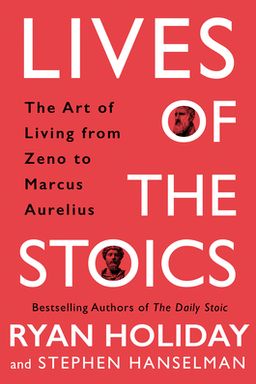
What does it really mean to live a good life? To endure loss and chaos, and yet remain calm, principled, and kind? In Lives of the Stoics—a collaboration between Ryan Holiday and Stephen Hanselman—the authors resurrect twenty-six figures from the ancient Stoic tradition to answer these timeless questions. Their argument is straightforward yet radical: philosophy is not about abstract reasoning or intellectual pride; it is a practical art of living, forged in action, hardship, and moral choice.
Holiday and Hanselman contend that the true purpose of studying philosophy—echoing Seneca’s belief—is to become a better person. The Stoics, they remind us, did not sit in ivory towers debating riddles. They led armies, advised emperors, faced exile, practiced compassion, and met death with dignity. Their philosophy was alive in their decisions. From Zeno of Kition, the shipwrecked merchant who founded Stoicism, to Marcus Aurelius, the emperor who ruled through plague and war, each Stoic wrestled with the same questions we face today: How do I act justly? How do I preserve inner peace? How do I serve others honorably?
Stoicism as a Philosophy of Action
Holiday frames Stoicism’s essence this way: it is a philosophy not of words but of deeds. The four Stoic virtues—Courage, Temperance, Justice, and Wisdom—are not abstract ideals but daily practices. “Turn words into works,” Seneca said, and the authors take that as their guiding principle. Through story after story, they show that Stoic strength is less about emotional suppression and more about aligning reason, ethics, and conduct.
Cato the Younger, who defied tyranny at the cost of his life, stands as a model of justice and integrity. Cleanthes, the water-hauling philosopher, embodies diligence and humility. And Musonius Rufus, sometimes called the “Roman Socrates,” insisted that virtue belonged to women as much as to men—proof that Stoicism was ahead of its time. Each lived by the ethic that you should not talk about goodness, but live it.
Crisis as the Furnace of Character
The book opens by noting that Stoicism itself began in disaster. Zeno lost everything in a shipwreck. Rather than despair, he took it as a sign to seek wisdom, mentoring under Crates and eventually teaching in Athens. From this accident, a philosophy was born that would nourish generations for over two thousand years. The implication for you is that adversity is not the end—it is the beginning. “Well-being is realized by small steps,” Zeno said, “but is no small thing.”
The lives that follow bear this out: Marcus Aurelius governed amid plague; Seneca served a mad emperor; Rutilius Rufus was exiled for his honesty; Porcia Cato and Thrasea Paetus faced death rather than bow to corruption. Each story shows that virtue is most visible when the world is at its worst. Like a muscle, character only strengthens through strain.
History as a Mirror for Modern Life
Holiday and Hanselman’s premise is that these biographies are more than historical anecdotes—they are moral mirrors. The authors use ancient lives to illuminate modern challenges: political corruption, moral cowardice, and the search for meaning in a frenetic world. They weave in parallels to modern leaders and thinkers—from George Washington to James Mattis—showing that Stoicism’s appeal persists because its problems and answers are human, not historical.
The Stoics lived in tumultuous times not unlike ours: collapsing empires, economic inequality, political unrest. Yet their resilience came from focusing only on what they could control—their own minds and actions. As Marcus Aurelius wrote in Meditations, “You have power over your mind—not outside events. Realize this, and you will find strength.”
A Biographical Map for Virtue
The structure of the book itself traces the philosophical lineage of Stoicism: from Zeno’s founding in third-century BC Athens, through its Roman flowering under Cato, Seneca, and Marcus. The authors divide the tradition into personalities—Zeno the Prophet, Cleanthes the Apostle, Chrysippus the Fighter, Cato the Iron Man, Musonius the Unbreakable, and Marcus the Philosopher King—to emphasize that each embodied a different facet of Stoic wisdom. Together, they show that philosophy lives in people, in how they eat, work, love, serve, and die.
Holiday and Hanselman’s storytelling approach makes the book less a textbook on ancient thought than a vivid gallery of examples. It echoes Plutarch’s Lives, revealing how moral philosophy is best taught through character rather than theory. By turning biography into ethics, they show that Stoicism’s power lies not in argument but in example.
Why Stoic Wisdom Still Matters
Why should you care about philosophers who lived and died two thousand years ago? Because the problems they solved are the same ones we face: anxiety, anger, injustice, and mortality. Stoicism teaches that you don’t need perfect conditions to live well; you need the skill to act rightly in imperfect ones. Holiday and Hanselman argue that modern life—with its constant noise and crises—has only made this art more necessary. To read Lives of the Stoics is to be reminded that every one of us, like Zeno after his shipwreck, has a chance to start over, to choose virtue over vanity, and to live a philosophy of action rather than opinion.