
Idea 1
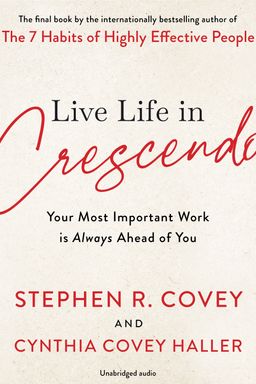
Living Life in Crescendo: Your Most Important Work Is Always Ahead of You
What if the best years of your life were still to come? In Live Life in Crescendo, Stephen R. Covey and his daughter Cynthia Covey Haller argue that your greatest contributions, purpose, and joy are never behind you—but always ahead. Through heartfelt storytelling, research, and timeless principles, they invite you to reject a life of decline (what musicians call diminuendo) in favor of one of continual growth, contribution, and service—what they call the Crescendo Mentality.
The authors contend that life’s later seasons—whether midlife, career peak, after tragedy, or retirement—should not be times of retreat but opportunity. Instead of coasting once you reach success or feeling defeated when circumstances change, you can see every stage as a new beginning. This mindset echoes Covey’s famous principle from The 7 Habits of Highly Effective People: begin with the end in mind. To live in Crescendo, you must continually look ahead to what you can still contribute—to your family, your work, your community, and the world.
Redefining Success as Service
Covey and Haller challenge society’s obsession with wealth and status. True success, they argue, is measured not by accumulation but by contribution. Quoting Albert Schweitzer, they remind readers: “The great secret to happiness is contribution, not accumulation.” This shift in mindset—from what you get to what you give—anchors every story in the book. Whether you’re a CEO, teacher, or parent, the Crescendo Mentality asks you to pursue a mission larger than yourself.
One vivid story comes from Austrian entrepreneur Karl Rabeder, who gave away his fortune to fund microloans for poor entrepreneurs after realizing luxury had left him “soulless.” Similarly, Bill and Melinda Gates embody Crescendo living after their corporate success, channeling billions toward global health and education. These stories illustrate that prosperity without purpose leaves one empty, while generosity expands joy through service.
A Symphony with Four Movements
Covey structures the book around four major “movements” of life, each one requiring a Crescendo mindset instead of resignation:
- The Midlife Struggle: When people feel stuck, disillusioned, or question their impact, the authors remind us to measure success differently—by strengthening relationships and character, not just careers.
- The Pinnacle of Success: After success, many plateau or coast. Covey urges readers to look forward again—to use influence to mentor, give back, and serve.
- Life-Changing Setbacks: Tragedies or failures can either disable or deepen us. By choosing growth, faith, and service, we can turn pain into purpose (examples include Elizabeth Smart, Anthony Ray Hinton, and others who transformed trauma into service).
- The Second Half of Life: Rather than “retirement,” Covey envisions renewed purpose—what he calls “accelerando,” speeding up your influence and serving new generations.
Each stage demands renewed awareness, courage, and commitment. You can’t control what happens to you, but you can always control your response—and that choice determines whether your life expands or contracts.
The Crescendo Mentality in Action
Stephen and Cynthia Covey weave their family story—particularly Stephen’s final years battling dementia and Sandra Covey’s paralysis—as a living example of the Crescendo Mentality in action. Even when Stephen Covey could no longer write or speak, his family notes he tried to teach and connect through every possible moment. Sandra Covey, confined to a wheelchair, continued to host gatherings, volunteer in her community, and send birthday cards to dozens of grandchildren, declaring near the end, “It is not finished!”
These heartfelt stories anchor the book’s central truth: living in Crescendo is not dependent on age, health, or status—it’s a mindset. The Covey parents, along with daughter Cynthia, model resilience fueled by optimism and faith. Their lives form a symphony where the final movement, far from fading, builds to a powerful chord.
Why It Matters Now
In an age obsessed with productivity and perfection, Live Life in Crescendo calls for depth, meaning, and legacy. The book is both an invitation and a challenge: if your life is music, will you end in diminuendo—fading into silence—or crescendo, growing into ever-greater empathy, faith, and impact? The Coveys’ answer is clear: whatever your circumstances, your most important work is still ahead of you.
By embracing this philosophy, you can redefine every new season not as decline but as expansion. You can live as Victor Hugo once wrote—a guiding quote throughout the book—“When I go down to the grave, I can say, ‘I have finished my day’s work,’ but I cannot say, ‘I have finished my life’s work.’” The Crescendo Mentality, then, is not just about success. It’s about significance, resilience, and love that grows louder, richer, and more generous until the very end.