
Idea 1
Listening as the Path to True Connection
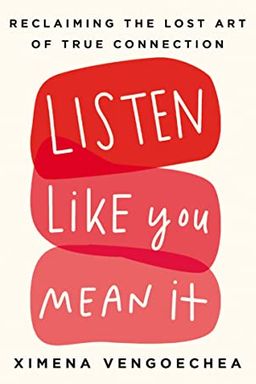
Have you ever left a conversation feeling like you spoke but weren’t really heard—or like you heard someone’s words without catching what they truly meant? In Listen Like You Mean It, Ximena Vengoechea argues that most of us believe we listen well, yet we seldom listen deeply enough to connect. We hear words but miss emotions, motivations, and the delicate cues hidden beneath people’s speech. Vengoechea contends that genuine listening is more than an act of hearing—it’s a practice of empathy, curiosity, and humility that allows you to truly know others and be known in return.
Vengoechea draws from her years as a user researcher in Silicon Valley—where her job was to understand people’s needs, desires, and frustrations. Through hundreds of interviews, she learned that real insight didn’t emerge from smart questions alone but from the quality of attention she gave others. Whether she was interviewing a weary mother about her finances or a celebrity dealing with online harassment, she discovered that people reveal themselves only when they feel seen and safe. That safety comes not from perfect phrasing, but from authentic presence and patience.
The Core Argument: Listening as Active Empathy
At its heart, Vengoechea’s message is both simple and radical: listening is an act of love. It’s how we counter loneliness, defuse conflict, and build trust in overworked teams, frayed families, and digital-age friendships. Yet most of us treat it as passive—waiting for our turn to speak, multitasking, or projecting our own experiences onto others. She calls this default mode surface listening: fast, transactional, and efficient but emotionally hollow. True connection, she argues, requires moving toward empathetic listening—listening to understand, not to respond, fix, or impress.
This shift changes everything. When you listen empathetically, you stop trying to “win” the conversation or fill its silences. You get comfortable with discomfort—the pauses, sighs, or contradictions that signal something real is emerging. Listening becomes a mirror to the speaker and a window into yourself. You notice when your biases interfere, when your energy ebbs, or when your need to be right drowns out your curiosity.
Three Phases of Deep Listening
The book unfolds in three major parts: Set the Stage, Navigate the Conversation, and Rest and Recharge. Each phase equips you with specific skills. First, you cultivate a mindset that opens you to others—empathy to step into their shoes, humility to admit you might be wrong, and curiosity to explore what you don’t yet know. Next, you learn the skills of presence: noticing your body language, managing distractions, and decoding emotional cues beyond speech. Finally, you practice recovery—recognizing that deep listening is emotionally demanding, and maintaining your energy is essential to keep showing up with sincerity.
Throughout these stages, Vengoechea grounds each lesson in stories from her research career. In one study, she learns the power of silence: by waiting through twenty seconds of discomfort, she allows a participant named Charlotte to open up about her financial fears. In another, she witnesses how easy it is to miss emotional truth when a junior interviewer interrupts a participant mid-story. Each moment reveals that listening isn’t about having clever advice—it’s about holding space until others find their own words.
Why Listening Matters More Than Ever
Vengoechea places her insights in today’s context of constant noise and fleeting attention. We communicate through screens but yearn for belonging; we reward self-promotion but crave authenticity. Anxiety, burnout, and divisiveness intensify our isolation. In such a climate, listening becomes a revolutionary skill. It bridges divides not through argument but through empathy. It deepens leadership, friendship, and love by giving people what they hunger for most: acknowledgment.
“Every conversation,” Vengoechea writes, "is an opportunity to understand each other more deeply—if we know how to listen."
Ultimately, the book argues that by listening like we mean it, we can transform not just how we communicate, but how we live. To listen well is to reclaim presence in an impatient world, to create relationships rooted in understanding rather than assumption, and to extend compassion even when views or values differ. Vengoechea invites you to experiment, reflect, and practice—because connection is built word by word, silence by silence, moment by moment. Listening, once mastered, is no longer a skill. It becomes a way of being.