
Idea 1
Building a Likeable Brand in a Social Media World
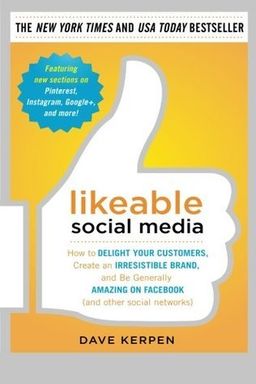
When was the last time a brand truly listened to you — not through a survey or generic email, but in real time, on the platforms where you actually spend your day? In Likeable Social Media, Dave Kerpen argues that the world of marketing has shifted forever. The megaphone-style approach of the past is dead. The companies that will thrive now are those that listen to their customers, respond authentically, tell compelling stories, and create communities that people genuinely want to be part of. In other words, they must become likeable.
Kerpen, the CEO of Likeable Media, contends that social media is the world’s largest cocktail party — a place where brands can either shine like natural conversationalists or fumble like awkward salespeople. In this digital party, being likeable isn’t just polite; it’s profitable. Customers have megaphones of their own, and their posts, comments, and reviews can make or break reputations overnight. To succeed in this environment, organizations must shift from broadcasting to conversing, from controlling the message to fostering meaningful dialogue.
The Rise of the Empowered Consumer
Kerpen opens the book with a defining story: a frustrating wait at a Las Vegas hotel. After tweeting about the long line, he receives no response from the Aria Hotel — but within minutes, a competing property, the Rio, offers a simple message of empathy: “Sorry about the bad experience, hope the rest of your stay goes well.” That single tweet results in thousands of dollars of future business. This simple gesture illustrates the core truth of the digital age: listening and humanity are the new advantage.
In the era of Facebook likes, tweets, and online reviews, Kerpen notes, a brand’s reputation no longer lives in boardrooms or ad agencies. It lives in the hands of customers who can share their unfiltered experiences with thousands of people instantly. The traditional wisdom that “a happy customer tells three friends, but an unhappy customer tells ten” no longer applies. Today’s customers can tell thousands.
Why Likeability Matters More Than Ever
The “Like Revolution,” as Kerpen calls it, radically democratized marketing. Now, anyone can amplify their voice online. What once required massive ad budgets can now be achieved through genuine relationships and remarkable service. “Likeable” companies — those that listen, respond, and engage with customers as people — are able to build enduring loyalty that no amount of advertising dollars can buy. Disney may have imagined being “the happiest place on earth,” but in the digital age, happiness is built one like, one comment, one authentic response at a time.
Kerpen emphasizes that social media is not a fad, nor is it free. It demands time, empathy, and consistent effort across an entire organization. Social platforms are not broadcast media but engagement platforms. Brands must think like guests at the party — curious, attentive, and value-adding — instead of barging in to sell something immediately. The most successful social media users understand that trust precedes transactions.
The New Marketing Playbook
Each of Kerpen’s eighteen chapters expands on a distinct yet interconnected principle — a blueprint for building a brand that customers love. It begins with Listening First: before speaking, companies must tune in to conversations already happening about their brand, industry, or customer pain points. Next comes Targeting Smarter, where Kerpen replaces the outdated “Women 25 to 54” demographic model with hypertargeting — using social profiles to reach exactly the right people. In Think and Act Like Your Customer, he reminds marketers to create content that audiences would actually want to receive, not interruptive “Look at me” ads.
Kerpen then explores how to turn early clients and employees into a loyal fan base and why responsiveness — to both good and bad feedback — is non-negotiable. Subsequent chapters expand on authenticity, transparency, storytelling, asking questions, providing free value, and integrating social media into every corner of the customer experience. The book culminates with lessons on handling mistakes gracefully, creating moments of “surprise and delight,” and making buying so effortless that selling becomes unnecessary.
“Just be likeable,” Kerpen writes in the book’s conclusion. “Treat your customers the way you’d like to be treated, and share online as if you were at a dinner party, not a trade show.”
From Selling to Storytelling
Kerpen’s approach aligns with a broader transformation in marketing thinking championed by experts like Seth Godin and Simon Sinek. It’s no longer enough to compete on price or product; now, connection and purpose define success. In a world overflowing with noise, the brands that stand out are those that tell compelling stories, invite participation, and act with integrity. As Kerpen shows through examples from his clients — from Verizon responding empathetically to customer complaints to Omaha Steaks engaging fans with “Table Talk” conversations — social media isn’t about shouting the loudest. It’s about being the most human.
Ultimately, Likeable Social Media isn’t a book about technology; it’s a manifesto about behavior. The digital transformation of communication has made conversations public and permanent. Every post, comment, and share is an opportunity to either elevate trust or erode it. The old marketing question — “How do we get people to talk about us?” — is replaced by a far more powerful one: “How can we make them want to?”
Kerpen’s answer is deceptively simple: Listen carefully. Respond generously. Share authentically. Tell great stories. And never stop being likeable. In doing so, your brand becomes more than a product — it becomes a friend worth keeping in people’s digital lives.