
Idea 1
Flourishing as Participation in Divine Love
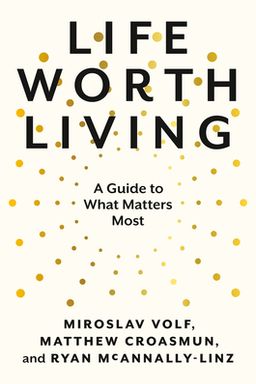
What does it mean for you to flourish as a human being—and what does theology have to do with that question? This book, drawing on Miroslav Volf, David Kelsey, Marianne Meye Thompson, and multiple interfaith voices, offers a coherent yet diverse vision: human flourishing is not just psychological well‑being or social success. It is participation in divine love—a life formed by the Triune God's self‑giving, drawn into joy, peace, justice, and beauty that radiate through all creation.
God as Love and the Trinitarian Pattern
Miroslav Volf begins with the audacious claim that God is love—not just loving. The Trinity’s mutual indwelling (perichoresis) is the template for human relationality. You flourish not by autonomy but through communion. Persons, whether divine or human, exist in openness, reciprocity, and mutual self‑gift. Thus, the telos of creation is not competition or self‑assertion but the joyful circulation of love.
Creation, then, is gift, not egoistic projection. It bears intrinsic goodness—each creature is “good for one another.” You are invited to perceive life as sacramental: to receive others, to share, and to love even when it costs. Volf’s ethics of embrace emerges from Christ’s cruciform generosity—the willingness to suffer love for enemies and to transform enmity into reconciliation. Human flourishing means being drawn into this divine movement of self‑giving, even when it requires loss or suffering.
Flourishing Beyond Well‑Being
David Kelsey warns that theology must distinguish true flourishing from secular frames of well‑being. While sociology may equate flourishing with health or autonomy, theology describes it as being caught up in God’s glory. You “flourish” as a creature beloved by God—whether or not your circumstances appear outwardly successful. Kelsey’s careful taxonomy—creation (blessing), reconciliation (liberation), and consummation (eschatological life)—maps how your life participates in divine action across time. In this view, even suffering bodies or dying infants glorify God simply by existing as divine creations.
Flourishing thus has paradoxical forms. From the standpoint of faith, your creaturely existence already manifests the divine glory; full flourishing awaits eschatological communion. Volf’s and Kelsey’s frameworks converge: God’s love provides the grammar and goal of human life, and that love refuses reduction to functional or utilitarian success.
Christ and the Kingdom as the Pattern of Life
Marianne Meye Thompson grounds this theology in the life of Jesus. In him, the Creator’s wisdom becomes flesh, and the Kingdom of God becomes tangible in healing, forgiveness, and restored community. Jesus reveals flourishing as life received, not earned—life expressed through mercy, trust, and prayer. You flourish when you love God and neighbor, when you forgive rather than judge, and when you entrust daily needs to divine care. The ethic of the Kingdom re‑centers Torah around compassion and direct dependence on God, yielding what Jesus names “abundant life.”
(Note: Thompson’s focus on the double love command parallels Volf’s Trinitarian emphasis—both make relational love the center of existence.) Flourishing becomes kingdom practice: to live prayerfully, mercifully, and communally within God’s reign here and now, anticipating new creation.
Public Faith and Intercommunal Life
Because human flourishing is relational and social, it cannot stay private. Volf and Michael Welker insist that theology must shape public life, especially in pluralistic societies. Public faith means engaging diverse moral languages to work for common goods—justice, truth, mercy—while appealing to transcendent realities that orient human practices. Nicholas Wolterstorff adds cultural texture: art and liturgy nurture shalom by enhancing ordinary life. A work song, hymn, or piece of shared beauty can lift labor into joy and turn worship into communal creation. These, too, are tangible acts of flourishing.
In a media‑saturated, politically polarized world, moral communication often falters; theology provides coherence by grounding conversation in love’s universality. Religious groups become carriers of transcendent value, checking violence and offering narratives that turn alienation into belonging.
Memory, Justice, and Reconciliation
Flourishing also depends on how you remember injury. Volf’s concept of embrace continues in his ethics of memory: remember truthfully, but aim toward reconciliation. Yet, as Nancy Bedford insists, memory cannot bypass justice or structural critique. You must remember in a way that heals without silencing; confronting racial violence, systemic exclusion, and theological “white spaces” becomes integral to any theology of peace. Flourishing communities tell the truth about harm and then choose to build new futures grounded in equity and grace.
At the horizon stands eschatological hope: in the world to come, divine mercy will heal even traumatic memory, transforming remembrance into praise. Whether, as Volf suggests, some evils will “not come to mind,” or as Thiel imagines, redeeming memory may continue eternally, the hope remains that love—and not grievance—will define eternity.
Beauty, Prayer, and Cross‑Religious Resonance
Flourishing finally reaches mystical depth in the book's engagement with Islamic and Sufi traditions. The “eye of the heart,” purified through prayer (dhikr), perceives divine beauty in all things. Beauty is not decorative—it is the fabric of reality. When the heart is purified by remembrance, you see creation as theophany: every form reveals the divine Names. Thus, to flourish is to perceive rightly, to return to the Source through love attracted by beauty. Christian mystics like Meister Eckhart echo this: detachment and re‑attachment open the soul to God’s radiance.
Reza Shah‑Kazemi’s reflections in Parisian sacred spaces, and Rav Kook’s harmony of five forces (body, culture, nation, religion, intellect), offer complementary webs of integration. Both traditions agree: health lies in balance and continuous growth. Inner harmony, communal justice, and reverence for the divine converge in holistic flourishing that unites all faiths.
Key synthesis
To flourish means to live within divine love—receiving creation as gift, relating through embrace, remembering for healing, praying for perception, and working for a world where beauty, justice, and community reflect the life of God.