
Idea 1
Craft, Collaboration, and the Making of Alinea
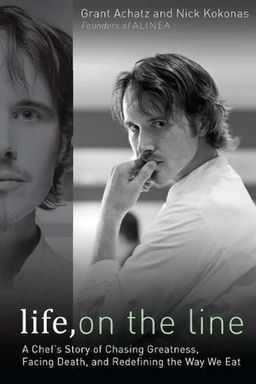
How do you reinvent dining while surviving its human and creative costs? In Life, on the Line, chef Grant Achatz and business partner Nick Kokonas trace that question from Midwestern diner to the world stage. Their story isn’t only about cooking; it’s about systems, resilience, mentorship, design, and partnership. You see how a childhood of repetition forged a craftsman, how elite mentorship at The French Laundry created rigor, and how collaborations from Trio to Alinea turned vision into execution. The through line is clear: excellence is cumulative and communal, not solitary genius.
Across its pages, you follow Achatz’s transformation—from scrubbing pans at the Achatz Family Restaurant to staging under Thomas Keller and Ferran Adrià, then rebuilding Chicago fine dining through Trio and Alinea. His journey reflects a broader evolution in modern cuisine, where science meets story and leadership becomes both technical and emotional. Kokonas’s role emphasizes that art thrives best under smart business plans and disciplined partnership.
The Roots of Craft and Standard
Achatz’s beginnings are deceptively humble: cracking eggs for Grandma in Marine City, washing dishes beside his father, and learning to run a diner by age ten. These early lessons—cleanliness as pride, consistency as performance, and work as identity—give him the habits that later define The French Laundry and Alinea. You realize that perfectionism isn’t innate; it’s trained through repetition and family standards. (Note: this echoes themes in Jiro Ono’s philosophy—craft as endless refinement rather than dramatic creativity.)
Mentorship and Mastery
Keller, Trotter, and Adrià form the creative tripod under Achatz’s growth. Keller models patience, humility, and leadership by example—showing that excellence comes from sweeping floors, not bragging about stars. Trotter demonstrates the pressure and fragility of high-end kitchens, while Adrià’s elBulli shatters the old rules of cuisine, showing food as an open lab. Each mentor gives Achatz a contrast: rigidity, raw intensity, and pure freedom. When he later balances Keller’s precision with Adrià’s invention, you see why Alinea achieves both discipline and wonder.
From Kitchen to Company
When Achatz leads Trio, he learns leadership the hard way: how to turn a limited kitchen into a functioning machine, how to train a small crew in obsessive standards, and how to translate abstract creativity into profitable service. He converts scarcity into discipline, proving that design and culture matter more than budget. That experience lays the groundwork for Alinea’s eventual success: systems, culture, and theater must unite under one vision.
The Partnership Blueprint
Kokonas enters not as an investor but as a complement. The book makes clear: chefs often lack business strategy; Nick often lacks culinary intuition. Together they build a balanced organism. From their friendship-first approach to their investor philosophy—only backers who see risk as art—their partnership defines how creative ventures can stay sustainable. Their investor packets, scented boxes, and tasting vials translate the Alinea concept into a multisensory business proposal, blending passion with credibility.
Illness, Resilience, and Reinvention
At the book’s heart stands Achatz’s confrontation with cancer—the chef who loses his sense of taste but not his sense of purpose. The crisis reveals how an organization’s culture becomes a safety net: sous chefs, partners, and investors align to keep Alinea alive. As therapy steals his voice, his team becomes his voice. When he recovers, taste returns cautiously, but imagination fully. Out of disease comes a new model: one that values resilience as much as recognition.
Core message
The book argues that culinary innovation is never solo genius—it’s built from discipline, humility, partnership, and endurance. Alinea emerges not as an endpoint but as evidence that collaboration and standards, aligned with imagination, can reinvent how the world eats.
As you read, you come to see Life, on the Line not only as a culinary memoir but as a leadership manual: about how creativity scales, how ambition must survive crisis, and how every transformation—whether professional or personal—demands both rigor and reinvention.