
Idea 1
Rediscovering the World Through the Five Senses
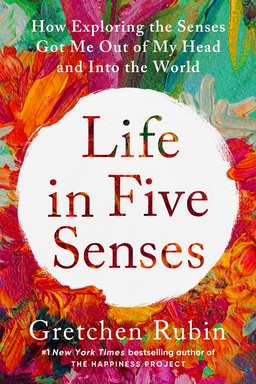
When was the last time you truly saw a sunset, heard the quiet hum of silence, or noticed the scent of freshly baked bread with full attention? In Life in Five Senses, bestselling author Gretchen Rubin invites you to reawaken your connection to the world by tuning in to what she calls our “chief inlets of the soul”: sight, hearing, smell, taste, and touch. Rubin argues that in the rush of modern life—dominated by schedules, technology, and productivity—we’ve dulled these essential pathways, living more in our heads than in our bodies. To repair this disconnection, she proposes a conscious practice of sensory awareness, one that brings joy, gratitude, and vitality back into everyday moments.
The book begins with a wake-up call: a routine eye doctor visit where Rubin learns she’s at risk of retinal detachment—a condition that could endanger her sight. Shocked into awareness, she steps out into the New York City streets and suddenly experiences everything—the city sounds, the cool air, the kale’s purple frills, and even the smell of exhaust—with explosive vividness. This moment sets her on a personal experiment to explore each of the five senses deliberately and systematically, much like she previously explored happiness and habits in The Happiness Project and Better Than Before.
The Core Argument: Grounding the Soul in the Body
Rubin’s central claim is deceptively simple: happiness, connection, and creativity ultimately depend on our senses. “We build happy lives on the foundation of self-knowledge,” she writes, and knowing ourselves requires inhabiting our bodies. It’s not enough to think our way to happiness; we must feel our way there. Our bodies, she insists, are not vessels that carry our brains—they are the very source of our life experience. The senses knit us to the physical world and to the people and moments that make life meaningful. In every page, Rubin suggests that delight and presence aren’t luxuries or spiritual bonuses—they’re accessible in the simplest acts of seeing, hearing, smelling, tasting, and touching, if only we notice them.
Five Senses, Five Gateways
Each section of the book focuses on one sense as a gateway to awareness. Through sight, she learns to truly look; through hearing, to listen; through smell, to feel memory and love; through taste, to savor life; and through touch, to connect. Rubin organizes her experiment around practical challenges—a daily visit to New York City’s Metropolitan Museum of Art, creating a personal playlist she calls her “Audio Apothecary,” taking a perfumery class, and holding taste parties comparing foods. These are not grand adventures but everyday investigations that turn the mundane into sacred observation. Her approach is methodical yet joyful, blending research, philosophy, and autobiographical storytelling in an accessible way reminiscent of Diane Ackerman’s A Natural History of the Senses.
Rubin blends scientific insight and human curiosity. She explores perception studies—such as the McGurk effect (how vision can change what we hear) and the reality of sensory adaptation (how we stop noticing ongoing sensations)—to show that perception is a joint act of body and brain. She acknowledges neurodiversity, recognizing that not everyone experiences the senses in the same way, and calls for compassion in designing “sensory environments where everyone can feel comfortable.” This awareness expands her mission from personal mindfulness to collective empathy.
The Met Experiment: Finding the Infinite in the Familiar
Perhaps Rubin’s most ambitious sensory project was her commitment to visit the Metropolitan Museum of Art every day for a year. It became a laboratory for attention. By returning to the same space again and again, she demonstrates a paradoxical truth: repetition expands, not diminishes, wonder. While novelty can trigger awe, familiarity deepens it. She likens her Met visits to recess for adults—structured pleasure that stimulates creativity. “Anything one does every day is important and imposing,” she quotes Gertrude Stein, embracing the ritual as an anchor in a restless life. It’s also a metaphor for noticing the extraordinary in the ordinary—a recurring theme throughout the book.
Each sense brings both discovery and humility. Vision teaches her to truly see her husband’s face; hearing opens her to her daughters’ laughter and the calm of silence; smell reconnects her to childhood and intimacy; taste links her to tradition and memory; and touch awakens tenderness and grounding. By the end, Rubin moves beyond experiment into transformation: she no longer sees sensory delight as optional but as essential nourishment for mind and spirit.
Why This Matters Today
Rubin’s exploration resonates in a time of digital overload. In an era when many of us feel detached from our bodies, her message challenges the tyranny of screens, multitasking, and constant mental chatter. Modern life trains us to abstract experience into metrics—steps counted, likes received, goals achieved. Rubin reminds us instead to dwell in embodied moments that resist quantification. Grounding ourselves in sensory experience, she argues, brings not only more happiness but greater empathy, creativity, and meaning. Our senses are the language through which life speaks to us; listening carefully is its own act of reverence.
If The Happiness Project was Rubin’s intellectual path to joy, Life in Five Senses is her sensual one. Together they reveal a full-circle philosophy: that happiness is not found in abstract pursuit but in concrete perception. As she experiences during her final epiphany—staring at an ordinary orange traffic cone glowing with transcendent beauty—the sublime is hidden in plain sight. All we have to do, she concludes, is look, look, look.