
Idea 1
The Empire of Google and the New Digital Order
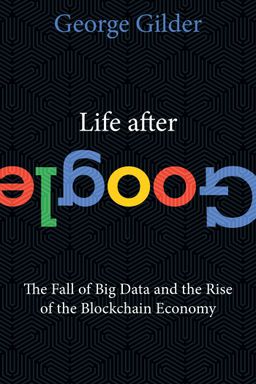
What happens when a search company becomes the architect of human knowledge? George Gilder’s Life After Google argues that Google is not merely a corporation but a worldview, a self-contained "system of the world" designed to define truth, money, and morality through algorithms. Like Newton’s mechanics or the gold standard before it, Google’s ethos rests on the belief that enough data and processing power can model – and thus master – all reality.
Google’s Vision: A World Made of Data
Larry Page and Sergey Brin envisioned a mirror-world, where every fact, photo, map, and video could be indexed and made searchable through PageRank and machine learning. Their intellectual premise: information is ultimate reality, and statistical computation can replace human interpretation. The company’s datacenters—massive “Siren Servers” like The Dalles in Oregon—materialize this doctrine, storing exabytes of personal and world data connected through fiber optics and cloud architectures.
(Note: Gilder borrows “Siren Servers” from Jaron Lanier to describe the allure and danger of centralizing intelligence within data farms.) This architecture creates immense convenience—your Gmail, Maps, YouTube, and Android devices—but also a dependency: all users, queries, and transactions become inputs for Google’s predictive algorithms.
The Moral Economics of “Free”
Gilder reveals that Google’s economic model flows directly from its epistemology. If knowledge thrives by absorbing data, access must be free. Thus, every tool—search, email, documents, even cafeterias—becomes complimentary, while advertisers pay for the insights gleaned from collective behavior. You think you are a customer, but in reality, you are the product: your clicks, preferences, and time are sold to advertisers.
This model comes at a price. Free erodes pricing signals and incentives for security, because revenue depends not on service reliability but on scale and surveillance. As Apple’s ad-blockers and Amazon’s rise in commerce demonstrate, even small disruptions threaten Google’s delicate ad-based equilibrium. The zero-price illusion masks time theft: what you spend is your attention, the ultimate scarce resource.
Centralization and Its Discontents
By concentrating information and computation in remote servers, Google has created both a marvel of engineering and a moral hazard. Datacenter design (supercooled racks optimized for latency via costly RAM and hydropower) produces immense speed but also single points of failure. Each data hub becomes a surveillance node and potential target. Gilder calls this the “flat universe” fallacy: the idea that intelligence and morality can be reduced to computation, erasing the interpretive role of human minds.
This philosophical critique extends to artificial intelligence and the modern cult of the Singularity. Machines, Gilder reminds you, cannot be conscious; they lack the interpretant, the self-referential capacity that Charles Peirce, Alan Turing, and Kurt Gödel identified as distinct to human understanding. AI may play chess or identify cats in photos faster than you, but it cannot produce meaning or morality.
The Seeds of the Next Revolution
Gilder concludes that Google’s architecture, although magnificent, is destined for crisis. Its dependence on free services, central infrastructure, and data extraction creates technical and ethical fragility. Just as Newton’s mechanical universe gave way to Einstein’s relativity, the centralized “Googleverse” will give way to a decentralized “cryptocosm.”
The upcoming transformation centers on cryptography, blockchain, and distributed systems that restore human agency, property, and time. Where Google amassed data in single databases, the cryptocosm disperses it. Where Google owned your identity, you will hold your private keys. And where “free” eroded responsibility, priced exchanges and cryptographic proof will reintroduce value, trust, and dignity into digital life. This vision—part technical, part moral—sets the stage for the new Internet Gilder predicts throughout Life After Google.