
Idea 1
Leviathan and the Architecture of Human Order
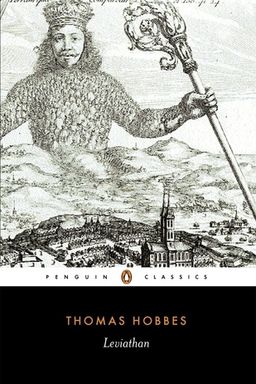
How do you turn a crowd of fearful, self-interested individuals into a peaceful society? In Leviathan, Thomas Hobbes answers by constructing a radically modern vision of political order. He argues that security and civilization require an artificial sovereign power—a created “mortal god”—that channels human passions away from mutual destruction into structured cooperation. His entire argument traces how psychology, language, reason, and divine authority feed into one overriding need: order.
Human nature and the condition of war
You begin with Hobbes’s austere psychology. Sense is mechanical, imagination is decaying sensation, and reason is a skilled computation of names. From these simple motions arise the passions—hope, fear, pride, glory—that drive self-preservation and rivalry. Because people are roughly equal in vulnerability (“the weakest has strength enough to kill the strongest”), equality breeds insecurity. Fear, competition, and quest for reputation generate conflict. Without a common power, you live in a state of nature—a logical, not historical, condition—in which everyone has reason to suspect everyone else. It doesn’t require constant war; rather, the perpetual possibility of attack creates an atmosphere of war, much like threatening weather before a storm.
From natural rights to the laws of nature
To escape pervasive insecurity, Hobbes draws a careful distinction between the Right of Nature—your liberty to use any means for survival—and the Laws of Nature—rules discovered by reason for peaceful preservation. People have natural right to any action that protects them, including violence, but reason advises restraint and cooperation. The first law of nature: seek peace. The second: lay down your rights when others will too, through mutual covenant. The third: keep covenants once made. These laws guide the mind toward stability, but they fail without enforcement because “in foro externo” behavior rarely obeys conscience alone. Hence, reason requires creating a sovereign capable of punishment and reward.
Creating the Leviathan
In Chapter XVII Hobbes presents the act of creation: individuals in fear of death covenant with one another to surrender their private judgment and authorize one person or assembly to represent them. This act produces a civil person—the Leviathan. The sovereign is not a party to the covenant but its product, bearing all collective authority. Whether acquired by institution (agreement) or conquest, sovereignty holds the same essence: unity of command. Hobbes compares it to constructing an artificial man, with reason as soul and laws as ligaments. Peace, law, and religion depend on this artifice. Without it, fear and honour revert men to chaos.
Speech, definition, and error
Hobbes devotes early chapters to language because words regulate thought. Improper definitions breed absurdity—he lists seven kinds of linguistic errors, from bad definitions to rhetorical tropes. When public meanings diverge, factions arise. Political salvation therefore requires clarity of speech and centralized interpretation, which later justifies the sovereign’s authority over doctrine and education. (Note: Hobbes’s concern with linguistic precision anticipates modern political communication theory.)
Religion and divine authority within politics
Hobbes integrates theology into civil power. He reinterprets Scripture and miracles through political lenses: revelation binds only when publicly authorized. Prophets are validated not by private inspiration, but by conformity to law and fulfilled predictions. Christian sovereigns become supreme pastors who govern religion as part of peacekeeping. Civil law determines what counts as Holy Scripture, canonical authority, and church discipline. Even excommunication, baptism, or binding and loosing operate originally as communal persuasion, not coercion, until backed by civil force.
The economic and judicial dimensions of the Commonwealth
The Leviathan also eats: Hobbes compares money to blood and trade to nutrition. Sovereigns must regulate property, currency, and colonies to sustain the body politic’s circulation. Judges, ambassadors, and ministers act as its organs; their authority derives from the sovereign’s will. Civil law replaces subjective conscience as rule: law is command, not reason in abstraction. Judges apply, not create, law—ensuring consistency while avoiding faction.
Punishment, reward, and protection
The Leviathan’s nerves are coercion and recompense. Punishment—inflicted evil by public authority after judgment—maintains obedience. Reward—salary or grace—cultivates virtue and service. Both rest on the natural transfer of right from individuals to the sovereign. Yet Hobbes places limits: self-defence cannot be surrendered, punishment cannot be arbitrary, and civil peace must align with natural law’s demand for preservation. His realism lies not in cruelty but in his insistence that justice without power is impotent.
Faith, superstition, and the darkness of ignorance
Hobbes ends with theology’s reform. True faith is simple—believing “Jesus is the Christ” and repenting sincerely. Superstition, elaborate metaphysics, and hierarchical clerical power breed what Hobbes calls the “Kingdom of Darkness”: human constructions that exploit fear through ambiguous language and imaginary demons. He dissects ritual enchantments, indulgences, and scholastic forms to expose their political intent—control through confusion. His cure is light: clear reasoning, defined words, and civil regulation.
Taken together, Hobbes’s Leviathan constructs a unified science of human order. Psychology, language, civil law, economy, theology—all converge on one structural insight: peace is an artificial product. You make it by covenant, sustain it through centralized power, and preserve it by clarity of speech and limits on pretended spiritual sovereignty. In Hobbes’s world, liberty begins where protection is guaranteed, and protection requires the mortal god of the commonwealth.