
Idea 1
Becoming More Than an Athlete: The Life Lessons of Chris Bosh
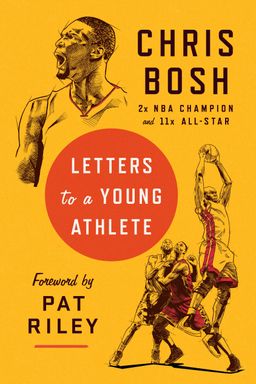
What does it really take to succeed—not just in sports, but in life? In his book Letters to a Young Athlete, two-time NBA champion Chris Bosh offers an answer drawn from his own extraordinary rise, fall, and rebirth. Through twelve letters written as heartfelt mentorship, Bosh reveals that greatness comes from mastering not just the game, but yourself. More than a guide to basketball, it’s a guide to becoming a complete, thoughtful, resilient person.
Bosh argues that sports are a metaphor for everything: discipline, teamwork, focus, leadership, and humility. Every story—from his teen workouts in the Texas heat to his championships with LeBron James and Dwyane Wade—carries a universal message. He contends that true success isn’t about fame or fortune; it’s about character, mindset, and consistent effort. As Pat Riley writes in the foreword, Bosh’s career and philosophy embody the rare balance between competitiveness and compassion that defines a leader.
The Athlete’s Inner Struggle
Bosh opens by talking directly to young athletes overwhelmed by voices—coaches, parents, social media, and, most dangerously, their own internal critics. He notes that the hardest battle is fought in the mind. He recalls his own doubts as a teenager and even later as an NBA All-Star when injuries and criticism nearly derailed him. Bosh’s clarity is rooted in hard-earned humility: he has lived both the triumph and heartbreak of athletic life. The central challenge, he says, is to choose the right voice to listen to—the one grounded in purpose, patience, and love for the game.
Beyond Trophies and Stats
In one of the book’s most powerful insights, Bosh dismantles the obsession with external validation. He urges you to find a deeper motivation—your why—that can survive losses, critics, and even the end of a career. His own journey—from fame in Toronto to sacrifice in Miami, and later to forced retirement after a life-threatening blood clot—offers proof that external success can vanish in an instant. What endures is inner purpose: playing for joy, for growth, and for the team. He writes, “The name on the front of the jersey is what counts.”
Like Simon Sinek in Start with Why, Bosh shows that meaning fuels excellence. When your purpose is love of the craft rather than money or attention, setbacks become lessons. When your motivation is integrity, you’re free to enjoy the struggle. That’s why he compares athletes to poets and musicians who create not for applause, but for expression.
The Mental Game: Endurance, Ego, and Mindset
A recurring theme is that greatness begins where comfort ends. Bosh recounts his early dread of wind sprints and unforgiving practices, explaining how true toughness is built not in games but in rehearsing through exhaustion. Inspired by Navy SEAL-turned-ultrarunner David Goggins’s idea that when you think you’re done, you’ve only reached 40% of your capacity, he learned to ignore the brain’s false limits. “Pain is temporary; glory is forever,” he declares, echoing Muhammad Ali. But it’s not just physical effort—mental conditioning is equally vital. Being a “student-athlete,” Bosh argues, means cultivating curiosity and emotional intelligence along with muscle memory.
He extends this view by warning against the ego—the inner saboteur that masks insecurity as arrogance. Drawing from his own mistakes in the 2006 World Championship, where frustration over minutes turned him self-centered, he illustrates how ego destroys teams. Later, as part of Miami’s “Big Three,” he found liberation in humility: sacrificing stats to help his teammates shine. True pride, he learned, comes from playing your role perfectly, however small. It’s this discipline that transformed him from a star in Toronto to a champion in Miami.
From the Court to Life
Bosh’s letters are also a roadmap for life beyond sports. He treats topics like communication, leadership, and self-care as universal disciplines. He describes LeBron’s meticulous stretching routine and Tom Brady’s obsessive diet as examples of respecting your instrument—your body. He tells young readers that the same precision they bring to their gameplay will serve them in building relationships, managing emotions, and facing transitions. When a career-ending illness struck, it was his ability to apply these lessons—resilience, perspective, gratitude—that saved him from despair.
Ultimately, Letters to a Young Athlete is Bosh’s argument that sports are spiritual training grounds for life. The scoreboard resets, the crowd forgets, but what persists are the habits of excellence, humility, and persistence. His message extends far beyond basketball: find what you love, commit to the process, treat both triumph and disaster as impostors, and never let the last game catch you unprepared. With echoes of John Wooden’s belief that “what you are as a person is far more important than what you are as a basketball player,” Bosh’s wisdom is both deeply human and quietly revolutionary.