
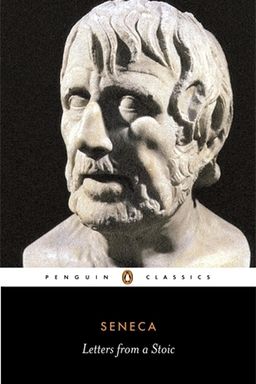
Letters from a Stoic cover

Letters from a Stoic

by Seneca

Explore the timeless wisdom of Seneca in Letters from a Stoic, where philosophy meets practical advice for living a fulfilling life. Discover how to align with nature, cultivate inner peace, and overcome life''s challenges.

The Stoic Path to Freedom and Serenity

What would it feel like to live without fear—of death, loss, or misfortune? In Letters from a Stoic, the Roman philosopher Lucius Annaeus Seneca argues that the key to freedom lies within ourselves, in the mastery of our own minds. Writing in the first century AD to his friend Lucilius, Seneca distills Stoic philosophy into practical lessons for living wisely, enduring hardship, and cultivating inner peace in a chaotic world.

Seneca contends that happiness and moral strength can be achieved by turning inward rather than outward. Wealth, fame, and pleasure are mere distractions from the pursuit of wisdom. It is philosophy—not fortune—that teaches us how to live well and die bravely. His letters, written as if to a friend but addressed to anyone seeking serenity, blend reflection, moral instruction, and vivid anecdotes from Roman life into a guide for every age.

Philosophy as the Practice of Living

For Seneca, philosophy is not an academic pursuit but an everyday discipline. It is, he writes, 'a guide to conduct, not a trick of words.' True philosophy is medicine for the soul—a therapy meant to heal our passions, fears, and illusions. Like Marcus Aurelius a century later, Seneca sees philosophy as a practical art of living in tune with nature and reason. It teaches you to discern between what you can and cannot control, to act virtuously, and to find peace within the limits of fate. In his view, merely reading philosophies without applying them is like endlessly preparing to live without ever beginning to do so.

Living According to Nature and Reason

Central to Seneca’s Stoicism is the idea of living according to nature—that is, according to reason and the order of the universe. To live well, you must align your will with nature’s rational design. Since fate governs all external events, human freedom lies in the choice of how to respond. The wise person accepts fortune’s gifts and blows alike with equanimity. Whether struck by poverty, exile, or illness, the Stoic remains unshaken, recognizing that external losses cannot touch the inner citadel of virtue. 'It is not the man who has too little who is poor, but the one who hankers after more,' Seneca writes.

Friendship, Self-Reflection, and the Inner Life

The letters are framed as moral correspondence to a younger friend, but their intimacy invites you to reflect on your own life. Seneca urges Lucilius to cultivate true friendship, founded not on advantage but on shared virtue and trust. He distinguishes between the popular sense of 'friends'—people who flatter us—and the Stoic sense, where friendship is a mirror for self-knowledge. Daily self-examination, he insists, is the Stoic’s most powerful tool: each night, review your thoughts and actions, noting where you fell short and resolving to improve. This routine builds the moral awareness and consistency that free us from inner turmoil.

Wealth, Pleasure, and Detachment

Seneca’s own wealth as a statesman and advisor to Emperor Nero has often drawn criticism, yet his letters show a man struggling to reconcile prosperity with virtue. He acknowledges that riches are permissible if they serve reason, not luxury. 'Philosophy does not call for penance,' he reminds us, 'but for simple living.' The Stoic does not reject wealth but remains indifferent to it—ready to lose everything without loss of character. Pleasure, similarly, is not evil but dangerous when it enslaves the will. Seneca compares pleasure to a powerful beast that must be kept on a short leash, lest it become your master.

Facing Death and Fortune with Courage

Stoicism’s power shines brightest in its approach to death. To Seneca, death is nothing fearful—it is nature’s release, as natural as birth. 'Rehearse death,' he advises; 'to practice dying is to practice freedom.' By contemplating mortality, you learn to value each day and to stop postponing life. The key is not to seek length of days but fullness of living. This calm acceptance of death mirrors Seneca’s own end, described by the historian Tacitus—composed, philosophical, and deliberate. His life becomes the ultimate expression of his written philosophy: that the good life is one lived in harmony with reason, untroubled by fear or desire.

Why It Matters Now

In an anxious, overstimulated age, Seneca’s counsel feels strikingly modern. His portraits of the Roman elite—restless, distracted, and seeking meaning in excess—could describe our own lives of constant motion and consumption. His remedy is still radical: simplify, reflect, master yourself, and live deliberately. Letters from a Stoic is not a call to withdraw from the world but to transform your presence in it through inner order. By understanding what depends on you and what does not, you can find serenity under any circumstances. The Stoic path, Seneca shows, is not about hardening the heart—it is about liberating it.


Philosophy as a Way of Life

To Seneca, philosophy is the art of living, not a subject to be studied in leisure. He repeatedly tells Lucilius that wisdom must manifest in action: 'Philosophy teaches us to act, not to talk.' It is worthless to discuss virtue in words if your life contradicts your teachings. For him, philosophy is a moral discipline designed to transform the soul, much like medicine heals the body. As he puts it, 'Philosophy moulds and builds the personality, orders one’s life, regulates one’s conduct, and shows one what one should do and what one should leave undone.'

The Doctor of the Soul

Seneca views the philosopher as a spiritual doctor. People are ill not from bodily weakness but from mental confusion—possessed by greed, anger, or fear. The teacher’s role is to diagnose these diseases and prescribe daily remedies: reflection, restraint, humility, and courage. In Letter XVI, he writes, 'No one can live a happy life, or even one that is bearable, without the pursuit of wisdom.' Philosophy becomes a continuous therapy of the mind, one that must be practiced every day, for the corruption of the mind is continual too.

Against Empty Learning

Seneca lashes out against those who study merely to improve their eloquence or reputation, calling them 'collectors of knowledge useless for life.' In Letter LXXXVIII, he claims that only philosophy—not geometry, rhetoric, or music—can teach how to live well. Liberal arts may refine the intellect, but only moral insight can heal the soul. True study is not to know many things, but to know what matters. This rejection of sterile scholarship anticipates Montaigne’s later motto: 'To study philosophy is to learn how to die.'

Learning to Live, Not Just to Know

Philosophy, in Seneca’s sense, is accessible to everyone, not confined to schools or books. Wisdom comes from meditation, conversation, and everyday trials. His letters themselves model this: they turn philosophy into a living dialogue rather than a dry system. By recounting his own struggles—with fatigue, temper, and fear—he offers an example of progress rather than perfection. His humility—'I am not a wise man, only a lover of wisdom'—makes Stoicism a journey of continual self-reform. (In this, he resembles Epictetus, who later framed philosophy as “a training for life,” not an academic exercise.)

For you, Seneca suggests, philosophy is a daily apprenticeship in mindfulness and moral strength. It is not about retreating from the world but facing it with armor forged from clarity and self-command. If practiced sincerely, it becomes not a theory but a habit—an inner rhythm that guides how you think, choose, and endure.


The Discipline of the Mind

Seneca insists that freedom begins in mastering your thoughts. 'To be everywhere is to be nowhere,' he warns Lucilius in the second letter, urging him to stay with a few authors and ideas long enough to absorb them. Constant distraction, whether in reading, travel, or social life, signals a restless and untrained mind. The Stoic mind, by contrast, is focused, calm, and self-possessed—it lives in the present moment and does not depend on fortune’s changes for its peace.

Training Inner Stillness

Seneca compares mental discipline to bodily strength: both require steady training and moderation. In Letter LVI, he tells of lodging above a noisy Roman bathhouse where the constant shouts of athletes, hawkers, and bathers reach his ears. Yet he learns to ignore the din, realizing that true quiet must come from within: 'It can be bedlam outside without disturbing you, so long as there is no commotion within.' This passage captures his conviction that peace is an internal condition, independent of surroundings.

Guarding Against Fear and Desire

The human mind, Seneca explains, is most enslaved by two impulses—fear of what may happen, and desire for what may not. Both pull us out of the present and into anxiety. His remedy is rational clarity: distinguish what lies within your control—your judgments, choices, and values—from what does not—health, wealth, others’ actions. This dichotomy, later developed by Epictetus, anchors Stoic resilience. 'Cease to hope,' Seneca writes, 'and you will cease to fear.' Hope and fear, twins of the anxious mind, vanish when you accept the moment as enough.

Meditation and Nightly Self-Examination

Every evening, Seneca reviews his thoughts like a judge of his own soul: 'When the light has been taken away and my wife has fallen silent, I examine my entire day.' This habit of mental auditing—examining what you did well or poorly—creates self-mastery and peace of conscience. You, too, can practice this nightly discipline: it transforms philosophy from theory into transformation. The disciplined mind, free of turmoil, becomes the seat of freedom itself—impervious to chance, unafraid of the unknown, and content with itself.


Friendship and Human Fellowship

While Stoicism is often viewed as austere, Seneca’s vision of it is deeply human. He celebrates friendship not as an indulgence but as a moral partnership. In Letter IX, he contends that even the wise man, who is self-sufficient, still desires friends—not for advantage but to practice virtue. ‘If you wish to be loved,’ he quotes Hecato, ‘love.’ True friendship, for him, reflects cosmic kinship: just as all humans share the divine spark, friends share a commitment to what is noble.

The Test of True Friendship

Seneca warns against mistaking convenience for friendship. A friend is not someone who flatters or serves your purposes but one whom you trust 'as you would yourself.' Letter III offers practical advice: test a potential friend carefully before trusting him, but once trust is granted, share all. Suspicion poisons relationships, while unguarded openness before trust is folly. Friendship thus becomes an extension of moral integrity: it cannot exist without loyalty, judgment, and faith in character.

Living for Others, Not Just Oneself

Stoic fellowship extends beyond private friends to all humanity. Seneca reminds Lucilius that we are part of a universal community, 'limbs of one body.' Helping others, forgiving enemies, and showing mercy are all expressions of our shared divine nature. He argues that philosophy’s first promise is not isolation but belonging—the feeling of partnership with mankind. (This anticipates later Christian ethics and even modern humanism.)

In Letter XLVII, Seneca goes further, denouncing cruelty toward slaves and insisting on their equal humanity: 'They are slaves? No, they are human beings. They are our fellow-slaves if you once reflect that fortune has as much power over us as over them.' His words blaze with moral clarity centuries ahead of their time. For Seneca, kindness is not weakness but strength—the mark of a soul aligned with reason and nature.


Facing Death and Misfortune

In a world wracked by plague, corruption, and tyranny, Seneca found in Stoicism not escape but courage. His letters repeatedly urge Lucilius to 'rehearse death'—a phrase that might sound grim until you understand its aim. To practice dying is to prepare for living rightly. When you reflect daily on mortality, the fear of loss vanishes and gratitude takes its place.

Understanding Death

Death, Seneca insists, is no evil. In Letter LIV, writing after an asthma attack that nearly killed him, he jokes that the disease is merely 'rehearsing death' for him. To fear what is natural is to rebel against nature. If death simply ends pain and illusion, it cannot harm the wise man. He compares life and death to waking and sleeping—both parts of nature’s rhythm. Thus, courage lies in acceptance, not defiance: 'We are born for life’s hardship, not its ease.'

Responding to Fortune’s Blows

Fire, exile, poverty—such disasters struck Seneca’s contemporaries frequently. In Letter XCI, responding to the destruction of Lyons by fire, he urges resilience: nothing that fortune gives is truly ours. Even cities, he reminds us, perish by the same laws that govern nature’s cycles. The wise person accepts reversals as inevitable, meeting them not with complaint but with renewed courage. This resilience is not numbness but moral strength: misfortune is the training ground of the soul. (Viktor Frankl’s Man’s Search for Meaning later echoed this view that suffering, rightly borne, reveals one’s freedom.)

Freedom Through Acceptance

In a striking image, Seneca declares, 'Fate leads the willing and drags the unwilling.' To live well is to consent to what happens as if you had chosen it. The more you resist, the more you suffer. When you yield to nature’s law, you discover freedom—not the freedom to change events, but the freedom to become superior to them. Seneca’s own death, calmly endured under Nero’s orders, confirms the doctrine he preached: that a philosopher’s task is not to escape life’s pain, but to transform it into peace.


Simplicity, Moderation, and the Good Life

Seneca’s version of the good life is radically simple. Happiness does not come from accumulation but from alignment with virtue. In Letter XVIII, set during the Roman festival of Saturnalia, he tells Lucilius to take part moderately—without indulgence but without disdain. 'Philosophy calls for simple living, not for doing penance,' he writes. The rule of life should be harmony between the ideal and the ordinary—living better, not differently, from the crowd.

Learning to Desire Less

Seneca prescribes periodic self-imposed poverty: eating coarse bread, wearing rough clothing, and sleeping on the floor. This Stoic exercise builds strength against fear of deprivation. 'What is the worst that can happen?' he asks. 'You will discover that the things you dread are hardly hardships at all.' Such voluntary simplicity makes gratitude possible. Once you know you can survive on little, everything you have feels abundant. Modern minimalists echo this insight: by mastering our desires, we reclaim our freedom from consumer slavery.

Wealth as a Test of Character

Though rich himself, Seneca never equates wealth with virtue. In Letter V, he cautions against the ostentation of philosophers who parade their poverty like a costume. Moderation, not extremism, is the Stoic hallmark. It is as foolish to despise gold as to worship it. What matters is inner disposition: be able to treat your silver as clay and your clay as silver. The truly great man, he says, 'treats his earthenware as if it were silver, and his silver as if it were earthenware.'

For Seneca, balance is the secret of joy. To want nothing is divine; to need little is almost so. The art of living well is the art of learning when to stop—when enough is, finally, enough. This is the peace that riches cannot buy and death cannot steal.


Freedom Through Self-Command

In Seneca’s Stoicism, freedom is not political or material—it is moral. The slave can be freer than his master if he lives by reason. The master, enslaved by greed or anger, is in chains of his own making. Freedom comes from mastery over the passions, over the turbulent impulses that make you a captive of circumstance. In Letter VIII, Seneca writes, 'To win true freedom you must be a slave to philosophy.' This paradox captures the Stoic belief that discipline is the gateway to liberation.

The Bondage of the Passions

Passions—anger, lust, envy—enslave the soul by overriding reason. No external tyrant can harm you more than your own ungoverned mind. Seneca devotes several essays to De Ira (On Anger), showing that retaliation only worsens injury. The wise person delays reaction until judgment returns. 'It is easier to exclude harmful passions than to rule them.' For him, anger is a brief madness, while forgiveness is reason’s triumph.

Freedom from Fear

Fear, likewise, shrinks the soul. To be free, you must fear only yourself—your own weakness, not external threats. In Letter XXVI, Seneca argues that the man who has learned to die cannot be enslaved. Death breaks every chain. To ‘rehearse’ it daily—imagining its arrival without dread—is to dissolve its power. The Stoic sage thus lives in serene readiness, neither clinging to life nor fleeing it.

The Power of Inner Kingship

Seneca redefines kingship as self-rule: 'Only the wise man is free, only the wise man is king.' His ideal of inner sovereignty influenced later thinkers from Augustine to Emerson. Freedom is not granted by laws or fortune but achieved through self-command. The less you depend on externals, the less the world can touch you. To live freely, you must submit to reason, which alone can make a man master of himself—and thus, in Seneca’s Stoic sense, equal to the gods.

Dig Deeper

Get personalized prompts to apply these lessons to your life and deepen your understanding.

Go Deeper

Get the Full Experience

Download Insight Books for AI-powered reflections, quizzes, and more.