
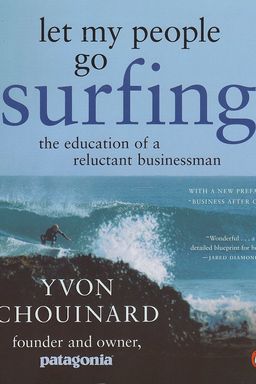
Let My People Go Surfing cover

Let My People Go Surfing

by Yvon Chouinard

Let My People Go Surfing uncovers the remarkable journey of Patagonia and its founder, Yvon Chouinard. Explore how this outdoor gear company defies traditional business practices by prioritizing environmental sustainability, fostering a unique workplace culture, and maintaining a steadfast commitment to innovative, authentic marketing.

The Education of a Reluctant Businessman

What would happen if business put the planet before profit? In Let My People Go Surfing, Yvon Chouinard—the climber, blacksmith, and founder of Patagonia—challenges the very foundation of modern capitalism. He argues that a company can make money and still protect the environment, proving that business can be a tool for good rather than a source of destruction.

Chouinard’s story is one of paradox: he began as a rebellious outdoorsman who despised corporate culture yet ended up building one of the most admired and ethical companies in the world. The book combines memoir, philosophy, and manifesto, presenting an alternative model for capitalism that balances financial success with human and environmental responsibility. It’s not just a history of Patagonia—it’s a guide for how to lead, design, build, and live more consciously.

A Company Born from the Wilderness

The story begins with a young Yvon Chouinard forging climbing tools in his backyard forge and selling them out of his car. He and his dirtbag friends lived to climb, surf, and explore—earning just enough to fund their next adventure. Business, to him, was a necessary evil to support a life outdoors. Yet as Chouinard watched the environmental impact of climbing—damage caused by steel pitons—he realized that his products were harming the very rocks he loved. This awakening led him to redesign his gear around principles of sustainability, a small but radical idea that would later blossom into Patagonia’s business ethos.

Redefining Business as Experiment

Chouinard describes Patagonia as an experiment—an ongoing attempt to test whether a business could thrive without succumbing to greed, waste, and mindless growth. He and his wife Malinda focused on three interwoven goals: make the best product, cause no unnecessary harm, and use business to inspire and implement solutions to the environmental crisis. This mission would guide every decision, from materials selection and product design to the way they treated employees. The book’s narrative tracks Patagonia’s path through near-bankruptcy, explosive growth, and deep introspection, showing how sticking to values created not only a profitable company but also a loyal global movement.

Philosophy as Corporate Compass

Each chapter lays out one of Patagonia’s guiding philosophies—on product design, production, distribution, management, finance, and the environment. Together, these serve as a kind of corporate compass. The goal is not perfection but awareness: to examine every step of a company’s life, acknowledge its costs, and continuously evolve toward sustainability. Chouinard paints a vivid picture of how businesses can act like ecosystems, where every function—designers, suppliers, customers, and employees—must work together to ensure the health of the whole.

Why It Matters Today

At its core, Let My People Go Surfing poses a challenge: in a time of environmental collapse and corporate excess, can we create businesses that last a century, not just a fiscal quarter? Chouinard urges each of us to rethink what it means to lead a good life—and to buy, make, and work in ways that respect both people and the planet. His story bridges adventure and activism, showing how even reluctant businesspeople can turn companies into agents of change.

In the pages that follow, you’ll discover how Patagonia reinvented product design, built a culture of freedom and trust (“let my people go surfing”), pioneered environmental accountability, and introduced the now-famous 1% for the Planet movement. Chouinard doesn’t claim to have all the answers—but he offers a blueprint for anyone seeking to align purpose with profit, work with joy, and leave the world better than they found it.


From Blacksmith to Patagonia: A Life in Motion

Yvon Chouinard’s journey from a scrappy Californian climber to the founder of a global ethical brand is more than a business story—it’s a moral awakening shaped by adventure, failure, and curiosity. His background as a craftsman forged his obsession with durability, and his love of wild places seeded Patagonia’s most enduring value: respect for nature above all else.

Forging Values at the Anvil

In the 1950s, Chouinard learned blacksmithing by trial and error. He began crafting climbing hardware that was lighter, stronger, and reusable—a reflection of his minimalist approach to the outdoors. Climbing taught him something business often forgets: inefficiency can be deadly. Every extra ounce or compromised tool could cost a life. This perspective shaped Patagonia’s philosophy of “simplicity, utility, and durability”—values that would later guide its entire product line.

When Passion Turned to Enterprise

By 1970, Chouinard Equipment had become the largest climbing hardware supplier in the United States. But as he noticed the environmental damage caused by repeated use of his metal pitons, he faced a moral dilemma: continue profiting or act to preserve nature. The decision to abandon his best-selling product line in favor of “clean climbing” hardware—removable chocks and hexentrics—was an early example of Patagonia’s willingness to sacrifice revenue for responsibility. The shift signaled a new era: innovation guided by ethics.

Birth of Patagonia and the Rise of Ethical Design

In the 1970s, Chouinard expanded from gear to clothing, inspired by a brightly colored Scottish rugby shirt he wore while climbing. This single design became a cult hit, laying the foundation for Patagonia. Yet, his journey was far from smooth: supply failures, near financial collapse, and growing pains forced him to learn business “on the fly.” The turning point came when his team embraced the idea that work and play shouldn’t be separate. Employees could surf when the waves were good—as long as the work got done. This unconventional freedom built a passionate company culture that still defines Patagonia today.

Chouinard’s path from reluctant businessman to leader in sustainable enterprise proves that success isn’t about mastering spreadsheets—it’s about mastering integrity. You don’t have to love business to run one well; you just have to love what you’re trying to protect.


Designing for Function, Longevity, and Simplicity

Patagonia’s design philosophy—“make the best product, cause no unnecessary harm”—is as much environmental creed as it is design strategy. For Chouinard, good design begins with humility before nature: a product should serve a real human need, waste no material, and last as long as possible.

Form Follows Function

Every Patagonia product starts with a question: What is it for? The answer dictates the materials, patterns, and even colors chosen. From alpine shells to surf shorts, designs prioritize functionality before aesthetics. Chouinard compares this to mountaineering—an activity where beauty emerges from efficiency, not ornamentation. This approach echoes Dieter Rams’ principle of “as little design as possible,” seen in Braun’s clean minimalism.

Durability as Activism

Durability, for Chouinard, is both an ethical and environmental mandate. The longer a jacket lasts, the less waste you generate. Patagonia tests every component—from zippers to stitching—until the weakest part shows. The goal is balanced endurance where no piece fails prematurely. This belief even birthed the “Worn Wear” program decades later, encouraging customers to repair and reuse gear rather than replace it. “The poor can’t afford to buy cheap goods,” Chouinard notes—a reminder that true quality saves both money and the planet.

Simplicity as Elegance

In design, complexity often masks confusion. Patagonia follows the Zen rule: reduce until nothing can be removed without compromising function. Chouinard despised needless features, likening overdesigned products to the tail-finned Cadillacs of the 1960s—flashy yet useless. Instead, he prizes simplicity, stating that “perfection is achieved not when there is nothing more to add, but when there is nothing more to take away.” This focus makes Patagonia’s gear timeless, resisting the churn of fashion trends. It’s a design lesson for anyone—whether you’re making clothes, writing code, or building a life: simplicity is the ultimate sophistication.


Building an Employee Culture of Freedom and Trust

Patagonia’s internal culture is as legendary as its products. Chouinard’s management philosophy—summed up by the phrase “Let my people go surfing”—created a workplace rooted in flexibility, autonomy, and genuine enjoyment. He believes work should feel like play, not punishment.

Work–Life Integration, Not Balance

For Chouinard, the divide between work and life is artificial. He encouraged employees to surf when the swell was good or leave early for a powder day in the mountains. This trust-based approach empowered workers to deliver high-quality results because they wanted to, not because they feared reprimand. The idea predated modern “flex work” policies by decades. Patagonia’s office in Ventura even includes an on-site child care center—a rare move in the 1980s—showing that caring for families is part of productive work life, not separate from it.

The Power of Values-Aligned Hiring

Patagonia looks for “dirtbags with discipline”—people passionate about outdoor sports and environmental causes. The company doesn’t just fill positions; it builds a tribe around shared purpose. Chouinard insists that employees who love what the company stands for need less management. This decentralized structure cultivates creativity and accountability—two traits sorely lacking in most corporate environments.

Trust as a Management Tool

Instead of rigid hierarchies, Patagonia operates on transparency and communication. There are no private offices; executives sit beside junior staff. Chouinard jokingly calls his leadership style “management by absence”—he prefers surfboards to boardrooms—but in truth, his absence empowers others to lead. The result is a company of self-reliant adventurers who see work as an extension of their values. As modern behavioral science (see Daniel Pink’s Drive) later confirmed, autonomy and purpose—not control—produce the highest motivation.


Reimagining Capitalism: Finance with a Conscience

Most businesses chase profit at all costs; Patagonia sees profit as the reward for doing everything else right. Chouinard’s financial philosophy flips traditional capitalism on its head. At Patagonia, money is a tool for mission—not the mission itself.

Natural Growth, Not Endless Expansion

After weathering a financial crisis in 1991, Chouinard vowed never again to let growth outpace values. He adopted what he calls “natural growth”—expanding only when demand and resources allow. The focus is on long-term stewardship, not short-term gain. As he puts it, “We want to be the best company, not the biggest.” This perspective defies Wall Street logic but ensures Patagonia remains independent, resilient, and mission-driven.

Sustainability as the Real Bottom Line

Every dollar is weighed against its ecological impact. Chouinard describes Patagonia’s self-imposed “earth tax”—donating 1% of sales to environmental causes, whether profitable or not—as both moral duty and smart investment. By internalizing environmental costs instead of externalizing them to society, the company maintains integrity and earns customer loyalty. In effect, Patagonia practices “triple bottom line” accounting decades before it became a buzzword.

Chouinard’s message to entrepreneurs is clear: sustainable finance isn’t about cutting corners or chasing quarterly numbers. It’s about designing systems that endure—and that pay dividends in trust, quality, and meaning. Profit is proof you’re healthy, not that you’re right.


The Environmental Ethic: Business as Activism

Chouinard doesn’t view Patagonia as a company that sells outdoor clothing—it’s an environmental organization disguised as one. The book’s later chapters become a call to arms: the planet is in crisis, and corporations must act not just to minimize harm but to create positive change.

Facing the Environmental Cost of Business

Through internal audits, Patagonia discovered that nearly every product—from cotton t-shirts to nylon jackets—created pollution. Instead of hiding this truth, the company used it as fuel for reform. They switched to 100% organic cotton by 1996, pioneered recycled polyester fleece from soda bottles, and demanded transparency from suppliers. These choices often increased costs but became powerful examples of “doing well by doing good.”

Activism from Within

Chouinard believes real change starts with self-taxation and civic action. Patagonia donates 1% of sales through its own 1% for the Planet alliance, supporting grassroots activists worldwide. Employees are encouraged to take two-month “environmental internships” with local NGOs while still being paid by Patagonia. Some even risk arrest in peaceful protests—with the company’s blessing. This blurring of business and activism turns every purchase into a small act of advocacy.

Beyond Compliance

Patagonia refuses to settle for minimal compliance with environmental laws. “Doing less bad is not good enough,” Chouinard insists. He envisions a closed-loop economy where companies take back used products, recycle them fully, and design with the planet’s limits in mind. His ideas prefigure today’s discussions around circular economies and regenerative business. The message is urgent: capitalism as usual is unsustainable—but conscious capitalism could be our last, best hope.


1% for the Planet and the Ripple Effect

What began as a casual conversation between Yvon Chouinard and fly-shop owner Craig Mathews on the banks of the Henrys Fork River became one of the most influential environmental movements in modern business: 1% for the Planet. The initiative channels collective corporate responsibility into measurable environmental impact.

From Idea to Movement

Chouinard and Mathews realized that while their customers wanted to support environmentally responsible companies, they had no easy way to identify them. Their solution was simple: create a recognizable logo representing a firm’s commitment to donate at least 1% of annual sales to environmental nonprofits. Unlike vague “eco-friendly” marketing claims, this was a hard number with transparency and teeth.

Collective Action for a Shared Planet

Since its founding in 2001, 1% for the Planet has attracted hundreds of companies globally, from small outdoor startups to international brands. Each contributes directly to vetted organizations tackling issues from river restoration to climate justice. The model amplifies individual giving into systemic change. It also reframes philanthropy not as charity but as corporate responsibility—an “earth tax” for doing business on a finite planet.

In the end, what Chouinard offers is not just a brand blueprint but a moral compass. His central lesson: You don’t need to be a saint to make a difference—you just need to pay attention, take responsibility, and start. Small, consistent steps—like 1%—can move mountains when multiplied across companies and communities worldwide.

Dig Deeper

Get personalized prompts to apply these lessons to your life and deepen your understanding.

Go Deeper

Get the Full Experience

Download Insight Books for AI-powered reflections, quizzes, and more.