
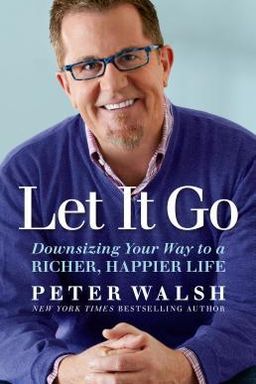
Let It Go cover

Let It Go

by Peter Walsh

Let It Go offers a transformative approach to downsizing, encouraging you to view decluttering as a positive, cathartic journey. Discover practical tips to separate what matters from what holds you back, fostering a space that aligns with your true self and aspirations.

The Freedom of Letting It Go

Have you ever looked around your home and wondered, “Why do I own all of this?” Peter Walsh’s Let It Go asks that exact question—and offers a powerful answer. Walsh argues that our possessions tell the story of our lives, but when they start defining who we are, they trap us. His central claim is simple yet profound: you are not your stuff. When you learn to separate your identity and memories from your possessions, you reclaim control over your life, your relationships, and your peace of mind.

Walsh, a leading expert from TLC’s Clean Sweep and Oprah’s organizing shows, reframes downsizing as a transformative emotional process—not just about decluttering, but about rediscovering meaning. He reminds you that downsizing isn’t a punishment or a loss; it’s an evolution. It happens when life forces change—retirement, moving, loss, marriage—and each of these milestones invites you to examine what truly matters. In his words, “Your stuff doesn’t tell your life story; you do.”

A Nation Buried in Stuff

Walsh opens with a vivid portrait of modern excess. From giant entertainment centers to “brown furniture” inherited from grandparents, our homes have become museums of outdated technology and forgotten memories. He cites sociologist David Ekerdt’s “material convoy”—the lifetime accumulation of possessions that travels with us from home to home. Over time, this convoy grows so heavy we can barely move forward. We are a nation, Walsh says, struggling to “find a place for our treasures” as they turn from heirlooms to junk.

Walsh situates this in a cultural moment, noting that millions of baby boomers are entering retirement and preparing to pass down $30 trillion in possessions and wealth. Families are not just transferring money—they’re transferring clutter, emotional baggage, and unresolved grief. In his view, downsizing isn’t optional—it’s inevitable. The question is whether you’ll do it thoughtfully or chaotically.

The Core Promise of the “Let It Go” Method

The “Let It Go” method transforms downsizing from a dreaded chore into a deeply healing experience. Walsh moves the focus away from simply throwing things out. Instead, he asks you to reframe the meaning behind everything you own—what he calls your “material convoy”—and uncover the emotional threads binding you to those items. When you do, clutter becomes a window into your thoughts, fears, and insecurities.

His method unfolds through three stages: (1) understand the psychological roots of attachment; (2) categorize everything you own into clear groups (Memories, I-Might-Need-It items, or Trash); and (3) pare down intentionally, keeping only treasures and worthy items that actively support joy, function, or legacy. Instead of losing something, you’re gaining clarity—Walsh calls this reclaiming “space for the life you want next.”

The Emotional Journey of Downsizing

Walsh shares his own story downsizing after his mother’s death—a moment that encapsulates the heart of the book. Standing with his sister outside their mother’s nursing home, each holding one box of Kath Walsh’s remaining possessions, his sister mourned, “Is this the sum of her life?” Peter’s reply anchors the book’s philosophy: “Mum’s life was not about the stuff.” Through this moment, Walsh illustrates that letting go doesn’t erase memory—it refines it, distilling it to what truly matters: laughter, love, and legacy.

For Walsh, every downsizing milestone—from moving to caregiving to death—forces you to renegotiate identity. You aren’t just parting with things; you’re questioning who you are without them. The “Let It Go” process becomes both practical and spiritual: a chance to confront fear, sadness, and guilt, and emerge lighter and freer.

Why It Matters Now

Walsh’s insights ring louder in an era obsessed with minimalism and digital clutter. His approach resembles Marie Kondo’s Spark Joy—but where Kondo focuses on aesthetics and intuition, Walsh focuses on psychology and legacy. Downsizing, he argues, is not about perfection but progress. If you handle it mindfully, you won’t just have a cleaner home; you’ll gain better communication with loved ones, emotional healing, and renewed appreciation for life’s finite nature.

Ultimately, Let It Go is a book about choosing presence over possession. Walsh encourages you to shift focus from what fills your shelves to what fills your days. In his world, fewer things mean more freedom—not just physical, but emotional and spiritual. By learning to let go, you’re not emptying your life. You’re creating room for everything that truly belongs there.


Downsizing as a Life Milestone

Peter Walsh redefines downsizing as a natural milestone in life’s journey—akin to marriage, career changes, or parenthood. Instead of viewing it as decline or loss, he invites you to see it as a rite of passage that shapes growth. In his words, “You’re not losing anything. You’re moving forward to somewhere better.”

Facing Life’s Transitions

Walsh highlights multiple forms of downsizing—retirement, relocating, divorce, losing parents, or merging households—that trigger deep emotional shifts. Each event pulls you to reconsider who you are now versus who you’ve been. Downsizing, he says, is never just about square footage; it’s about identity. When you let go of your old belongings, you symbolically release outdated versions of yourself.

Through stories like Susan Moore’s move from California to Arizona after 31 years in the same house, Walsh demonstrates this struggle. Susan called downsizing “one of the hardest things I’ve ever done,” grieving as if she were discarding her own identity. Yet months later, she felt liberated—“I’m still me, but lighter.” Walsh uses her story to prove that when done with intention, downsizing becomes rebirth.

The Emotional Weight of Your Stuff

Dr. David Ekerdt, whose research Walsh features, describes possessions as a “material convoy” that follows us through life. This convoy peaks in middle age—when careers, children, and aspirations fill homes to the brim. But as you age, the convoy becomes too heavy to carry. Walsh connects this physical weight to emotional weight: “Your possessions—and the insecurity they conceal—can anchor you so tightly that you can’t move forward.”

Downsizing requires confronting mortality, identity shifts, and fear of change. But it also delivers rare clarity. After sorting through their deceased mother’s belongings, Walsh and his siblings realized that Kath’s legacy wasn’t “a houseful of things” but “a lifetime of laughter.” That’s why he frames downsizing as legacy work: a chance to convert memories into meaning.

Three Choices: Which Path Will You Take?

Walsh outlines three ways to respond to life’s downsizing demands:

  • Stress yourself by clinging to everything—bringing old clutter into your new life.
  • Rush through the process mindlessly—only to regret decisions later.
  • Approach downsizing intentionally—the Let It Go way—to find peace, insight, and freedom.

The third path reframes downsizing as a conscious transformation. Walsh promises that through this process, you’ll not only lighten your home but unburden your heart. You’ll realize that every possession you let go of frees you to embrace what you truly value—a home that fits your life, rather than defines it.


You Are Not Your Stuff

One of Walsh’s most radical—and liberating—assertions is that you are not your possessions. This idea dismantles years of cultural conditioning that equates worth with wealth and self with stuff. As he explains, “If you’ve defined yourself by what you own, downsizing demands you examine your way of thinking.”

The Identity Trap

Every item in your home tells a story about how you see yourself: your clothes announce success or youth, your books reflect intellect, your car projects status. Walsh compares this to wearing a uniform—you use possessions to declare who you are. Yet when those possessions stay after their purpose disappears, you get stuck living as your old self. A desk from an abandoned career, baby toys from grown children, gifts from a past marriage—all whisper stories that no longer align with you now.

The first step toward freedom, Walsh says, is realizing this disconnect. Just as psychologist Sam Gosling’s research in Snoop shows that our spaces “shape our actions,” Walsh notes that our homes mirror our mindsets. Your clutter is not random—it’s a visible manifestation of your emotional backlog.

Possessions as Emotional Mirrors

Walsh describes how the objects we surround ourselves with reflect both joy and pain. They can evoke laughter and nostalgia—or guilt and grief. You may keep a broken watch because it reminds you of your late father, or hoard a wedding dress because letting it go feels like letting go of that era. Walsh’s insight mirrors that of therapists like Brené Brown (Daring Greatly): confronting vulnerability frees you from shame. Similarly, acknowledging what your stuff symbolizes frees you from its emotional grip.

Redefining Self Beyond Possessions

Once you accept that your identity isn’t housed in objects, you can replace external validation with internal purpose. Walsh encourages you to ask: “If I were stripped of all this, who would I still be?” That question reframes downsizing from loss into self-discovery. Kath Walsh lived 92 years, yet her essence—wisdom, humor, kindness—existed independent of her belongings. Her life proves the book’s mantra: meaning outlasts material.

By learning that you are not your stuff, you create space to grow. You realize that self-worth comes not from what you own but what you contribute, love, and remember. Walsh turns decluttering into existential clarity—an awakening that liberates the true “you” beneath the piles of possessions.


The Psychology of Attachment and Fear

Why is letting go so difficult? Walsh exposes the emotional mechanisms behind our resistance: sadness, anxiety, and guilt—the “SAG emotions.” These feelings masquerade as practical fears (“I’ll need this someday!” or “Mom would be upset if I gave that away!”) but actually reveal deeper attachments.

Sadness: Mourning the Past

Sadness often emerges when downsizing reminds you of what’s gone—relationships, dreams, time. Walsh notes that touching memorabilia awakens grief, even for moments decades past. But, he insists, sadness itself is not a reason to keep something. “Honor the memory, but don’t let sorrow decide what stays.” This echoes Buddhist thinking from Pema Chödrön (When Things Fall Apart): pain acknowledged is pain released.

Anxiety: Fear of the Future

Walsh reveals how anxiety distorts decisions—especially fear of making mistakes or losing control. He teaches you to reframe anxiety through logic and preparation. His downsizing exercises, like categorizing items and setting clear space limits, transform anxiety into action. Instead of drowning in what-ifs, you create parameters for peace.

Guilt: Family and Legacy Pressure

Guilt may be the strongest force keeping you attached. You feel you’re betraying loved ones or traditions if you discard an heirloom. Walsh gently dismantles this myth: “Your parents wouldn’t want their possessions to make you miserable.” By reframing legacy as the transmission of values rather than objects, you release guilt and preserve genuine remembrance.

This triad—sadness, anxiety, and guilt—explains why clutter persists long after usefulness fades. Walsh teaches that identifying the emotion behind each object is the real act of decluttering. When you can name what you feel, you reclaim power over what you own.


The Three Types of Stuff

When overwhelm sets in, Walsh simplifies your universe of belongings into three categories: Memory Items, I-Might-Need-It Items, and Trash/Recycling. This framework is the practical backbone of Let It Go—a way to quickly sort through emotional chaos with logic.

1. Memory Items

These carry emotional and historical weight. Walsh divides them further into four subtypes: treasures, trinkets, forgotten items, and malignant items. Keep only treasures—items representing your “bests, mosts, and greatests” moments. Trent’s grandmother’s green pie plate, for example, passed through decades of family dinners and becomes an emblem of love. That’s worth keeping. Trinkets and forgotten items belong to nostalgia without meaning, while malignant items evoke pain and must go.

2. I-Might-Need-It Items

This category covers functional objects—tools, clothes, furniture—but with strict rules. Walsh insists you only retain worthy items: things you use now, that fit comfortably into your next home, and serve immediate purpose. “If you can’t say where it will live or when you’ll use it, you don’t need it.” His test: place only as many treasures as fit on your dining table, and only as many worthy items as fit in designated spaces in your new home.

3. Trash/Recycling

Walsh identifies this pile as freedom incarnate—the pile that doesn’t belong to anyone’s memories or future. He even places “malignant memories” here. Throwing out these items isn’t destruction—it’s release.

This simple, three-part structure converts emotion into decision. Walsh’s brilliance lies in how this logic removes paralysis: once you can name a category, you can act. Each item becomes manageable, and the mountain of clutter becomes a series of choices that make sense again.


Family Dynamics: Conflict to Connection

Downsizing rarely happens in isolation—and Walsh calls family coordination “the most misunderstood part of letting go.” Whether you’re dividing parents’ possessions or merging two households, family tension inevitably surfaces. He compares the process to running a family business—complete with stakeholders, agendas, and roles.

Recognizing the Characters in the Drama

Walsh identifies seven archetypes that appear in downsizing conversations: the Control Freak, Denier, Procrastinator, Businessperson, Provocateur, Peacemaker, and Attention Seeker. Each represents a coping mechanism for grief and change. Rather than labeling relatives as obstacles, he suggests treating these behaviors as emotional signals—fear disguised as control, grief expressed as delay, anxiety masked by humor.

In his family, a debate over his father’s World War II medals nearly derailed the process. His sister wanted them because she cared for their father; his brother claimed tradition made him rightful heir. Walsh resolved it by having replicas made for everyone. The solution wasn’t perfect—but it preserved peace. His point: good enough decisions are often the best ones.

Turning Conflict into Collaboration

Walsh promotes structured collaboration—formal meetings, clear task lists, deadlines, and transparency. He’s pragmatic: treat this process as businesslike to protect relationships from chaos. Emotional honesty is key. “It’s never about the stuff,” he reminds readers. When family members express anger, dig deeper—they’re grieving time, roles, or connection, not furniture.

Handled with diplomacy, downsizing heals families. It exposes hidden histories, rekindles memories, and redefines roles. Walsh calls this one of the process’s overlooked gifts: “You don’t just end with empty shelves—you end with fuller hearts.”


The Let It Go Way: A Step-by-Step System

Walsh’s Let It Go method is both emotional philosophy and step-by-step strategy. From sorting objects to disposing of them responsibly, he systematizes downsizing so you can approach it calmly and logically.

Step 1–3: Identify, Categorize, Simplify

Start with treasures—the items that symbolize your “mosts, bests, and greatests.” Use the dining table test: only what fits there stays. Then identify worthy items you’ll actively use. Walsh insists on logical sorting—group like items together, delay nostalgic distractions (like photos), and set a 2-hour daily limit to prevent burnout.

Step 4–6: Face Space Reality

Measure your new home. Perform a “space audit,” plotting every shelf and wall. Walsh’s rule: “You never have too little space; you only have too much stuff.” Assign each item a future home before packing. If there’s no room, it doesn’t come.

Step 7–10: Release, Sell, and Honor

Walsh outlines final actions—return borrowed items, gift to loved ones, hold garage or estate sales, and donate useful possessions to charity. Always recycle ethically and record stories behind items you keep. “Every possession worth saving deserves its story,” he advises. This transforms clutter into curated legacy.

His attention to closure—writing wills, sharing heirlooms, planning for future downsizing—makes the system holistic. You don’t just tidy up; you prepare your life for harmonious continuity.

Letting go is both physical and philosophical discipline. When you follow Walsh’s system, you end not with emptiness but intentional space—a home designed for joy, not obligation.


Finding Joy and Legacy After Letting Go

In his Afterword, Walsh circles back to Susan Moore—the woman who once cried over bins of “junk.” Six weeks after her move, she tells him, “You think you need your stuff, but you don’t. It doesn’t fit your new life.” That transformation embodies the book’s closing theme: joy arrives when possessions no longer dictate meaning.

Embracing Emotional Contradictions

Walsh’s psychologist friend Jay Edwards explains that big life transitions naturally create “competing emotions”—excitement and grief, relief and melancholy. A balanced mind learns to coexist with both. You don’t erase the pain of change; you integrate it. For Walsh, this emotional maturity is the true reward of downsizing: peace that survives sadness.

Creating Space for Legacy

Walsh ends with a powerful metaphor—his mother’s two cardboard boxes outside the nursing home. A life cannot be summed up in possessions; its legacy lives in laughter, kindness, and connections. He urges readers to make wishes known through wills and talk openly about family heirlooms. Doing so converts sentimental chaos into organized legacy.

Life After Stuff

“You are not your things,” Walsh reminds us one last time. Downsizing clears physical space—but also creates space for volunteering, relationships, and purpose. It teaches that letting go isn’t an ending but a beginning. Every object released opens time and energy to fill life with meaning.

In the end, Let It Go isn’t about storage—it’s about freedom. It’s a guide to living lightly while honoring what endures. Walsh’s mission is simple yet life-changing: let go of what’s done, hold on to what’s loved, and use the space that remains to live boldly.

Dig Deeper

Get personalized prompts to apply these lessons to your life and deepen your understanding.

Go Deeper

Get the Full Experience

Download Insight Books for AI-powered reflections, quizzes, and more.