
Idea 1
Industrial Greatness and the Compounding Game
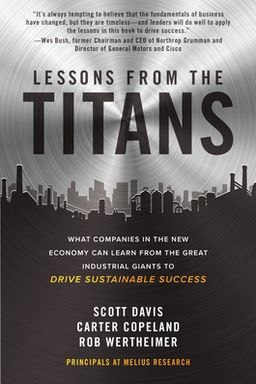
How do the world’s best industrial companies sustain greatness across decades while others collapse under their own weight? This book argues that industrial success isn’t built on one genius idea, but on disciplined systems that compound results over time. The secret lies in the intersection of process, culture, and cash flow. You win not by forecasting markets or chasing trends, but by building self-reinforcing operational flywheels that generate continuous improvement.
Across giants like GE, Boeing, Honeywell, Danaher, Roper, and TransDigm, you see a central pattern: operating excellence creates cash; cash generates choice; choice allows bold reinvestment. When those loops persist, value compounds. When they break—through arrogance, bad incentives, or eroded governance—the system fails.
From Operations to Optionality
Jack Welch’s revolution at GE shows the origin of this ideology. He began by attacking cost structures, freeing working capital, and putting factories at the center of strategy. Cash then funded bold bets in engines, turbines, and NBC. His mantra—lean operations, measurable performance, and cash discipline—turned GE into a benchmark for industrial excellence. But it also revealed the danger of performance obsession: success created hubris that planted the seeds for later decline.
The Rise and Fall Archetype
Jeff Immelt’s GE illustrates how hard it is to sustain an inherited machine. The shift from precision discipline to narrative optimism introduced financial opacity and cultural complacency. GE’s collapse during the 2008 crisis and later write-downs trace back to a failure of governance and measurement. When incentives reward smooth earnings instead of real improvement, truth decays from inside.
(Note: similar cultural decay appeared at Boeing, where financial targets began to override engineering safeguards.)
The Alternative Model: Lean and Learning Systems
Companies like Danaher and Honeywell build the opposite culture: they see improvement as daily craft. Danaher’s Business System (DBS) institutionalizes Lean, accountability, and transparency. Honeywell’s Operating System (HOS) becomes its language for process, quality, and cash. Both create momentum through measurement and reinvestment rather than narrative. Roper and TransDigm apply similar logics financially: target high-return, recurring businesses, and measure relentlessly by cash-on-cash results.
The Governance Flywheel
Great systems need guardians. Strong boards, credible CFOs, and structured incentives act as stabilizers that keep the compounding loop honest. Where GE’s board flinched from oversight, Honeywell’s directors enforced discipline, and Danaher managed succession deliberately. Incentives that align with long-term returns (like Roper’s cash-return metrics or TransDigm’s owner-style stock programs) reinforce focus. Static or one-size-fits-all goals, such as UTC’s 10% EPS target, eventually distort behavior and erode resilience.
Cyclicality and Resilience
As Caterpillar teaches, forecasting in cyclical industries is a trap. Process and discipline—not prediction—are what let you survive booms and busts. Build Lean first, then scale. The same rule applies across the book: predictable systems outperform heroic acts. Boeing’s 787 drama, Honeywell’s patient turnaround, and Roper’s repeatable acquisitions all demonstrate that consistency compounds faster than charisma.
Core Thesis
Industrial greatness isn’t about perfection. It’s about designing organizations where measurement drives improvement, cash drives strategy, and governance prevents drift. The compounding advantage lies not in forecasting the next big thing, but in building systems that make every year slightly better than the last—and protecting those systems from themselves.
By studying these industrial titans, you discover how to build your own durable engine for growth: start with cost and process, measure everything that matters, convert discipline into cash, and reinvest wisely through governance that endures success as well as failure.