
Idea 1
Lessons for Living: Growing Through Adversity and Connection to Higher Forces
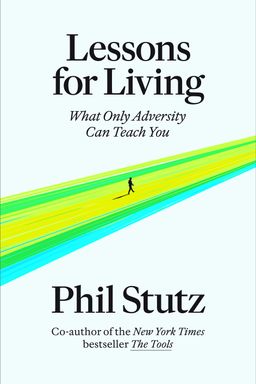
What if the struggles and setbacks you face were not detours, but essential parts of your growth? In Lessons for Living: What Only Adversity Can Teach You, psychiatrist Phil Stutz invites you to rethink every painful, confusing, or disappointing moment as a spiritual classroom. Drawing from decades of therapeutic practice and his influential work on The Tools (co-authored with Barry Michels), Stutz argues that life’s greatest lessons come, paradoxically, from its darkest corners.
At the book’s heart lies a radical idea: adversity is not something to be survived—it’s something to be used. Stutz insists that pain, uncertainty, and effort aren’t defects of the human condition; they are the ingredients of real growth. The problem isn’t that life is hard—it’s that our culture, obsessed with comfort, perfection, and control, has taught us to resist the realities that make us stronger.
Rejecting Illusion and Reconnecting to Reality
Stutz begins by confronting a widespread illusion: that we can live pain-free, predictable lives built on perfect self-presentation and constant pleasure. Through essays like "Just an Illusion" and "The Sky Is Falling," he dismantles this fantasy, showing how denying reality disconnects us from life’s deeper meaning. True mental health, he suggests, isn’t serenity in the absence of pain, but the ability to accept one’s fate with enthusiasm. This echoes the Stoics (like Marcus Aurelius), who taught that resisting what is merely multiplies suffering.
Stutz reframes life as a process of events—each one, especially the challenging ones, offering opportunities to develop spiritual skills. Accepting that adversity will always exist frees us to engage life fully instead of endlessly trying to perfect it.
The Reality of Part X and the Higher Forces
In several chapters, especially “The Grateful Flow” and “The Sky Is Falling,” Stutz introduces a recurring inner adversary he calls Part X. This is the dark psychological force that thrives on dissatisfaction, fear, and self-sabotage. It’s the voice that tells you that others are luckier, that you’re a fraud, or that your pain means something is wrong. In contrast, Higher Forces—like gratitude, love, and creation—restore connection to something larger than the self. The goal of inner work isn’t to eliminate Part X but to confront and overcome it daily, building spiritual strength in the process.
Grace Through Work, Not Escape
Stutz continually emphasizes practice. Whether facing depression, judgment, or addiction, no transformation is passive. The essays outline Tools—practical, meditative exercises—that transform negative emotions into creative energy. He addresses everything from building patience (“Precious Time”) to mastering anger (“Positively Furious”), loving faithfully (“Loving the One You’re With”), and finding faith (“Faith: No Doubt About It”). Unlike traditional psychotherapy that over-focuses on the past, Stutz’s Tools anchor you in immediate, embodied action.
The three markers of meaningful growth—Homework, Forward Motion, and Higher Forces—structure his philosophy. Homework means practicing daily, integrating insights into lived behavior. Forward Motion demands courage: taking steps even when fear lingers. And Higher Forces remind you that life itself is intelligent—that you’re evolving through a broader cosmic process that uses your pain to wake you up.
Faith, Connection, and the Bigger Story
Ultimately, Lessons for Living expands therapy into spirituality. Stutz proposes that healing isn’t about eliminating problems—it’s about changing your relationship to them. Depression becomes an invitation to build inner motivation (“Out of the Blues”), conflict becomes the test ground for love (“Making Peace with Conflict”), and guilt becomes the growing pains of becoming yourself (“A Separate Peace”). Adversity trains the soul to connect with higher forces—the mysterious life-giving energy that wants us to evolve. When you align with this movement, you no longer fear the next event, because each one carries meaning.
As Stutz concludes, therapy without faith often leaves you emptier than before; working on yourself with faith transforms not only your life but the collective world. “When you change,” he writes, “you have more energy, not less. That energy will transform the world.”