
Idea 1
Becoming Undeniable
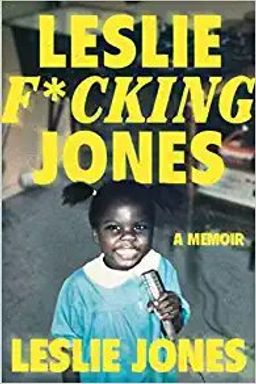
When life keeps telling you “no,” how do you make yourself a “yes”? In Leslie F*cking Jones, Leslie Jones argues that you don’t wait for permission—you become undeniable. She contends that talent only carries you so far; what changes your fate is the compound effect of radical honesty, relentless reps, fierce self-advocacy, and an ironclad belief that your voice matters. But to do that, you have to understand the machinery she built: how she turned pain and rejection into punchlines, leveraged a hustler’s work ethic to create leverage, and learned to protect her magic inside systems that weren’t designed for her.
Across this memoir-manifesto, you’ll watch Jones transform from a tall, bullied kid in military towns into a comic who could flatten any room, from Roscoe’s Table 5 waitress to SNL cast member, from the target of organized online abuse to a master of narrative judo. You’ll see her grow from an insecure newcomer who tried to be the next Eddie Murphy into Leslie F*cking Jones—the singular comic who weaponizes truth, loves Black girls out loud, and refuses to shrink inside other people’s categories.
The Core Claim: Make Yourself Undeniable
Jones’s father, Willie Jones Jr., drilled it into her: You’re Black and you’re a woman—so be better than everybody. That drumbeat becomes the book’s through line. “Undeniable” for Jones isn’t hype; it’s a survival plan. It’s why she demanded an extra $1,000 to take a headliner slot in Indianapolis when promoters tried her. It’s why she turned her most provocative bit—the “slave draft pick” joke—into a breakout Saturday Night Live Weekend Update moment. And it’s why, when Ghostbusters triggered a shitstorm of racist and sexist trolling, she didn’t fold. She owned the story: first on Twitter, then on the Emmys stage (“If you wanted to see my nudes, all you had to do was ask”), and then in an SNL Update piece reframing shame as power.
What You’ll Learn in This Summary
First, you’ll see how Jones turns hard truths into comedy without flinching—why she calls honesty her “main export,” and how bombing, rewriting, and living more life (per Jamie Foxx’s early advice) made her material deeper and more dangerous. Then you’ll learn the business moves that let her break gatekeepers’ games: negotiating pay, selling merch, and creating leverage so rooms can’t afford to shortchange her. We’ll examine how family pain (childhood abuse, a strict father, a brother lost to the streets at thirty-eight) becomes fuel rather than a script—plus how faith, a warm Black church, and a Roscoe’s Sunday crew (“Table 5”) helped her reset her life and spirit.
You’ll also walk through “angels” who show up when you move: a deli guy in Manhattan, a Kansas sheriff, Patsi with the perfect afro on 3rd Street, and Kenan Thompson and Bryan Tucker at SNL. We’ll crack open SNL as both finishing school and fight club—what Jones learned about writing sketches, playing the political game, pitching hosts, taking notes, and knowing when to walk. Finally, we’ll talk boundaries, brand, and business: why “world‑renowned” collaborators can be a trap; how she fought to keep the funny in Supermarket Sweep; and how she protects crews and calls out coded racism (like “bug your eyes” on a commercial shoot).
Why This Matters—For You
You don’t have to be a comic to use Jones’s playbook. If you’re trying to build something in an industry that wasn’t made with you in mind—corporate, creative, startup, public sector—her system is a blueprint. Use unvarnished truth as a differentiator. Create leverage with excellence and reps. Price your value like you mean it. Build a circle that feeds you spiritually and practically. And when a system tries to make you smaller, remember: the system hired you because of your magic—protect it.
Signature Idea
“You’re going to have to work harder than everybody else. But if you work harder, you are undeniable.” —Willie Jones Jr., echoing throughout Leslie’s life
How the Book Is Different
Where many comedy memoirs focus on backstage gossip or tidy triumph arcs, Jones keeps the mess in view: the brutal abortions conversation, the “I wish I’d just gotten out of the car” admission behind a celebrated bit, the hemorrhoid surgery she narrates through a character named Merle so you can understand the pain. It reads like Born Standing Up (Steve Martin) collided with Born a Crime (Trevor Noah) and The Last Black Unicorn (Tiffany Haddish), then laced up Air Maxes to run suicides with Coach Berger. The result is both an instruction manual and a rallying cry: be loud, be honest, be better—be Leslie F*cking You.