
Idea 1
Leisure as the Foundation of Human Culture
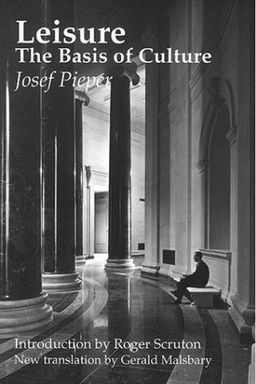
When was the last time you truly rested—not idly, but in a way that felt rich and meaningful? In Leisure: The Basis of Culture, German philosopher Josef Pieper argues that true leisure is not simply time off from work—it’s the beating heart of any genuine culture. Pieper contends that when societies lose touch with the art of contemplative rest, they also lose the capacity for philosophy, worship, art, and ultimately freedom.
Pieper wrote this book in the ruins of postwar Europe, when the world was obsessed with rebuilding, production, and progress. Against this obsession with utility and productivity—a spirit Max Weber had already warned of in the rise of capitalism—Pieper offers a radical claim: culture flourishes only when human beings step aside from necessity and engage in leisure as a form of celebration, contemplation, and connection with the divine. If we live only as workers, he warns, we risk becoming functionaries in a world of “total work,” where the highest human goods—truth, beauty, goodness—are subordinated to efficiency and profit.
Leisure Beyond Idleness
Pieper insists that leisure is not laziness or escape. It’s an attitude of receptive stillness—a freedom that allows you to see reality as it truly is. In Greek, the word for leisure, skole, gives us the English word “school.” Learning and culture, then, arise from leisure, not labor. In leisure, the mind is open, contemplative, and capable of wonder. For Pieper, leisure involves the soul being at peace with itself and the universe, recognizing creation as “good” and worthy of celebration.
After the Second World War, this message could not have been more striking. Rebuilding societies were driven by utilitarian urgency: production as redemption, work as salvation. But Pieper warns that this new “religion of work” risks enslaving the human spirit to the tyranny of usefulness. In contrast, leisure—rooted in festivity and divine worship—creates space for humanity to rediscover grace, beauty, and gratitude. “We are unleisurely,” Aristotle once wrote, “in order to have leisure.” Pieper takes up that paradox: work exists for life, not the other way around.
The World of Total Work
The modern ideal of the “worker” was already visible in Pieper’s time through industrial economies, Marxist states, and capitalist corporations alike. He calls this the world of “total work”—a vision in which every aspect of human life, including thought, art, and religion, is reduced to function and productivity. Even scholars become “intellectual workers” who must justify inquiry through its social utility. This, Pieper warns, is a distortion of the intellect itself, for the highest forms of knowledge—philosophy, theology, and contemplation—are valuable not because they are useful, but because they open us to truth as a gift.
Contemplation as Freedom
True leisure, Pieper claims, is rooted in contemplation—what Thomas Aquinas calls intellectus, the peaceful reception of truth. It is the opposite of restless striving; it is the posture that allows the soul to participate in divine wisdom. In this contemplative state, knowledge and joy converge, as one realizes that truth is not produced but received. “Be still and know that I am God,” the Psalmist says; Pieper turns this verse into a philosophical axiom. Without contemplation, knowledge hardens into calculation, and culture becomes a machine of endless production rather than a festival of human flourishing.
In this opening vision, Pieper lays the foundation for understanding culture itself as a fruit of leisure. Work serves necessity; leisure serves truth. To recover a truly human culture, we must reclaim leisure as spiritual stillness, intellectual openness, and festive gratitude—a celebration of creation, of being, and of God.