
Idea 1
Racism’s Legacy in American Medicine
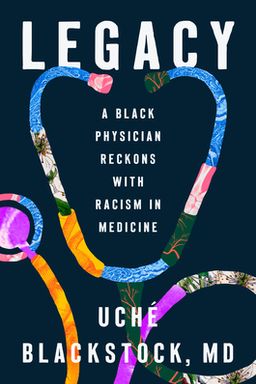
How can you tell whether a health setback is about your body—or about the world your body lives in? In Legacy, Uché Blackstock, MD, argues that health in America is inseparable from history, policy, and power. She contends that racism isn’t a side note to medicine; it’s a structuring force that shapes who becomes a doctor, who gets listened to, and who survives. To heal patients, she says, you must learn to see (and treat) the structures that make people sick—what scholars Jonathan Metzl and Helena Hansen call structural competency.
Blackstock braids her family story—especially the life and early death of her mother, Dr. Dale Gloria Blackstock—with a sharp diagnosis of American medicine. As a child roaming SUNY Downstate’s halls in Brooklyn, she watched her mother practice what today we’d call structurally competent, culturally responsive care. Years later, she felt that legacy—and the forces working against it—when she was misdiagnosed as a Black medical student, trained on curricula that erased harmful histories, and worked in underfunded ERs serving the very communities most harmed by systemic racism. The book builds to a reckoning with segregated care, the maternal mortality crisis, and the pandemic’s disproportionate toll, then offers a path forward grounded in policy, practice, and community power.
What This Book Argues
Blackstock’s core claim is blunt: racism in medicine is not just interpersonal bias; it’s embedded in training pipelines, hospital financing, clinical algorithms, and public policy. From the Flexner Report that shuttered most Black medical schools, to redlining and the GI Bill’s exclusions that harmed Black neighborhoods’ health for generations, to race-corrected tests that deny Black patients transplants or timely interventions, the profession has repeatedly coded inequality as science. Changing inequitable outcomes requires both clinical humility and structural change: more Black physicians, anti-racist training, race-explicit quality improvement, investment in community-based care (like midwifery and doulas), and universal coverage that treats health care as a right.
What You’ll Learn
You’ll meet the “original Dr. Blackstock,” a Harvard-trained nephrologist who returned to serve the Brooklyn community that raised her. You’ll see how her example seeded two daughters’ medical careers—and how a system designed without them in mind made those careers harder. You’ll tour the “hidden curriculum” that erased the Tuskegee syphilis study’s truths, Henrietta Lacks’s story, and J. Marion Sims’s experimentation on enslaved women—while naturalizing modern race-based equations in nephrology and pulmonology. You’ll sit in two New York City ERs—NYU Tisch (private, largely white, VIP-ready) and Bellevue (public, incredibly diverse, chronically under-resourced)—and feel what “medical apartheid” looks like in one city block.
You’ll follow cases that make policy painfully concrete: Jordan, a young Black man with sickle cell disease disbelieved as “drug seeking”; a pregnant woman who miscarried in a hallway while the team searched for a clean room; and Uché herself, discharged with “gastroenteritis” when a rupturing appendix demanded surgery. You’ll then move into the era of COVID-19, where urgent care lines wrapped around blocks, pulse oximeters read oxygen inaccurately in darker skin, and Dr. Susan Moore recorded on Facebook how, as a Black physician-patient, her pain and breathlessness were dismissed before she died.
Why It Matters Now
The book lands in the aftermath of George Floyd, Breonna Taylor, and a pandemic that cut Black life expectancy by nearly three years in months. Black maternal mortality remains three to four times that of white peers (as journalist Linda Villarosa also documents in Under the Skin), and segregated hospital markets quietly steer the best-resourced care away from Black communities. Blackstock shows how the same logics that let police violence flourish—surveillance, neglect, devaluation—also shape where ambulances deliver, how ERs are staffed, and what gets counted as a “quality” outcome. To improve health, she insists, you can’t treat biology without treating the body politic.
How This Summary Is Organized
First, you’ll see how representation and mentorship—“you can’t be what you can’t see”—collide with history’s choke points (the Flexner Report) to explain today’s tiny share of Black physicians. Then you’ll unpack how policy becomes physiology—redlining, GI Bill exclusions, and environmental racism turning zip codes into destiny. Next, you’ll look inside medicine’s hidden curriculum and race-based algorithms, and at the bedside where bias shows up in pain management, triage, and “protocols” that forget people. You’ll walk through two ERs to see segregated care up close. Finally, you’ll explore solutions—from birth justice and midwifery-led models to structural competency, organizational change, and universal coverage—alongside Blackstock’s own pivot from academic constraints to public advocacy.
A through-line worth holding
“Of all forms of discrimination and inequalities, injustice in health is the most shocking and inhuman.” —Martin Luther King Jr., a line Blackstock cites to remind you that equitable care is not charity; it’s justice.
If you’re a clinician, policymaker, or patient navigating American health care, Legacy offers a usable lens: ask how history built the exam room you’re standing in—and what you can change right now to make the next visit safer, fairer, and more humane.