
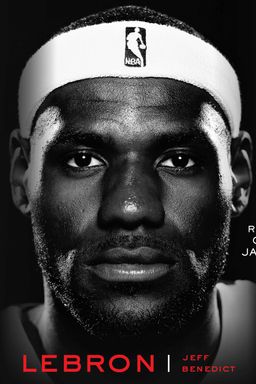
Lebron cover

Lebron

by Jeff Benedict

The author of “The Dynasty” and “Tiger Woods” details the life and career of the star basketball player LeBron James.

From Talent to Power: The LeBron Blueprint

How do you turn rare talent into durable power? This book argues that LeBron James’s life is a blueprint for transforming athletic excellence into cultural authority, business ownership, and civic influence. The core claim: when you combine skill with a trusted inner circle, platform control, and strategic communications, you can shift power away from legacy gatekeepers (owners, media, institutions) toward the athlete-creator. To see that shift, you have to track LeBron from Akron instability to global brand, through crises, reinvention, and ultimately, institution-building in his hometown and beyond.

Roots that determine direction

You begin in Akron with Gloria James—teenage motherhood, housing insecurity, and relentless love. Surrogate families (Frank and Pam Walker), mentors (Coach Dru Joyce, Coach Keith Dambrot), and the Fab Five (Little Dru, Sian Cotton, Willie McGee, Romeo Travis) give LeBron structure. Their shared mantra—"If you pass the ball, everyone is going to want to play with you"—makes unselfishness both a moral compass and a competitive advantage. This team-first ethic explains choices decades later, from passing lanes on the court to bringing childhood friends into formal business roles (LRMR).

Media as amplifier and risk

LeBron’s rise is inseparable from media infrastructure. The Sports Illustrated "Chosen One" cover, the ABCD Camp (Sonny Vaccaro’s stage), and ESPN’s St. Vincent–St. Mary vs. Oak Hill broadcast convert a local prodigy into a national product. Exposure validates him (ratings, sponsors) but inflates vulnerability (scrutiny of practice habits, family drama). That paradox—attention multiplies both leverage and risk—drives later decisions to control message and platform (note the arc from Jim Gray’s live spectacle to a crafted Sports Illustrated essay with Lee Jenkins).

Negotiating like an owner, not a celebrity

Early shoe wars reveal the business mindset. Adidas leverages relationships (Vaccaro), Reebok waves a $100M check with $10M on the table (Paul Fireman), and Nike, led by Lynn Merritt, offers legacy and product vision. Agent Aaron Goodwin and lawyer Fred Schreyer insist LeBron stays in the room and think long-term fit over immediate cash—a choice that compounds into a lifetime Nike partnership. Later, with investment banker Paul Wachter and advice from Warren Buffett, LeBron evolves from endorsements to equity (Cannondale, Beats) and platform ownership (SpringHill, Uninterrupted), turning attention into assets that outlive playing years.

Crisis, law, and reputational defense

Fame invites institutional friction. The Hummer controversy and jersey incident trigger the OHSAA’s punitive overreach. Fred Nance, a seasoned attorney, proves why high-profile figures need immediate legal rigor—he documents facts (U.S. Bank loan), wins an emergency ruling from Judge James R. Williams, and restores eligibility. Years later, The Decision shows the other front—optics. A TV special (brokered with Ari Emanuel), in Greenwich, using the "taking my talents to South Beach" line, detonates goodwill. The lesson is blunt: even charity framing can’t save poor staging. LeBron adapts by hiring crisis strategist Adam Mendelsohn and picking trustworthy storytellers (Jenkins) and calmer formats.

Reinvention and player power

After the 2011 Finals loss, LeBron returns to Akron for brutal fundamentals under Dambrot, while Erik Spoelstra retools Miami’s system to unleash a positionless apex predator. He delivers in Boston (2012 ECF Game 6: 45-15-5) and in the 2012 Finals (iconic cramp-and-three). Off the court, he pioneers player agency—engineering superteams, then acting as a de facto GM on his Cleveland return by recruiting Kevin Love and shaping roster moves (Mike Miller, James Jones, Shawn Marion). Dan Gilbert’s about-face (from Comic Sans rage to courting LeBron back) marks the league’s power shift from owners to stars.

Culture, activism, and legacy

LeBron doesn’t stop at trophies. He uses cultural capital (Vogue cover with Gisele under Anna Wintour’s eye; styling by Rachel Johnson) to cross into fashion, and his platform for civic action—Heat hoodies for Trayvon Martin, "I CAN’T BREATHE" shirts after Eric Garner, and a public call to expel Donald Sterling. He endures backlash (Laura Ingraham’s "shut up and dribble"), counters with documentary storytelling, and builds durable institutions (I Promise School with wraparound services and college scholarships). The 2016 title—capped by The Block in Game 7—closes the moral loop: from perceived betrayal to promise kept, and from athlete to architect of community uplift.

If you map your own career onto this arc, the formula clarifies: ground your identity in values and team play, acquire leverage through performance and media savvy, formalize trust into an operating company, prepare for legal and PR storms, keep reinventing, and trade fame for institutions. That’s LeBron’s modern playbook for turning talent into power.


Akron Roots, Team-First DNA

LeBron’s character—and later leadership—originates in Akron’s instability and Gloria James’s devotion. Born to a 16‑year‑old mother, LeBron grows up bouncing among relatives and couches after the death of his grandmother Freda. The lesson you see early: survival requires vigilance, and gratitude flows to those who provide stability. When Frank and Pam Walker invite him into their home, LeBron learns routine, accountability, and the dignity of being expected at dinner.

Surrogate mentors and the making of habits

Coach Frank Walker introduces fundamental movement (football before basketball) while Coach Dru Joyce and Coach Keith Dambrot shape mindset and discipline. Dru’s Golden Rule—pass the ball and everyone wants to play with you—hardwires LeBron’s instinct to create for others. Dambrot supplies edge and structure, later critical when LeBron needs to rebuild after Miami’s early failure.

Fab Five: community as competitive edge

The Fab Four—Little Dru, Sian Cotton, Willie McGee, and LeBron—become the Fab Five with Romeo Travis. They choose St. Vincent–St. Mary as a unit, translating friendship into system-level chemistry. The 1999 AAU title, ESPN broadcasts, and state runs showcase how trust begets predictability: each player knows the others’ tendencies. When LeBron later defers MVP recognition to Corey Jones after a title, it isn’t posturing; it is the culture they built together.

Family-first priorities that endure

Gloria’s agonizing decision to let LeBron live with the Walkers models tradeoffs for a better future. That scaffolding shows up years later in how LeBron prioritizes family optics (protecting Savannah and the kids), sets loyalty as policy (Randy Mims as player liaison), and keeps gratitude central (dedications, community giving). His later insistence on trusted partners over shiny résumés reflects this early calculus: you win with people who keep faith under pressure.

Team play as moral stance

Passing for LeBron is more than a tactic; it’s an ethic. You see it on the court (point‑forward creativity) and off (sharing opportunity with Maverick Carter, Rich Paul, and Randy Mims). This ethic scales: teammates buy in, executives adapt systems (Spoelstra), and corporate partners trust him to carry brands without diva volatility. (Note: This echoes themes in Bill Walsh’s The Score Takes Care of Itself—culture first, then execution.)

What you can use

If you lead teams, make generosity a strategy. Build shared language and rituals (the Fab Five pact), invest in role development, and keep gratitude visible. If your background includes instability, draw from it as fuel and clarity: protect your circle, choose mentors who insist on fundamentals, and define loyalty not as nostalgia but as a performance asset. LeBron’s Akron chapter proves that greatness is social before it is spectacular.

Guiding line

“To understand LeBron James, all roads lead back to Gloria James and Akron, Ohio.” The roots don’t explain everything, but they explain why trust, passing, and stewardship are the constants when everything else changes.


Media Engines and the Making of a Brand

LeBron’s ascent shows how modern stardom is manufactured by performance plus media architecture. Three inflection points matter: playing up with the Bay Area Soldiers (proving he belonged beyond his age group), dominating Adidas’s ABCD Camp under Sonny Vaccaro’s gaze (earning “greatest high school player I’ve ever seen”), and landing on the Sports Illustrated cover as “The Chosen One.” These moments legitimize him to fans and corporations and trigger a new economy around his name.

Prime-time as proof of concept

ESPN’s decision to broadcast St. V vs. Oak Hill doesn’t just spotlight a teenager; it validates him as television. Ratings follow, shoe companies swarm, and the pipeline from high school gym to global marketplace accelerates. But the lens cuts both ways: exposure magnifies lapses (practice habits, teenage swagger), and the press learns it can both elevate and police a child-phenom narrative. LeBron sees early that you either manage the narrative or the narrative manages you.

Shoe wars: leverage crystallized

The Adidas–Reebok–Nike race is a masterclass in negotiation. Reebok’s Paul Fireman lays down a $100M, ten‑year guarantee with a $10M check right there (seductive when your mom struggles to pay bills). Adidas leans on Vaccaro’s relationship, but the deal has triggers and contingencies. Nike, driven by Lynn Merritt, leans into product legacy (Jordan), design (Zoom Generation I), and cultural machinery. With agent Aaron Goodwin and legal veteran Fred Schreyer, LeBron pushes for long-term fit over immediate windfall. It’s a decision that looks conservative in 2003 and prophetic by the time of his lifetime Nike deal.

Brand voice beyond commercials

Nike gives him global amplification—“Pressure,” “Book of Dimes”—but LeBron learns to supplement it with his own channels and people. He hires PR pro Keith Estabrook, cultivates relationships with journalists (riding with Grant Wahl to New York), and partners with culture brokers (Jay‑Z) who translate sports fame into music, fashion, and nightlife cachet. This diversification protects him from single‑point narrative failure and sets the stage for later content ownership (SpringHill).

Media paradox you must manage

Exposure creates an intoxicating sense of invincibility—LeBron admits the SI cover made them feel like rock stars—and it also attracts watchdogs who interpret normal teenage choices as scandals waiting to happen. That duality culminates in The Decision’s optics disaster, but even before then, the Hummer and jersey episodes prove that fame rewrites the rules in real time. If you want to scale your own profile, plan for the scrutiny with documentation, savvy counsel, and a channel strategy that lets you correct the record quickly.

Practical template

Use credibility makers (third-party endorsements like Vaccaro), anchor your brand in authentic strengths (passing-first identity), and pick platforms that convert attention into loyalty (signature product, global tours in Tokyo, Hong Kong, Beijing). Then, build a firewall—trusted PR, legal readiness, and editorial partnerships—so amplification doesn’t become annihilation. (Compare to Tiger Woods’s early brand machine; LeBron’s twist is earlier embrace of narrative co-ownership.)


Inner Circle and Enterprise Building

LeBron’s greatest business innovation is organizational: he formalizes trust. LRMR—LeBron, Maverick Carter, Rich Paul, Randy Mims—turns a friendship covenant into a modern operating company. Maverick leaves Nike to become CEO of LRMR’s ventures; Randy joins the Cavaliers as player liaison to stabilize logistics; Rich Paul apprentices under Leon Rose to learn the agent craft the hard way. This is not nepotism posing as strategy; it’s a talent stack where loyalty and learning curves compound into unique execution.

From endorsements to equity

With investment banker Paul Wachter, LeBron shifts from cash-now deals to owner economics. He takes a stake in Cannondale and profits on its sale to Dorel. He backs Jimmy Iovine and Dr. Dre’s Powerbeats; when Apple buys Beats, reports peg LeBron’s return near $30M. The principle is simple: trade a bit of guaranteed money for upside that compounds, and pick categories where your cultural gravity (music, performance) can grow the pie.

Owning the story: SpringHill and Uninterrupted

SpringHill Entertainment (led by Maverick) and Uninterrupted give LeBron narrative sovereignty. Projects like The LeBrons, Survivor’s Remorse, Trainwreck, and the Space Jam sequel (with Ryan Coogler) serve a double function: they produce revenue and reframe athlete identity (from pitchman to producer). Uninterrupted provides direct-to-fan distribution that doesn’t beg for airtime on traditional networks. This is vertical integration—talent (Klutch), content (SpringHill), distribution (Uninterrupted), and equity (Beats, Liverpool FC via Fenway)—that buffers against market shocks.

Financial discipline underneath the ambition

Buffett’s counsel—favor low-cost index funds, maintain reserves, think long term—anchors the enterprise. Aggressive brand bets paired with conservative portfolio building protect the family’s future from the volatility of a playing career. This pairing—risk on the edge, ballast at the core—is a model you can copy even without superstar income.

Agent revolution: Klutch as institution

When LeBron leaves CAA to sign with Rich Paul’s Klutch in 2012, he seeds a new power center for players. Klutch scales because it starts with trust and proof (delivering for LeBron) and then recruits others who want the same leverage. Owners and legacy agencies adapt; the marketplace tilts toward players who can mobilize both on-court value and off-court distribution. (Note: This mirrors Silicon Valley founders who build operating companies around personal brand—think Reese Witherspoon’s Hello Sunshine in entertainment.)

What you can apply

Map required roles—operator, legal, banker, storyteller—then elevate trusted people into those seats and layer external experts as needed. Prefer deals where your presence adds enterprise value, not just ad impressions. Treat content as an asset class, not a press release. LeBron shows that the ultimate endorsement is ownership.


Crisis, Law, and Narrative Control

Every high-visibility career eventually meets institutional friction. LeBron’s early tests—Hummer financing and the vintage jersey gift—trigger a cascade: OHSAA commissioner Clair Muscaro declares him ineligible based on press accounts, threatening his senior season and public image. Fred Nance assembles facts (loan documents from U.S. Bank, witness statements) and moves quickly. Judge James R. Williams restores eligibility, citing arbitrary process. The playbook is clear: document, retain top counsel, move on both legal and PR fronts, and insist on due process.

Optics as outcomes: The Decision

Fast forward to 2010. LeBron, Maverick Carter, and Ari Emanuel secure an ESPN hour to announce free agency and direct ad dollars to the Boys & Girls Clubs. On paper, it looks brilliant. In practice—Greenwich staging, live suspense, and the phrase “take my talents to South Beach”—it detonates. Dan Gilbert’s Comic Sans broadside crystallizes public anger; national boos follow; LeBron admits he goes to a “dark place.” The lesson is ruthless: in public pivots, form can erase charitable substance.

The repair: strategy over spectacle

LeBron rebuilds his communications stack. Fenway Sports Group introduces Adam Mendelsohn (crisis veteran). Rather than live TV, LeBron opts for controlled, reflective platforms. The masterstroke is the 2014 Sports Illustrated essay with Lee Jenkins—“Who am I to hold a grudge?”—which reframes his Cleveland return as humility and service, not theatrics. Tactical silence precedes the drop; backchannels shape expectations; the rollout lands as statesmanship.

Cultural controversies as training grounds

The Vogue cover with Gisele (shot by Annie Leibovitz) draws critique (racialized imagery comparisons), even as Rachel Johnson argues it breaks fashion barriers for Black men in elite magazines. These episodes teach timing, context, and coalition building. When criticism arrives (and it will), explain intent, show learning, and keep moving toward platforms you own (SpringHill, Uninterrupted) where editorial context isn’t a coin toss.

Your crisis toolkit

- Secure counsel early (legal: Fred Nance; comms: Adam Mendelsohn).
- Choose messengers with empathy and discretion (Lee Jenkins).
- Control timing (favor essays and recorded formats over live stunts).
- Coordinate PR with legal facts (bank letters, affidavits).
- Anticipate stakeholder emotions (fans, partners) and honor them in tone and venue.

Bottom line

Excellence doesn’t immunize you from crisis; preparation and platform choice determine whether a storm becomes a stain or a stepping stone.


Reinvention, Player Power, and Championships

The 2011 Finals loss to Dallas is LeBron’s crucible. He doesn’t offer platitudes; he changes inputs. Back in Akron, Coach Keith Dambrot imposes austere fundamentals (conditioning rides pushing toward 100 miles, footwork, rebounding, movement without the ball). The goal is clarity under pressure. In Miami, Erik Spoelstra opens the system—no rigid positional box—so LeBron can be point guard, wing, or big as needed. The 2011–12 opener in Dallas previews the version we remember: 37 points, merciless pace control.

Signature moments that reset narratives

Two performances rewire public opinion. In Boston (2012 ECF, Game 6), LeBron drops 45-15-5 with the stare that freezes TD Garden; the subtext is mastery, not mood. In the 2012 Finals, he plays through searing cramps to bury a dagger three—preparation meeting pain tolerance. Back-to-back titles (2012, 2013) validate the rebuild. These are not accidents; they’re the harvest of fundamentals plus a system tailored to his strengths.

Player as architect

The Miami Big Three is a declaration of player agency; the Cleveland return refines it. LeBron signs a two‑year deal with an opt-out, retaining leverage as TV money inflates the cap. He recruits Kevin Love with a personal call; Cleveland trades Andrew Wiggins and Anthony Bennett to Minnesota to finalize the vision. Around the margins, LeBron lobbies for connectors he trusts—Mike Miller, James Jones, Shawn Marion—because culture is chemistry as much as talent. Dan Gilbert shifts from scorn to accommodation; that pivot documents a league’s power recalibration.

Redemption in Cleveland: The Block

Game 7 of the 2016 Finals distills a career. Kyrie Irving hits the go-ahead three; LeBron chases down Andre Iguodala for The Block, a defensive masterpiece born of anticipation, film work, and anaerobic reserves. When the buzzer sounds, a 52‑year Cleveland title drought ends. LeBron’s collapse to the floor is personal and public absolution—the promise he made in the Jenkins essay realized under the highest duress.

Transferable playbook

- After failure, change the system and the habits, not just the slogans.
- Design roles around your superpower (Spoelstra’s freedom-within-system).
- Use contractual flexibility as strategic leverage (short deals, opt-outs).
- Recruit for skill fit and trust density (Love plus culture guys).
- Let defining moments come from preparation, not hope.

Core shift

LeBron evolves from superstar to system—an individual who can redesign franchises, economies, and narratives through intentional choice and elite execution.


Culture, Activism, and Institutional Influence

LeBron’s platform becomes political capital when he chooses to spend it. Early, the Darfur episode exposes how unpreparedness can cost moral credibility; later, he learns to act when facts and moments align. The Miami Heat’s hoodie photo for Trayvon Martin marks a new era: superstar-led, social-media-native protest at scale. Wearing "I CAN’T BREATHE" in Brooklyn—on a night with Prince William courtside—signals comfort with mixing sport, global attention, and conscience.

Catalyzing institutional decisions

When Donald Sterling’s racist comments surface, LeBron doesn’t defer to ownership; he sets the tone: “There is no room for Donald Sterling in our league.” Commissioner Adam Silver bans Sterling for life; the team is sold. LeBron’s statement and stature accelerate the outcome. This is player power as governance nudge—the league that once disciplined players now responds to them.

Managing backlash and narrative war

Public interventions provoke counterattacks (Laura Ingraham’s “shut up and dribble,” presidential tweets). LeBron responds by widening the lens—documentary storytelling, aligned statements by peers, and partnerships that are hard to vilify (Coach K, President Obama, Jay‑Z). Adam Mendelsohn’s counsel helps match tone to moment while preserving the ability to pivot from statements to structures (More Than a Vote later, voter access work, and ongoing education initiatives).

Culture as capital

Fashion and magazine covers are not vanity— they’re gateways. The Vogue cover (Annie Leibovitz), Rachel Johnson’s styling, and ties to Anna Wintour insert LeBron into rooms where cultural narratives are authored. That access translates into opportunities to direct and produce, to fund civic projects, and to build coalitions that extend beyond basketball demographics.

Your activism framework

- Pick issues with clear moral clarity and community proximity (Trayvon, Garner).
- Use high-visibility moments strategically (national TV, royal attendance, Finals weeks).
- Coordinate allies (teammates, artists, elected leaders) for message density.
- Expect backlash and pre-plan responses that educate rather than escalate.
- Convert symbolic acts into institutions that persist beyond news cycles.

Principle

Treat your platform as a civic resource; spend it where it can change rules, not just trends.


Family, Legacy, and Durable Impact

LeBron’s ultimate project is not a season but a lineage. Marriage to Savannah, raising Bronny, Bryce, and Zhuri, and prioritizing private rituals amid public life anchor his choices of city and partner. Moves back to Cleveland (2014) and later to Los Angeles include family calculus—schools, safety, and proximity to opportunity. This household-first lens is the throughline from Gloria’s sacrifices to LeBron’s insistence on control over schedule, health, and image.

I Promise School as structural philanthropy

The I Promise School reframes athlete charity as institution building. Starting with 240 students, it bundles wraparound services: free tuition, uniforms, transportation, meals; GED and job placement for parents; a food pantry; and guaranteed University of Akron tuition for graduates. Corporate and civic partners (Chase, University of Akron) help scale the model. The theory of change is pragmatic: reduce friction in a child’s life so learning can occur, then guarantee a ladder to college. This is the anti-photo‑op approach.

Hollywood as legacy amplifier

SpringHill’s slate (Survivor’s Remorse, The LeBrons, Space Jam with Ryan Coogler) and high-visibility cameos (Trainwreck) synchronize revenue with representation. Content gives LeBron the ability to normalize the multidimensional athlete and to seed messages—about family, education, and community—that align with his civic work. It also builds intergenerational wealth outside the volatility of professional sports.

Balancing privacy and presence

LeBron draws bright lines around personal events (intimate wedding, guarded honeymoons) while accepting ceremonial duties (White House visits, ESPY speeches). That boundary management is teachable: protect the core with clear no-go zones; share strategically when it advances mission, not ego. Adam Mendelsohn’s communications discipline ensures that private life is not content fodder unless the family chooses to make it so.

Designing a replicable legacy

You can adapt this model even without superstar scale: pick one domain to institutionalize (education, health), partner with credible operators, commit multiyear capital, and build media capacity to tell the story so others can fund or copy it. In business, convert celebrity into ownership; in community, convert headlines into schools. That’s the arc from Gloria’s hustle to a city’s new educational infrastructure.

Lasting lesson

Trophies fade; institutions endure. LeBron’s most important wins may be classrooms, not box scores.

Dig Deeper

Get personalized prompts to apply these lessons to your life and deepen your understanding.

Go Deeper

Get the Full Experience

Download Insight Books for AI-powered reflections, quizzes, and more.