
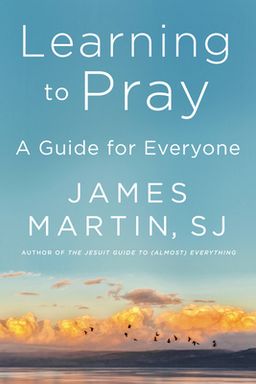
Learning to Pray cover

Learning to Pray

by James Martin

Learning to Pray by James Martin delves into the multifaceted nature of prayer, offering insights into various styles and traditions. This guide helps readers cultivate a personal spiritual practice, enhancing their connection with the divine through love, humility, and emotional exploration.

Prayer as Relationship and Invitation

James Martin’s central claim is simple yet radical: everyone can pray because prayer is not an exclusive ability but a human capacity for relationship. In his book, he reframes prayer from a formal religious duty into a living friendship between God and person. You don’t need mystical talent or spiritual credentials—the desire itself is enough. If you are curious about God, Martin says, that curiosity is already divine invitation.

Prayer as Human Relationship

Drawing from Jesuit spiritual tradition and his personal story, Martin defines prayer as friendship. He borrows from William A. Barry’s insight that God desires friendship with humanity independent of worthiness. Through anecdotes from his Jesuit life—learning only rote prayers as a child, fumbling through novitiate prayer, and rediscovering God as confidant—he demonstrates that prayer unfolds like any relationship: through trial, honesty, listening, and time.

Recognizing Unconscious Prayer

Martin insists you may already be praying without knowing it. Ordinary experiences—feeling awe at a sunset, compassion for a stranger, gratitude after good news—are preliminary forms of prayer. These moments are the “embryos of spirituality.” By naming them as prayer, you awaken awareness of God’s constant presence in daily life. (Note: he echoes Gerard Hughes’s teaching that desire itself is the seed of prayer.)

Why Prayer Matters

Martin answers the enduring question: why pray at all? His layered response combines theology and psychology. You pray because God created you for relationship; because you need help and strength; because prayer transforms your character; and because through it you express gratitude and solidarity. He cites St. Augustine’s line—“Our hearts are restless until they rest in you”—as the ultimate explanation: prayer fulfills your deepest human restlessness.

An Invitation, Not a Test

For Martin, prayer is never performance; it’s willingness to be with God. He reassures beginners who fear failure: wobbling and awkwardness are normal, like learning to ride a bike. Whether you start by memorized prayers, short petitions, or silent sitting, the effort itself pleases God. (In Ignatian terms, the movement toward God is already grace.)

Key Insight

Prayer begins not in holiness but in desire. The mere fact that you wish to pray is evidence that God is already reaching out to you. Prayer therefore becomes participation in divine friendship rather than an exam of faith.

This foundational idea reframes the entire book: prayer is God’s invitation to human life fully lived. It is how you learn attentiveness, transformation, and participation in love. Every chapter that follows expands this relationship—moving from recognition to practice, from listening to discernment, and finally from contemplation to compassionate action.


Learning the Language of Prayer

You learn prayer by doing it. Martin compares spiritual life to learning a new language—you start with simple words, make mistakes, and grow fluent over time. He catalogs early and hidden ways people already pray and shows practical methods to develop them deliberately.

Recognizing Ordinary Forms

Nine informal kinds of unrecognized prayer structure your day: spontaneous cries for help, moments of compassion, gratitude, wonder, conscience checks, and even the desire to pray itself. Each counts as conversation with God. Martin asks readers to pause, name these moments, and let them evolve into active prayer. (He compares this realization to Molière’s line “I have been speaking prose without knowing it.”)

Defining Prayer

To clarify practice, Martin surveys classic definitions—from St. John Damascene’s reverent “raising the mind and heart” to St. Teresa’s “sharing between friends.” Walter Burghardt’s phrase “a long, loving look at the real” gives modern resonance. For Martin, prayer integrates all these: a conscious conversation in friendship that includes awe, love, and attention.

Friendship as Method

Treat God as friend: spend time, speak honestly, listen, and allow change. Martin provides analogies of human friendship—Joe’s cheerful detachment, Damian’s advice to voice anger honestly, and retreatants who learn silence as presence. When prayer feels distant, diagnose it as you would a friendship: have you been honest? Have you listened?

Balancing Formal and Spontaneous Prayer

Memorized prayers like the Our Father and Hail Mary are shared treasures. They provide words when emotions fail, link you to centuries of faith, and anchor you in community. Yet Martin warns against mechanical repetition; personalize by pausing between phrases or inserting names. Rote prayers are tools—not substitutes—for heartfelt dialogue.

Key Insight

You become fluent in prayer as you recognize everyday gestures as its vocabulary and blend fixed formulas with spontaneous honesty.

By transforming unrecognized impulses and learned prayers into integrated conversation, Martin teaches that spiritual maturity lies not in variety of technique but in consistency of presence and relationship.


Forms and Practices that Shape Presence

Guided practices train awareness of God. Martin outlines Ignatian and monastic traditions that root prayer in daily life: the Daily Examen, Lectio Divina, imaginative contemplation, centering silence, and nature reverence. Each enlarges perception of divine presence through different senses and faculties.

1. The Daily Examen

Ignatius’s five-step examen—Presence, Gratitude, Review, Sorrow, and Grace—is Martin’s preferred discipline. Reviewing your day in gratitude trains discernment: awareness of God’s yesterday sharpens responsiveness tomorrow. Martin’s anecdote of the actor’s exercise “I am here” expresses the examen’s fruit—ordinary life becomes sacramental when noticed in God’s light.

2. Lectio Divina

Daniel Harrington’s four questions transform Scripture into conversation: What does it say? To me? What do I say to God? How will I act? Martin’s example—Thomas Merton awakening his Jesuit vocation—illustrates text-to-life transformation. Lectio is prayer that acts; it pulls you from interior consolation toward concrete movement.

3. Ignatian Imaginative Contemplation

In Ignatian prayer, imagination is sanctified. You “compose a place” by visualizing Gospel scenes with sight, sound, touch, smell, and taste, entering as participant. This sensory engagement personalizes Scripture. Martin’s retreatant picturing himself as the servant at the Nativity discovers humility; imaginative entry births empathy and intimacy.

4. Centering Prayer and Silence

For those drawn to silence, centering prayer offers wordless rest in God. Using a sacred word like “Jesus,” you release distractions. Martin recalls Joyce Rupp’s short poem triggering deep stillness—the encounter of apophatic “empty” prayer. Silence becomes communion beyond language, echoing Augustine’s conviction that God dwells nearer than the self.

5. Nature Prayer

In creation, you find God’s artistry. Inspired by Laudato Si’, Martin instructs you to let fields, seas, or birds draw reverence through attentive presence. A catbird trapped in a retreat house becomes his metaphor: “Flying at false freedom hurts”—a divine lesson through nature.

These diverse forms prove that prayer is incarnational: God meets you through sight, sound, Scripture, silence, and soil. Each trains both perception and heart so that daily life becomes dialogue.


How God Speaks and How You Listen

What happens when you pray? Martin’s later chapters describe prayer’s inner phenomena and discernment. Emotions, insights, memories, desires, images, and even mystical moments are all channels of divine communication. The task is noticing and interpreting them.

God’s Palette of Communication

Through feelings and memories God personalizes encounter. Martin recounts reading Exodus and suddenly feeling anger—revealing new understanding of Moses’s struggle. A childhood Christmas memory of candlelight transformed into felt divine love. Desire serves as compass: Ignatius’s holy longing on reading saints leads him to vocation; your desires may indicate God’s direction.

Images and Felt Words

God sometimes gives brief, surprising phrases. Martin’s mother heard: “More than you can know.” His own pilgrimage voice said, “What is that to me?” These short, unexpected, fitting words leave durable peace—signs of authenticity. Images like the muslin banquet cloth show symbolic grace altering perception.

Discerning Voices

How do you know a movement is divine? Ignatian rules test fruit: Does the inspiration foster love, hope, and clarity or fear and confusion? The good spirit consoles like water on a sponge; the evil spirit agitates like water on stone. Evaluate whether it fits Scripture, produces charity, and endures with peace. Martin’s Haiti example—“You don’t get to do this forever”—passed all tests of clarity and service.

Key Insight

Prayer is two-way communion. God uses imagination and emotion, while discernment transforms experience into understanding. The measure of authenticity is sustained love and freedom.

Martin teaches practical discernment: journal experiences, discuss with directors, and watch outcomes. When fruits lead consistently toward compassion and peace, they mirror God’s good spirit. Learning the grammar of interior life becomes the lifelong study of prayer.


Struggles, Dryness, and Perseverance

No relationship endures without difficulty. Martin devotes whole sections to distractions, dryness, and darker states—the seven Ds: darkness, dryness, desolation, doubt, disbelief, depression, and despair. He explores each with realism and pastoral wisdom.

Distraction and Acceptance

Distraction is normal. Martin humorously describes retreatants irritated by noises or thoughts in chapel; he advises praying through them: “God, I’m distracted but here.” Sometimes distraction signals deeper issues you need to bring to conversation with God.

Dryness and Growth

Periods without consolation refine faith into trust. Martin cites Ignatius and Rahner: dryness teaches endurance and detachment from feelings. When prayer feels empty, vary method—shift from imaginative to silent forms—and record memories of previous consolation. The silence itself becomes companionship.

Distinguishing the Seven Ds

Recognizing states prevents confusion. Darkness (St. John of the Cross’s night) may be purifying presence; desolation (Ignatian turmoil) signals withdrawal from grace; depression requires medical and pastoral attention. Naming them restores perspective and points to right remedies.

Persistence and Help

Martin’s cure for all dryness is persistence. Ten minutes daily outweighs occasional marathons. Seek spiritual direction and community; external witnesses protect faith during inward drought. (He notes how journals and directors remind you of past God-moments.)

Key Insight

Dryness and distraction are not signs of failure but stages of maturation. Learning fidelity through silence transforms frustration into intimacy.

Through patient realism Martin removes shame from struggle. He shows that perseverance in prayer mirrors perseverance in any friendship; honest endurance through darkness reveals deeper trust.


Community, Direction, and Action

Prayer matures when shared and acted upon. Martin closes the arc from interior conversation to outward compassion, emphasizing four supports—direction, retreats, faith sharing, and journaling—and the final movement from prayer to justice in the world.

Spiritual Companionship

Spiritual direction helps notice God’s work. Through Joe and Cathy’s fictional session, Martin shows listening as catalyst for honesty. The director doesn’t fix; she holds silence, letting prayer clarify emotion. Direction keeps the conversation with God grounded.

Retreats and Communal Prayer

Retreats provide withdrawal for listening. Silence initially frightens, then frees; faith-sharing groups echo early Christian circles, helping you see divine diversity. Hearing others’ experiences multiplies hope and humility.

Journaling and Memory

Writing preserves what consolation teaches. Martin calls journaling “memory against forgetting.” It becomes prayer itself—a dialogue on paper that protects grace from amnesia and guides future discernment.

From Prayer to Action

Prayer ends not in the self but in service. Using the Transfiguration story, Martin illustrates returning “down the mountain” after revelation to minister. Your genuine encounters produce gratitude, clarity, and the courage to act. Journals and directors help translate feelings into deeds: call a friend, volunteer, forgive, defend creation. In action, you embody faith.

Key Insight

Prayer culminates in love expressed outwardly. Contemplation and action are two halves of vocation—the mountaintop leads to the valley of compassionate service.

In the end, Martin shows that prayer is not escape but engagement. It teaches you to listen so well that you become a voice of hope for others.

Dig Deeper

Get personalized prompts to apply these lessons to your life and deepen your understanding.

Go Deeper

Get the Full Experience

Download Insight Books for AI-powered reflections, quizzes, and more.