
Idea 1
Building High-Performance Learning Organizations
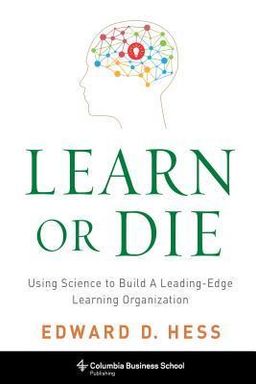
What makes some organizations continuously improve while others stagnate? Edward Hess answers this by proposing a disciplined formula for adaptability: HPLO = Right People + Right Environment + Right Processes. His book shows that learning is not a jargon-filled aspiration but a measurable operational capability that must be embedded into culture, leadership, and daily workflows.
Hess begins with urgency. Competitive advantage has never decayed faster—globalization and technology have shortened business lifespans and tightened innovation cycles. The message is clear: no organization survives long without institutionalizing learning as a perpetual function. Strategic planning and annual training programs are now obsolete; continuous learning must be systematic, not episodic.
Learning as a system, not a slogan
In the HPLO model, people are chosen and nurtured for curiosity, resilience, and humility. The environment protects them emotionally—through psychological safety, transparency, and leader vulnerability—and the processes reinforce disciplined reflection and experimentation. If any part fails, learning stalls. Hess compares it to a house: you cannot build sustainable intelligence on weak foundations.
From human cognition to organization design
The book weaves insights from psychology, neuroscience, and management. Daniel Kahneman’s concepts of System 1 (fast, automatic) and System 2 (slow, reflective) thinking show how biases interfere with learning. Emotional intelligence and positive psychology research (Fredrickson, Isen, Seligman, Davidson) reveal how fear constricts cognition while openness expands it. These ideas become organizational design principles: build environments that trigger System 2 thinking and encourage emotional states conducive to curiosity.
Real-world examples of learning systems
Bridgewater Associates demonstrates radical transparency through its digital feedback ecosystem: the Dot Collector, Baseball Cards, and Pain Button turn performance, emotion, and reflection into measurable learning inputs. Intuit’s “Design for Delight” program shows how structured experimentation democratizes innovation—leaders model “leadership by experiment” rather than hierarchy. UPS exemplifies large-scale learning through metrics, constructive dissatisfaction, and people-centered HR policies. Each company translates Hess’s blueprint differently, proving the formula is flexible but essential.
Leadership mindset and personal ego work
Leaders must model humility and curiosity, treating feedback as data rather than judgment. The book’s closing chapters emphasize “Pain + Reflection = Progress”—transforming discomfort into insight—and “getting above yourself,” the act of viewing errors objectively. Leaders such as Scott Cook, Ray Dalio, and Brad Smith exemplify this by publicly acknowledging mistakes and experimenting visibly. Ego is not an obstacle to suppress but a signal to study and retrain.
From mindset to measurement
Transformation demands metrics. Hess argues that learning behaviors—asking questions, analyzing data, running experiments, sharing results—must be measured and rewarded just like financial outcomes. Catechisms like Bridgewater’s “evaluate people accurately, not kindly” and UPS’s “measure everything” underscore this. A true HPLO institutionalizes curiosity with discipline. When you reward transparency and experimentation, continuous learning ceases to be an intangible goal—it becomes the organization’s operating currency.
Core message
Learning is not a trait—it’s a design. Build systems that make candor safe, thinking slow, error diagnosis fast, and emotion constructive. Then the formula HPLO becomes an engine that keeps your organization perpetually relevant.