
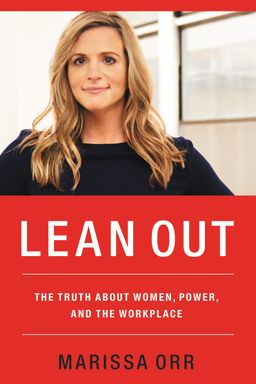
Lean Out cover

Lean Out

by Marissa Orr

Lean Out critiques corporate feminism, urging women to step back from patriarchal structures and embrace their unique qualities. Marissa Orr advocates for systemic change in workplaces, promoting environments that value empathy and collaboration over traditional masculine assertiveness. Discover how true gender equality requires redefining success and altering corporate conditions.

Rethinking Feminism and the Gender Gap

Why do so many corporate programs created to help women succeed leave them feeling more frustrated than empowered? In Lean Out: The Truth about Women, Power, and the Workplace, former Google and Facebook executive Marissa Orr argues that modern feminism has been hijacked by a narrow, male-oriented definition of success. Rather than helping women thrive, she says, the movement often pressures them to act like men—to equate confidence with dominance, leadership with aggression, and ambition with the pursuit of power for its own sake.

Orr contends that the persistent gender gap in leadership is not a reflection of female deficiency but of a system designed around outdated industrial-era models of competition, hierarchy, and visible bravado. Corporate structures were built by men to manage industrial workers in an age when productivity could easily be measured in units of steel or widgets. Yet in today’s knowledge economy—where creativity, emotional intelligence, and collaboration fuel success—these male-centric systems not only fail women, they fail companies.

Throughout the book, Orr combines razor-sharp humor and corporate war stories with extensive research to challenge the sacred cows of corporate feminism. She dismantles popular ideas like Sheryl Sandberg’s “leadership ambition gap,” the “confidence gap” of Kay and Shipman, and the self-help industry’s obsession with reforming women’s behavior. Her thesis is bold: women don’t need fixing. The system does.

Why Modern Feminism Misses the Point

Orr begins by examining how corporate feminism often acts as a public performance—more “feminist theater” than authentic dialogue. She describes how initiatives intended to help women at places like Google and Facebook often turned into echo chambers of corporate jargon. In one example, she recounts attending a communication workshop where female employees were told to stop apologizing, quit using exclamation points, and eliminate emotional expression from their speech. The idea was that masculine communication traits projected authority. But for Orr, the message was clear: be less like yourself if you want to succeed.

The underlying implication of such programs, she argues, is deeply anti-feminist—it assumes that male behavior is the norm and that women must adjust. Feminism has always been about expanding freedom and self-expression, not narrowing it to fit a corporate ideal. Yet as Orr saw firsthand, even well-meaning diversity efforts often reinforce the power structures they claim to challenge.

The System Is the Problem—Not Women

From Orr’s perspective, the corporate workplace functions like a rigged game, one that rewards self-promotion, performative confidence, and political savvy over authentic ability. She likens modern business culture to an “industrial artifact”—a system optimized for visible production rather than creative problem-solving. In such environments, those who talk the loudest and appear the most confident are perceived as the most competent. Research consistently shows that these behaviors correlate more with men than with women, but they do not actually correlate with performance.

This male-defined definition of success explains why women, even when they enter and excel in the workforce, often feel alienated or unmotivated by the corporate race to the top. Many simply don’t want the prize on offer—power through authority—because it doesn’t align with what brings them fulfillment: collaboration, impact, flexibility, and relationships. Orr reframes women’s reluctance to pursue certain roles not as weakness but as a rational response to a system that values what they don’t.

From Personal Story to Universal Insight

Orr’s personal journey from Google to Facebook—and her eventual firing—serves as the narrative thread driving the book. She recalls being punished for the very traits that supposedly made her effective: empathy, emotional intelligence, and integrity. Her frustrating experiences with corporate politics culminated in her being terminated after a conflict with a female executive, an irony that underscores her claim that the gender gap cannot be solved by merely inserting more women into broken systems.

Through these stories, Orr challenges readers to stop asking how women can succeed in existing power structures and start asking why those structures look the way they do. The key is systemic reform, not personal reinvention. The success of the future workplace, she argues, depends on rewriting the rules of power to value influence, trust, and creativity over dominance, fear, and control.

What You’ll Learn

In the chapters ahead, Orr tackles the big myths that dominate discussions about gender and power: why blaming women for lacking confidence or ambition misses the mark, how cultural values distort our understanding of leadership, and why traditional corporate rewards like promotions and hierarchy motivate only a narrow subset of humanity. She draws from psychology, economics, and organizational behavior to show that true diversity isn’t achieved by homogenizing everyone but by building systems that embrace differences in motivation and temperament.

Ultimately, Orr calls for nothing short of a management revolution—one grounded in trust, truth, and human well-being. “Lean out,” she argues, doesn’t mean quitting your job or giving up on ambition. It means rejecting toxic definitions of success and reclaiming your right to live and work authentically. For anyone tired of being told to simply “lean in,” her book offers a profound alternative: balance ambition with integrity and redesign the system so everyone—men and women alike—can thrive.


The Leadership Ambition Myth

Why don’t more women want to be CEOs? Sheryl Sandberg’s Lean In argues that cultural conditioning and fear create a “leadership ambition gap.” Marissa Orr takes this premise apart, suggesting that perhaps the simplest reason many women don’t aspire to the corner office is that they actually don’t want the job—and that’s okay. The problem, she says, lies in our assumption that power and dominance are the ultimate goals of success.

Cultural Conditioning vs. Choice

According to common feminist narratives, girls are taught to be polite, communal, and self-effacing, while boys are rewarded for boldness and aggression. These early messages supposedly explain why men end up running companies and women stay in supporting roles. Orr acknowledges that stereotypes exist, but she challenges the conclusion that socialization alone is to blame. Using data from McKinsey’s Women in the Workplace reports, she notes that most men don’t want to be CEOs either—only 36 percent of men and 18 percent of women aspire to executive roles. Perhaps, she suggests, the career structure itself, not female psychology, is the real issue.

If the majority of both genders reject the grueling lifestyle, politics, and stress of top roles, then labeling women’s choice as a lack of ambition is misleading. It’s not that women are socially conditioned into submission; it’s that the game rewards goals many of them don’t find meaningful.

The Double Standard of Ambition

Men’s disinterest in running homes isn’t scrutinized as cultural failure, yet women’s disinterest in running corporations is. Orr points out that we’ve accepted male avoidance of domestic work without trying to “fix” them, while we have entire industries devoted to fixing women. She humorously calls for a new term—the “domestic ambition gap”—to highlight this hypocrisy.

By treating female ambition as something that needs correction, society devalues other forms of leadership—caregiving, teaching, and cooperation. Real progress would mean expanding our definitions of success rather than shoehorning women into a masculine hierarchy that often rewards the least empathetic among us.

Leadership vs. Executive Ambition

Orr draws a clear line between wanting to lead and wanting to be in charge. Figures like Martin Luther King Jr. led by influence, vision, and empathy—not formal authority. Corporate executives, by contrast, lead by control. When surveys show that women value relationships, collaboration, and purpose over hierarchy, this doesn’t show weakness—it shows a different concept of power. Orr argues that forcing women to climb rigid ladders strips away the moral and creative strengths they bring to organizations.

In the end, she concludes that the leadership ambition gap is a reflection of systemic dysfunction, not female deficiency. If fewer women want to play a zero-sum game, perhaps the system should evolve into one where winning doesn’t require someone else’s loss.


The Confidence Con

We’ve all heard it before: women lack confidence. Orr devotes an entire section of her book to dismantling this pervasive myth. She examines how bestselling titles like The Confidence Code turned a simplistic psychological observation into a moral judgment. By equating female humility with inadequacy, the confidence-gap narrative both trivializes and insults women’s intelligence.

Confidence Redefined

Orr begins by exposing the shaky science behind the “confidence gap.” She takes readers through a Cornell University study where students rated their confidence in science and later decided whether to enter a trivia contest. When fewer women volunteered, researchers concluded they lacked confidence. Orr skewers this logic: maybe they just didn’t care about science games. She imagines the absurd parallel headline, “Men Underrepresented in Nursing Due to Lack of Confidence.” The point is clear: disinterest is not a symptom of deficiency.

According to Orr, the problem isn’t how women think of themselves, but how society misreads behavior. Hesitation, empathy, and reflection—all signs of thoughtfulness—are interpreted as insecurity. Meanwhile, arrogance and bluster are labeled as confidence. She contrasts corporate swagger with Nathaniel Branden’s psychological definition of self-esteem: “trust in one’s ability to think and cope with life.” By this standard, true confidence is built on honesty, not delusion.

Ego vs. Confidence

Through corporate anecdotes, Orr illustrates how low confidence is often confused with high integrity. A junior lawyer hesitant to speak in meetings was deemed timid; yet her male boss’s inability to confront her about it became the real act of cowardice. The book suggests that corporate culture rewards egoistic certainty—“fake it till you make it”—over authentic clarity. But bravado masks insecurity, not strength. “Ego,” she writes, “is loyalty to being right; confidence is loyalty to truth.”

This inversion has dire consequences. Arrogant CEOs and political leaders—mostly men—often drive organizations and economies to collapse precisely because they mistake confidence for control. True confidence, by contrast, is flexibility in the face of uncertainty, not denial of it.

The Real Gap

Instead of a confidence gap, Orr identifies a systemic gap: a workplace that punishes authenticity. Women learn to suppress self-awareness to imitate men’s exaggerated certainty. But in doing so, everyone loses. The system rewards the mask over the mind, ego over intellect. Real success, Orr concludes, isn’t about learning to roar louder—it’s about trusting yourself enough not to need to.


Power, Influence, and Motivation

Why do so few women crave power? Orr argues that the problem isn’t their lack of drive—it’s that the corporate world offers only one flavor of reward: authority over others. In a chapter inspired by a team-building exercise at Google, she describes how different personality types are coded by colors—Reds (competitive), Greens (collaborative), Yellows (social), and Blues (analytical). Eleven of twelve top executives were Reds. The lesson? The workplace rewards dominance above all else.

Authority vs. Influence

Orr distinguishes between two forms of power: authority—commanding others through hierarchy—and influence—leading through trust and relationships. Most organizations, she explains, prize the first and neglect the second. But while authority can compel obedience, influence inspires consent. Women tend to gravitate toward influence, which makes them natural champions of collaboration. Yet because companies conflate leadership with control, this distinctly feminine strength is devalued.

Research supports her observation. Studies show that men with hiring and firing authority report more happiness, while women in those roles report less. Women often prefer balance, autonomy, and meaningful impact over dominance. Orr argues that this isn’t weakness—it’s wisdom. Power doesn’t have to roar; it can also connect, heal, and unite.

Competition vs. Cooperation

Orr connects power dynamics to the larger issue of business design. Most corporate systems are zero-sum—one person’s win requires another’s loss. Women, conditioned for relational thinking, find this exhausting and unsatisfying. In her view, capitalism overemphasizes competition when modern work actually thrives on cooperation. She cites research showing that hierarchies hinder collaboration and that women working in groups outperform men—unless competition is introduced, which flips the outcome.

The conclusion is provocative: if women won’t thrive in the current system, maybe it’s the system that’s broken. Collaboration and empathy aren’t frills; they are economic advantages in a world increasingly powered by teams, not individuals. Shifting from authority to influence could make work not only more humane but also more productive.


System Failure and Cognitive Bias

At the heart of Lean Out lies a tough truth: workplaces don’t just undervalue women—they misunderstand talent altogether. Building on Michael Lewis’s Moneyball, Orr explains how companies, like baseball scouts, mistake visibility for competence. They reward loud talkers, tall men, and confident presenters because the system was built to see those traits. The result? A hierarchy of illusions where the best self-promoters rise faster than the best performers.

Bias Toward the Visible

In fields once defined by tangible production, output was obvious—you built 10 cars or you didn’t. In today’s knowledge economy, performance is abstract and hard to measure. So managers rely on proxies: aggressiveness, charisma, and volume. These traits correlate more with men, not because they lead to better outcomes, but because they are easier to notice. As Orr observes, corporations reward activity over impact and motion over meaning.

Male Overconfidence as Policy

Citing behavioral economics, Orr shows that male overconfidence drives not just personal success but global failures—from the Titanic to the 2008 financial crash. Studies prove that men’s frequent trading and decisiveness lose money, while women’s caution earns more. Yet companies still prize risk-taking bravado. If “fake it till you make it” is the unofficial rule of business, Orr suggests we should expect spectacular flameouts.

Fixing the System

Rather than trying to reprogram people, Orr argues for environmental changes—“systemic tweaks” that drive organic behavior shifts. She draws on Dan Ariely’s research on design, where subtle nudges (like changing default options on forms) lead to massive change without force. Similarly, corporate structures could replace forced ranking, subjective performance ratings, and zero-sum rewards with collaborative evaluation systems, flexible incentives, and clear, measurable goals. The future of fairness, she insists, lies in design, not demands.


Redesigning Power, Trust, and Leadership

In later chapters, Orr proposes a radical reset for the workplace: build organizations around truth and trust rather than dominance and fear. Drawing inspiration from bridgewater Associates’ Ray Dalio, she explores how “radical transparency” and evidence-based evaluation could replace political gamesmanship. When systems reward candor and protect fairness, diversity happens naturally—because people can finally be themselves.

The Trust Dividend

At Google, a massive internal study found that the single greatest predictor of high-performing teams was psychological safety—the sense that one could speak up without fear. In teams where trust was high, people took risks, shared ideas, and stayed longer. Orr emphasizes that this finding should be feminism’s north star: the goal isn’t female dominance but human freedom. When trust flourishes, gender balance becomes a by-product, not a goal.

Checks and Balances

One of Orr’s sharpest insights involves power distribution. Using a story from Google, she describes how the security department—charged with protecting company data—held real authority, even over executives. When a beloved manager violated policy, security overruled leadership and fired him. Orr suggests that human resources should wield similar independent power to safeguard people from toxic managers. When authority is balanced and fair, corruption and abuse diminish.

Recognizing Real Motivation

Finally, Orr reframes motivation: not everyone seeks control. Some crave creativity, recognition, or purpose. Studies show that simple, sincere recognition drives engagement far more than salary increases. If corporations offered diverse rewards—status for some, flexibility for others—they’d unleash dormant innovation. As she puts it, “Diversity requires a diversity of rewards.” When people trust the system to value truth over politics, the old gender gap will dissolve on its own.


From Winning to Well-Being

The closing chapters of Lean Out ask a powerful question: what if the feminist obsession with money and power has distracted us from what really matters—well-being? Orr challenges the usefulness of the “wage gap” as our primary measure of equality. When we adjust for hours, career choice, and job level, 96 percent of the gap disappears. The remaining difference, she argues, reflects values, not victimhood.

Measuring the Wrong Thing

By judging progress solely by income and rank, we assume that men’s lives are the ideal. Orr flips the equation: if equality means men lead half our homes as women lead half our companies, why aren’t we urging men to work fewer hours and care for children more? Feminism, she says, shouldn’t mean replicating men’s burnout but redesigning success to include balance, purpose, and joy.

Redefining Success

Money is not power unless you spend it, Orr notes, and women already control 80 percent of consumer purchasing and more than half of U.S. personal wealth. The feminist fixation on earnings misses the bigger truth: influence often happens through choice and consumption. Measuring equality by well-being, not wealth, reveals that progress lies in creating systems that allow individuals—male or female—to define what fulfillment means for them.

Finding Personal Freedom

Orr ends with a personal story about realizing she was chasing goals she didn’t want. Through a playful tool she calls “Doris”—her imaginary eighty-year-old self in a muumuu, sipping scotch—she evaluates decisions by asking what truly matters in the end. Her career workshops at Google echoed this theme: fulfillment comes from aligning work with personal values across four needs—security, power, freedom, and connection. Understanding which you value most helps you design a life, not just a résumé.

“Lean out,” Orr writes, “doesn’t mean give up. It means opting out of someone else’s story.” That story—about what success, feminism, and ambition should look like—is overdue for revision. Her call is not to reject work, but to reclaim humanity inside it.

Dig Deeper

Get personalized prompts to apply these lessons to your life and deepen your understanding.

Go Deeper

Get the Full Experience

Download Insight Books for AI-powered reflections, quizzes, and more.