
Idea 1
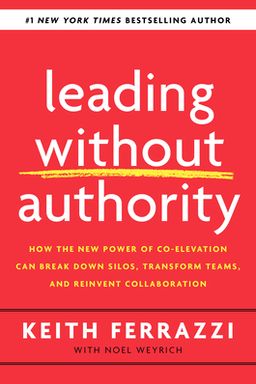
Leading Without Authority: The Power of Co-Elevation
When was the last time you felt powerless at work? Maybe you wanted to fix a broken process or rally teams around a new idea—but without the title or authority to make it happen. In Leading Without Authority, Keith Ferrazzi proposes a radical mindset shift: leadership is no longer tied to position or hierarchy. Instead, leadership is about impact—about the ability to inspire, connect, and elevate others toward shared goals. Ferrazzi calls his approach co-elevation: the art of going higher together, regardless of formal power or status.
Ferrazzi argues that in an age of digital disruption, rigid hierarchies kill innovation and slow collaboration. Teams now form fluidly across departments, projects, and even companies. To thrive, you must learn to lead laterally—to engage and inspire peers, partners, and even superiors to co-create solutions. He contends that success comes from building trust, fostering candor, and cultivating interconnected relationships that transcend job titles.
Why the Old Rules No Longer Work
Traditional leadership was built on control: managers directed, employees complied. But modern organizations are vast networks of interdependence. As Ferrazzi writes, technology and market change have made “authority” largely obsolete. Deloitte’s research confirms that only a fraction of large companies still depend on hierarchical structures; most have shifted to cross-functional teams. The people who rise today do so not by wielding power, but by creating collaboration.
In other words, your job title matters far less than your ability to mobilize people. Ferrazzi learned this early in his career at Deloitte, when he began generating new business on his own initiative—without permission. His creativity and relationship-building earned him promotion faster than his peers, proving that leadership can emerge from anywhere. Conversely, he shares how his later authority as a global CMO at Starwood Hotels made him complacent; when he stopped cultivating relationships, his influence waned. The distinction became his life’s lesson: authority is no substitute for trust and connection.
The New Work World: Radical Interdependence
Ferrazzi’s central idea is that the modern world has entered an era of radical interdependence. No one person—or team—can accomplish big missions alone. Innovation, transformation, and adaptation demand cooperation across disciplines and departments. He calls this the new “network of networks,” where success depends on leading relationships rather than managing people. This shift requires an entirely new operating system based on generosity, agility, and transparency.
To survive and thrive, Ferrazzi urges you to adopt the mindset of servant leadership: caring deeply about others’ success while co-creating the future. It’s about asking, “How can I help you succeed?” not “How can I control outcomes?” Leaders become facilitators of collaboration, not gatekeepers of authority. This mindset unlocks creativity and engagement—the attributes most critical in fast-changing, chaotic environments.
The Core Mechanism: Co-Elevation
Co-elevation means working with others to “go higher together.” It’s not cooperation or consensus—it’s deeper. Ferrazzi defines it as mission-driven partnership rooted in mutual accountability and openness. Through “serve, share, and care,” individuals learn to be generous (serve), vulnerable and authentic (share), and deeply committed to each other’s growth (care). This triad transforms teams from collections of silos into dynamic coalitions capable of solving complex challenges.
“Co-elevation calls for more than collaboration—it demands empathy, candor, and courage. It’s a new social contract where we agree to lift each other higher.”
From Theory to Practice
Throughout the book, Ferrazzi combines frameworks with stories—like Target’s $7 billion turnaround under CEO Brian Cornell. When teams across creative and legal began collaborating in real-time instead of in rigid silos, Target launched 30 new in-house brands in just two years. That outcome was the result of “radical inclusion, bold input, and agility”—a formula Ferrazzi distills for transformative outcomes. Other vignettes include General Motors’ dealer partnerships, West Point’s cadet coaching culture, and even Hollywood productions reinventing toxic environments through team-led change.
These examples show that leading without authority isn’t soft philosophy—it’s a hard skill that drives measurable results. Co-elevation produces faster innovation, greater trust, and stronger adaptability. It’s what Ray Dalio calls an “idea meritocracy,” where truth and transparency outweigh rank.
Why It Matters Now
Ferrazzi frames co-elevation not just as a work strategy but a global necessity. As industries face constant disruption—from technology to pandemics—the ability to mobilize teams swiftly across boundaries determines survival. Collaboration is no longer optional; it is the core competency of leadership. Co-elevation bridges diversity, nurtures innovation, and fosters resilience—a foundation for thriving in the Fourth Industrial Revolution described by Klaus Schwab.
Ultimately, this book argues that leadership is everyone’s responsibility. It’s not about hierarchy—it’s about human relationships and shared purpose. Ferrazzi’s challenge to you is personal: recognize your power to lead today, not someday. Because in the new work world, waiting for permission is the fastest route to irrelevance—and co-elevation is the path to a future where everyone rises together.