
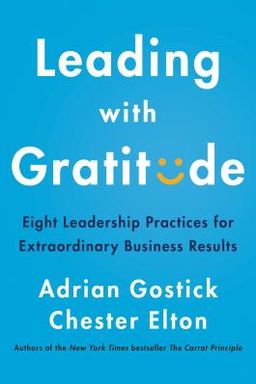
Leading with Gratitude cover

Leading with Gratitude

by Adrian Gostick, Chester Elton

Leading with Gratitude reveals how expressing gratitude can transform leadership, driving productivity and team cohesion. Through engaging examples, discover eight powerful practices that enhance workplace culture and inspire extraordinary business results.

Leading with Gratitude: The Transformative Power of Appreciation

When was the last time you felt truly appreciated at work? That small boost of acknowledgment, that genuine thank-you, can change everything—from how motivated you feel to how you view your team and your leader. In Leading with Gratitude, Adrian Gostick and Chester Elton argue that this simple act, often overlooked in the modern workplace, is one of the most powerful and undervalued tools of effective leadership. Gratitude, they claim, isn’t soft—it’s strategic. It fuels performance, builds trust, and strengthens cultures far more effectively than fear or money ever could.

The authors contend that while most managers intellectually understand gratitude’s importance, few put it into practice. They call this the gratitude gap: the chasm between knowing appreciation works and actually using it. Their research—spanning hundreds of thousands of employees—reveals that workplace gratitude is rarer than almost anywhere else in life. Yet when leaders express sincere, specific appreciation, engagement and productivity soar.

Why Gratitude Matters More Than Ever

Gostick and Elton open by sharing the story of Garry Ridge, CEO of WD-40, who led his company through the 2008 financial crisis not with fear, but with hope and gratitude. Ridge told employees daily: “No lying, no faking, no hiding.” He made appreciation an operating principle, thanking people for living core values like ownership and teamwork. The results were staggering—WD-40 achieved its best financial performance in history and maintained almost 100% staff engagement. It’s a vivid demonstration that, especially in turbulent times, gratitude creates belonging and resilience.

The authors argue that expressing appreciation isn’t just about being nice—it’s about improving business outcomes. Data shows grateful managers lead teams with up to twice the profitability, higher customer satisfaction, and dramatically lower turnover. When people feel seen and valued, they contribute their best ideas and energy. In contrast, fear and neglect breed resentment and disengagement.

The Myths That Hold Leaders Back

Despite gratitude’s power, many leaders resist it. Gostick and Elton identify a series of ingratitude myths that sabotage leadership effectiveness—like believing fear motivates best, thinking younger employees want too much praise, or assuming money trumps appreciation. Each myth exposes a mindset stuck in the industrial age, not the human-centric reality of modern work. For instance, the “Fear is a Motivator” myth leads managers to rule by anxiety, ignoring neuroscience that shows chronic stress kills creativity. The “Money is Everything” myth mistakes temporary incentives for sustainable motivation, missing research showing monetary bonuses fade fast compared to heartfelt recognition.

Breaking these myths, the authors prove that gratitude is not weakness but wisdom—a practice rooted in psychology and productivity science. As leadership expert Marshall Goldsmith (who wrote the foreword) notes, gratitude activates happiness more effectively than achievement. It’s not about “I’ll be happy when,” but “I’ll be grateful now.”

From Seeing to Expressing Gratitude

The book’s second half introduces eight practices of leading with gratitude, divided into two groups: Seeing and Expressing. “Seeing” covers how leaders can notice and understand great work: soliciting employee input, assuming positive intent, walking in their shoes, and spotting small wins. “Expressing” explores how to communicate appreciation: giving gratitude often and without fear, tailoring it to the individual, reinforcing core values, and making it peer-to-peer. Each practice offers real stories—like Alan Mulally at Ford, who transformed a fear-based culture by praising transparency, or Ken Chenault at American Express, who kept a gratitude journal to recognize employees in real time.

These examples make the book both inspiring and practical. Leaders learn to replace criticism with curiosity, isolation with empathy, and generic praise with specific acknowledgment tied to results and values. It’s gratitude designed for business application, not just good manners.

A Call to Lead Differently

Ultimately, Gostick and Elton call for a shift in how we define leadership success—from power and control to trust and connection. Gratitude, they insist, creates psychologically safe environments where innovation thrives. It gives people permission to speak up, fail safely, and keep learning. And beyond work, it enriches every relationship—from teams to families. The final chapter, “Take It Home,” applies gratitude to life outside the office, showing that the habit of appreciation transforms both professional and personal fulfillment.

In a world of constant disruption and pressure, Leading with Gratitude teaches that acknowledgment isn’t optional; it’s essential. When you practice it sincerely, you don’t just boost morale—you redefine what great leadership looks like. As Brené Brown puts it, “It’s not joy that makes us grateful; it’s gratitude that makes us joyful.” Gostick and Elton’s book shows how to make that truth a lived experience—for yourself, your team, and everyone around you.


Breaking the Ingratitude Myths

Gostick and Elton spend the first part of the book dismantling what they call the ingratitude myths—those false beliefs that prevent leaders from showing appreciation. These myths, they argue, are cultural relics that confuse control with credibility and silence with strength. The authors unpack seven especially persistent myths that deepen workplace dissatisfaction.

Myth 1: Fear Is the Best Motivator

According to many managers, pressure drives performance. Gostick and Elton show that’s simply wrong. Fear triggers the brain’s stress response—raising cortisol, killing creativity, and eroding trust. Alan Mulally’s turnaround at Ford proves the opposite: replacing fear with transparency and gratitude builds commitment. When executives admitted problems, Mulally applauded them instead of punishing them, transforming Ford from suspicion to unity. Gratitude became Ford’s secret fuel for engagement.

Myth 2: People Want Too Much Praise

Older managers sometimes stereotype Millennials and Gen Z as needy. Yet the authors’ data shows all generations crave clear, consistent feedback—not flattery. Younger workers simply expect it. Gratitude isn’t indulgence; it’s direction. Pharmaceutical rep Anne’s story illustrates this: when her boss mocked her request for appreciation, she left. The lesson? Employees don’t need praise for everything—they need meaningful recognition that their work matters.

Myth 3: I’m Not Wired to Feel It

Some argue they’re “just not the warm-and-fuzzy type.” Neuroscience debunks this myth. Gratitude may have genetic influences, but the brain rewires through practice. Gostick and Elton explain neuroplasticity—the ability of neurons to strengthen connections through repeated behavior (“neurons that fire together wire together”). Leaders can train themselves to notice and express appreciation, just as violinists build dexterity through repetition. Gratitude is a learnable skill, not a personality trait.

Myth 4: I Save My Praise for Those Who Deserve It

This myth breeds favoritism and disengagement. Research on hospital janitors showed that workers like Candice Philipps found deep meaning in seemingly simple tasks—patients’ dignity depended on her compassionate cleaning. Gratitude toward unsung heroes motivates everyone. The authors dismantle the misuse of the Pareto Principle (the idea that 20% of employees drive 80% of results). Instead of rewarding only stars, leaders should thank every contributor to elevate collective performance.

Myth 5: It’s All About the Benjamins

Many leaders assume money is the ultimate motivator. Yet research shows raises and bonuses create only fleeting satisfaction. Gostick and Elton describe how transparency and respect around pay matter more than dollar amounts. Recognition consistently ranks as a stronger driver than compensation—even at high-paying firms. When gratitude is absent, turnover skyrockets. In short: cash rewards pay bills, but appreciation pays attention.

Myth 6: People Will Think I’m Bogus

Leaders often fear seeming manipulative when giving praise. Gostick and Elton remind us: authenticity solves that. Employees don’t expect perfection—they appreciate effort. Announcing you’re working to show more gratitude earns respect. As Marshall Goldsmith teaches, meaningful change requires courage, humility, and discipline. When a manager openly admits “I want to do better,” people root for them. Cynicism fades when gratitude becomes consistent.

By charting these myths, the authors prepare readers to replace fear-based habits with trust-based leadership. Gratitude, they insist, isn’t a personality quirk—it’s a choice and a practice that rewires both your brain and your culture. Through real examples—from Ford to WD-40—it’s clear that gratitude is not just moral but practical: it strengthens teams, sparks innovation, and keeps people inspired to contribute their best.


Seeing Great Work in Action

In the first set of practices—what Gostick and Elton call Seeing—leaders learn how to notice and understand excellence before they express appreciation. Many managers are too buried in data and meetings to see the human effort that drives results. The authors introduce four transformational habits that help leaders pay attention in meaningful ways.

Solicit and Act on Input

When leaders ask employees for ideas, gratitude begins. Henry David Thoreau once wrote, “The greatest compliment anyone gave me was when they asked for my opinion and then attended to my answer.” Gostick and Elton show how that principle transforms companies. A manufacturing CEO admitted he didn’t have all the answers and invited employees’ help. By acting on their ideas, he cut production time from two weeks to six hours and grew sales 20%. Listening with gratitude turns suggestions into innovation.

Assume Positive Intent

Indra Nooyi, former PepsiCo CEO, said her best leadership advice was to assume positive intent. Instead of blaming mistakes, ask questions like “What can we do differently next time?” This mindset creates safety and collaboration. At WD-40, Garry Ridge replaced punishment with “learning moments.” Mistakes became opportunities to learn and share. Gratitude in conflict transforms anger into insight.

Walk in Their Shoes

Empathy makes gratitude credible. At Fairmont Hotels, leaders spent a day doing frontline jobs—housekeeping, maintenance, golf operations—to understand the work they managed. Alan Mulally extended this idea at Ford, recognizing even the janitors who polished display cars during his first town hall. When leaders truly see the people behind results, gratitude becomes natural and specific.

Look for Small Wins

Harvard researchers Teresa Amabile and Steven Kramer found that the biggest motivator at work is progress—no matter how small. Gostick and Elton urge leaders to notice daily wins, not just big victories. Jane Davis of Ability Beyond wrote thank-you notes to staff for gentle acts of kindness toward disabled patients. A small observation became a big moment of joy. At SnackNation, employees give Friday shout-outs to one another, breaking down silos and building trust. Gratitude magnifies everyday progress into lasting motivation.

Together, these seeing practices train leaders to notice before they judge. They cultivate curiosity, empathy, and awareness—the foundation for authentic appreciation. When leaders consistently see people’s efforts and challenges, they can express gratitude that feels earned, not performed. Seeing sets the stage for meaningful connection and long-term success.


Expressing Gratitude that Sticks

Once leaders learn to see excellence, they must learn to express it. Gostick and Elton introduce four expression practices that make gratitude meaningful and lasting. These habits turn appreciation from a random act into a cultural system that inspires sustained performance.

Give It Now, Give It Often, Don’t Be Afraid

Like ripe bananas, gratitude doesn’t keep. Timely praise reinforces behavior. Research on performance reviews shows that annual feedback is too late and often punitive. Frequent acknowledgment matters most—Gallup found that engaged employees receive recognition roughly every seven days. Alan Mulally mastered this rhythm at Ford with his color-coded progress system. Every “red-to-yellow” improvement was celebrated. Gratitude became the language of progress, not perfection.

Tailor to the Individual

Not everyone values the same recognition. Using their Motivators Assessment of 75,000 participants, the authors show that each person has unique motivators—like autonomy, teamwork, creativity, or service. Gratitude should fit those drives. Chad Pennington, the former NFL quarterback, said, “There’s no I in team, but there is a me.” When leaders personalize rewards—whether a quiet note for an introvert or a public shout-out for a social connector—it says, “I see you, not just your output.”

Reinforce Core Values

Gratitude can codify culture. Netflix’s famous Culture Deck is a model—the company turns values like transparency and excellence into lived behaviors. At the Larry H. Miller Group, employees are thanked for specific acts of integrity or service. When gratitude aligns with values, appreciation becomes the heartbeat of purpose. It teaches people why their work matters.

Make It Peer-to-Peer

Finally, Gostick and Elton show that gratitude shouldn’t flow only from managers. At JetBlue, employees nominate each other for the Lift program, sharing recognition across teams. Peer-to-peer thanks doubles engagement rates and builds psychological safety—the belief that teammates have your back. Whether through apps like Bonusly or handwritten notes, when gratitude circulates among peers, it becomes self-sustaining.

Expressing gratitude at this depth creates a cultural multiplier. It makes organizations not just efficient, but humane. When gratitude is frequent, personalized, value-driven, and shared among peers, people stay longer, work harder, and bring their full selves to work. That’s leadership by connection—not command.


Living a Life of Gratitude Beyond Work

In the book’s final chapters, Gostick and Elton extend gratitude beyond the workplace—showing that appreciation isn’t just a leadership technique but a lifestyle. Leaders often compartmentalize, being empathetic at work but detached at home—or the reverse. True gratitude integrates both worlds.

Taking It Home

Through vivid stories, the authors reveal how gratitude reshapes personal relationships. A leader named Miguel learned this the hard way: his success at work came at the cost of his family’s resentment. Only when he began expressing genuine appreciation to his loved ones did his home life—and leadership—transform. Practices like maintaining a family gratitude journal, writing daily thank-yous, and noticing small joys prove that gratitude reduces anxiety and deepens connection.

Building the Habit

Dave Kerpen’s micro-practice—pausing for two minutes to list what he’s thankful for—illustrates gratitude as emotional regulation. Psychologists like Robert Emmons support this with data: people who journal gratitude sleep better, exercise more, and have lower blood pressure. Ameet Mallik’s family “gratitude onion” digs deeper each week, reminding readers that small daily blessings matter most.

Thirteen Ways to Be More Grateful

Gostick and Elton provide practical steps: commit full attention to loved ones, give immediate positive feedback, practice random gratitude, teach kids to give back, and even “thank the cranks”—those difficult people who sharpen resilience. The idea is to see gratitude not as a performance but as perspective; a way of noticing goodness amid stress.

These habits echo other thinkers like Brené Brown and the Dalai Lama: gratitude is the gateway to joy. When leaders cultivate it at home, it spills naturally into their work. As one father taught his kids, “Everything we have today comes from a place where there was nothing.” Gratitude reminds us to see abundance where others see scarcity.

Ultimately, Leading with Gratitude closes with a universal truth: leadership begins with humanity. When you thank people—your team, your family, even strangers—you change relationships, culture, and yourself. As Neil Armstrong wrote in his letter of thanks for his spacesuit, “Its true beauty was that it worked.” Gratitude, too, may seem simple. But when practiced fully, it just works—transforming lives, one thank-you at a time.

Dig Deeper

Get personalized prompts to apply these lessons to your life and deepen your understanding.

Go Deeper

Get the Full Experience

Download Insight Books for AI-powered reflections, quizzes, and more.