
Idea 1
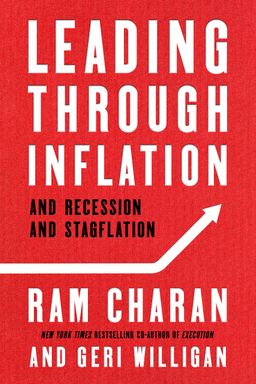
Leading Through Inflation: Thriving in Economic Turbulence
What kind of leader are you when everything costs more, cash dries up, and your old playbooks stop working? Ram Charan and Geri Willigan’s Leading Through Inflation: And Recession and Stagflation isn’t just a survival manual—it’s a guide to thriving in an era of accelerating uncertainty. Charan argues that inflation reshapes every dimension of business: from cash management and pricing to leadership psychology and business models. The book’s message is clear—leaders must act fast, think broadly, and turn crisis into opportunity.
Charan’s central argument is that inflation is not merely an external economic phenomenon; it’s an internal leadership test. Those who wait for central banks or government action will fail. Instead, leaders must mobilize their entire organizations—finance, sales, operations, HR, and even the board—to regain control over cash, pricing, and decision-making. Inflation, Charan insists, is everyone’s business, because it affects every transaction, relationship, and expectation within the company.
Seeing Inflation as a Leadership Arena
Rather than viewing inflation as a temporary disruption, Charan presents it as a transformative moment—a period when strong leaders can reset their businesses for the next decade. He recounts his first experience confronting inflation in the 1980s at General Electric under Jack Welch, where he built a program called COIN (“Coping with Inflation”). The lesson remains the same: inflation punishes slow movers and rewards decisive, creative ones.
Through examples like DuPont, Catalent, and TVS Motors, Charan shows that those who respond decisively—raising prices early, locking in loans, and restructuring operations—emerge stronger. He warns that inflation’s effects are cumulative and psychological: expectations of rising prices accelerate hoarding, distort value, and shift power along supply chains. To stay afloat, leaders must play offense, not defense.
From Panic to Playbook: The Tools for Acting Quickly
Charan’s framework doesn’t rely on abstract economics. It’s hands-on, tactical, and universal. He structures the book around seven actionable areas: understanding inflation’s mechanics, creating a “war room” for early warnings, managing cash with laser precision, changing pricing philosophy, cutting costs strategically, renewing the business model, and mobilizing every business function.
- Inflation literacy: Learn how inflation traps cash, distorts decisions, and can turn yesterday’s strategic investments into today’s liabilities.
- War-room discipline: Build quick feedback loops and data dashboards to react in real time to volatility.
- Cash obsession: Shift focus from paper profits to liquidity and develop metrics to detect cash traps early.
- Pricing mastery: Move from timid pricing to dynamic, value-based models and train sales teams to renegotiate fast.
- Smart cost-cutting: Eliminate waste but protect innovation and customer relationships.
- Business model renewal: Rethink who your best customers are, what products make sense, and how digitalization can bring sustainability to your margins.
- Shared responsibility: Empower every function—from HR to the board—to act with urgency.
Why This Matters Now
Charan’s approach is not theoretical; it’s urgent. Inflation and recession create a perfect storm that exposes weak leadership psychology. Many executives, conditioned by decades of low interest rates and cheap capital, are frozen by “analysis paralysis.” Charan urges leaders to evolve their mindset—to shift from “grow, grow, grow” to “strengthen, solidify, and strategize.” This psychological adaptability, he argues, is the differentiator that builds resilience now and competitive advantage later.
In sum, Leading Through Inflation is about leading transformation in disguise. It teaches you to tighten control without losing creativity, to defend cash while investing in digital tools, and to keep people aligned and confident when fear dominates the economy. Charan’s ultimate message is that leaders who proactively adapt can turn inflation’s chaos into a launching pad for future growth—and that moment of adversity may be the proving ground of your career.