
Idea 1
Leading from the Middle: The Art of Multi-Directional Influence
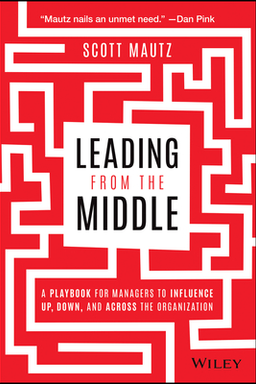
Have you ever felt caught between demands from above, expectations from below, and competition from all sides—wondering how to lead effectively when you’re in the crossfire? That’s the daily reality of middle managers or, as Scott Mautz calls them, those who lead from the middle. In his book Leading from the Middle: A Playbook for Managers to Influence Up, Down, and Across the Organization, Mautz argues that middle managers are the “core strength” of any organization—the lifeblood that connects strategic vision to execution, harmonizes conflicting agendas, and fuels performance everywhere.
Far from being bureaucratic placeholders or powerless intermediaries, managers in the middle have unique influence in all directions. Yet, their position is messy, exhausting, and often misunderstood. They must simultaneously please senior leaders, motivate junior teams, collaborate with peers, and still deliver results, all while dealing with limited authority, chronic overload, and emotional isolation. Mautz sets out to redefine this role—not as a struggle for survival, but as a chance to lead with purpose, courage, and connection.
Understanding the Messy Middle
Through years of research and corporate experience, including decades at Procter & Gamble, Mautz finds that the tension of leading from the middle stems from its SCOPE: Self-Identity, Conflict, Omnipotence, Physical, and Emotional challenges. Leaders wear multiple hats—deferential with their bosses, assertive with their teams, and collaborative with peers. They deal daily with conflict, unrealistic expectations, and role ambiguity. Yet, Mautz reframes these challenges as opportunities. Like a lighthouse standing between stormy seas and safe harbors, middle managers are positioned to illuminate threats and inspire progress.
The Mindset Shift: Leading for Others, Not Self
At the heart of Mautz’s philosophy lies what he calls the Others-Oriented Leadership Mindset. Middle leaders thrive not by asserting control but by serving—channelling influence through empathy, mastery, and purposeful support. This mindset distinguishes itself from traditional servant leadership by balancing servitude and authority. You lead with humility, but you never abdicate your power. You know when to command and when to step back. This duality—compassion fused with competence—defines what makes others-oriented leadership both practical and powerful.
The Skillset: Amplifying Everything You Touch
Mautz distills the key competencies of great middle leaders into a seven-part acronym: AMPLIFY—Adaptability, Meshing, Political Savviness, Locking In, Influencing, Fostering Compromise, and You Setting the Tone. To “lead from the middle” means to amplify messages, ideas, energy, and people. Adaptability turns chaos into coherence; meshing unites teams across silos; influence replaces authority as the leader’s real power. In the absence of clear direction, amplification fills the organizational gap between talk and traction.
Leading in All Directions
Mautz’s playbook unfolds in three major dimensions. First, leading up means managing your boss through understanding, alignment, and “purposeful support”—you focus on helping them succeed while maintaining your authenticity. Second, leading down requires building trust, coaching your people, giving transformative feedback, and recognizing teachable moments. Third, leading across involves influencing peers without authority by cultivating connection, building reputation, and using reciprocity and empathy to generate collaboration.
Leading Teams and Driving Change
Mautz goes beyond individual relationships to explore team and organizational influence. Great teams, he argues, display psychological safety, shared ownership, optimism, and purpose. To galvanize them, leaders must translate lofty visions into tangible goals through frameworks like the Purpose Pyramid (DRIVE: Discover, Role Model, Internalize, Value, Evangelize). In times of change, his EMC2 Model—Evoke Enthusiasm, Move Commitment, Create New Habits—guides leaders through the emotional arc of transformation, reminding them that change must be felt, communicated, and lived consistently.
Why Leading from the Middle Matters
Middle managers account for more than triple the impact on company revenue than those in innovation roles (according to Wharton research). They are the “keepers of the organizational flame,” translating strategy into culture and execution. Yet, because they face pressure from every side, their leadership must be reframed: not as survival in the middle, but as a strategic art form. Mautz’s book serves both as validation and guide—a heartfelt manual for those caught between vision and velocity, reminding you that being in the middle isn’t a curse; it’s a calling.
Core message: Strengthen the middle, and you strengthen the whole. You lead not by command, but by connection—up, down, and across. And when you amplify your influence, you transform the organization because in every direction, leadership flows through you.