
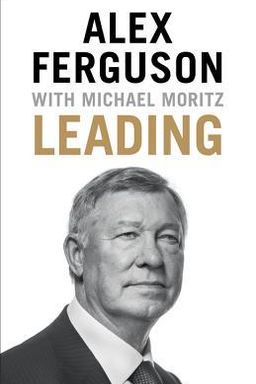
Leading cover

Leading

by Alex Ferguson, Michael Moritz

In ''Leading,'' Alex Ferguson, alongside Michael Moritz, shares profound leadership insights drawn from his tenure as one of soccer''s most successful managers. Discover how his strategic mindset, discipline, and motivational presence turned Manchester United into a powerhouse, offering timeless lessons applicable beyond the sporting world.

Building a Culture of Relentless Excellence

How do you sustain greatness across decades in one of the world’s most unforgiving professions? In Leading: Learning from Life and My Years at Manchester United, Sir Alex Ferguson argues that lasting success comes not from a single strategy or tactic, but from building a self-sustaining culture—a web of trust, discipline, curiosity, and continuous learning. He transforms football management into a template for leadership in any field: a story about people, standards, and habits that compound into championships.

Ferguson’s central claim is simple but radical: leadership is a daily craft, not a moment of inspiration. You win by combining long-term structure with intense short-term focus—by marrying discipline and empathy, detail and vision. In his eyes, every training session, scouting trip and speech is a chance to shape the organisation’s character. Over his 26 years at Manchester United, he built a system where players arrived hungry, matured within a disciplined structure, and were replaced before complacency spread.

Power of attention: observing, listening, reading

Ferguson begins where leadership truly starts—with observation. He believes your best teaching tools are your eyes, ears, and mind. He learned to watch moods on the training ground, listen to informal chatter, and read widely outside sport to broaden his judgment. The habit of listening once led him to sign Eric Cantona after overhearing players praise him. Reading, meanwhile, gave him perspective: from John Wooden’s discipline to Doris Kearns Goodwin’s studies of Lincoln’s decision-making. He demonstrates that insight doesn’t require resources—just patience and curiosity.

Discipline, hunger, and conviction as cultural DNA

A culture of excellence, Ferguson insists, runs on discipline and hunger. Discipline isn’t punishment; it’s a form of respect—the shared understanding that standards protect everyone. At Aberdeen and United, he enforced punctuality, dress codes, and behavioural rules with firmness and fairness. When Eric Cantona’s infamous 1995 outburst cost titles, Ferguson still suspended him to show that no star outranks the team. Hunger, equally vital, separates transient talent from enduring greatness. Players like Roy Keane and Ryan Giggs sustained drive for years; Ferguson cultivated ambition by rewarding effort more than flair. Conviction—the courage to persist through storms like United’s 1989 slump—anchors this triad. Without belief, neither discipline nor hunger can last.

Organisation, preparation and innovation

Behind the trophies lies a machine built on preparation. Ferguson rebuilt United from the ground up: scouting networks, academies, physio labs, and match routines. Training became his factory—meticulously structured days where repetition forged reflex. Preparation also means anticipating change: always grooming youth, scouting three years ahead, and testing new methods. By embracing data, nutrition science and recovery technology—but never surrendering to them—Ferguson kept human judgment at the centre of innovation. He borrowed from other fields (military briefings, basketball playbooks) to modernise his club’s structure before rivals could react.

Control, communication, and trust

Leadership, Ferguson notes, depends on control—but not tyranny. He distinguishes between power and authority. Control means setting standards and making courageous decisions; authority comes from fairness and constancy. He delegated operational detail to experts like David Gill and Tony Strudwick while keeping the final say. Communication reinforced control: short, vivid team talks, discreet one-on-ones, carefully handled media appearances, and decisive responses to leaks or agent meddling. He viewed communication as architecture—each message built behavioural reinforcement into the club’s DNA.

Legacy and renewal

Finally, Ferguson teaches that success means surviving your own dominance. Complacency, he warns, is the real enemy: it starts with small comforts and ends with decline. He demanded constant renewal—of squads, goals, and habits. When it came time to leave, he planned succession carefully and stepped away completely, resisting the temptation to interfere. His career forms a single coherent arc: build, raise standards, sustain hunger, and hand off with dignity. The lesson for you is stark but empowering—any leader, in any field, can replicate his system if they commit to its disciplines: observe relentlessly, prepare obsessively, lead fairly, and never stop learning.


Discipline, Standards, and Team Culture

Ferguson argues that discipline isn’t about control for its own sake—it’s about securing trust. Every rule signals seriousness: punctuality means respect, proper dress means unity, and following routines ensures accountability. Discipline creates rhythm in chaos and binds individuals to a collective mission.

Consistency and proportionality

He grades discipline like a craftsman calibrating tools: silence, fines, omission, suspension, or dismissal. The key is proportionality. Draconian punishment kills morale; gentle inconsistency breeds anarchy. At Aberdeen, he benched underperformers to restore focus; at United, he fined squads after poor behaviour but defended them publicly. His rule: act firmly in private and consistently in public so the culture knows the rules never change.

Standards as daily practice

Discipline alone isn’t enough; it must be paired with standards. Ferguson defines ‘world class’ narrowly and celebrates progress over perfection. By using praise strategically—his two favourite words being “well done”—he reinforced improvement rather than entitlement. He believed every win was temporary until the next challenge: complacency was the invisible opponent.

Managing personalities

A disciplined culture still thrives on individuality. Ferguson handled players case by case: leniency for learning youth, empathy for veterans, firmness for repeat offenders. When egos clashed (Cole and Sheringham) he imposed boundaries but preserved both players’ utility. This subtle management of personalities preserved competitiveness without destabilising the team.

In your own organisation, this translates to setting visible rules, enforcing them evenly, and using small rituals—from punctual meetings to feedback sessions—to reinforce shared pride. Culture, he insists, is just discipline that has become habit.


Organisation, Preparation, and Innovation

To Ferguson, organisational architecture is invisible performance. Success begins in structures—the training schedule, scouting networks, recovery systems and information flows that sustain consistent excellence.

Preparation as habit

His mantra—‘Whatever happens on Saturday has already happened on the training ground’—frames preparation as destiny. He choreographs weekly cycles where repetition builds intuition. After Chelsea’s mid-2000s dominance, he upgraded preseason, fitness testing, and nutrition to eliminate fatigue before it appeared. Preparation, in his system, replaces superstition with routine.

Youth and scouting pipelines

Organisation extends to talent flow. Ferguson expanded United’s academy and scouting network using a sales-inspired structure: regional scouts, performance bonuses, and aggressive pursuit of top prospects like Beckham and Giggs. The payoff: generations of homegrown players, from the Class of ’92 to later youth waves. You can’t buy culture; you must grow it from within.

Embracing technology wisely

Ferguson adopted sports science as United evolved—data analytics, video breakdowns, and nutrition overhaul under Tony Strudwick and Trevor Lea. Yet he distrusted over-analysis. Data, he said, should inform but never dictate. Leaders must translate information into understanding, just as coaches turn stats into conviction. (Note: this anticipates today’s ‘Moneyball’ paradox—numbers enrich intuition but never replace it.)

For any modern leader, Ferguson’s structure offers a blueprint: build a system that turns knowledge into routine, empower specialists to refine it, and keep innovation human-centred. Preparation is both craft and mindset—it’s how you make consistency look effortless.


Hunger, Drive, and Conviction

Talent attracts attention; drive builds dynasties. Ferguson ranks hunger above flair because determination compounds. He looked for players who trained obsessively—those from modest backgrounds or with something to prove. The defining trait wasn’t skill but appetite: Giggs, Beckham, and Scholes all practiced long after sessions ended.

Recruiting desire

Drive, for Ferguson, reveals itself through behaviour under pressure: how a player reacts to setbacks, adapts to criticism, and competes when fatigued. His recruitment focused less on CVs than on curiosity and resilience. He believed attitude could be refined into ability but never vice versa. That’s why he favoured Roy Keane’s granite focus or Ji-sung Park’s selfless work rate over pure flair.

Leadership conviction

As a leader, conviction matters equally. During early struggles at United, Ferguson’s adherence to principle—trusting youth, disciplining stars, and ignoring tabloid pressure—proved decisive. He learned to filter feedback, listen to insiders, and act quickly when his intuition was clear. Conviction, he explains, isn’t arrogance; it’s persistence guided by reflection.

You can cultivate the same quality by rewarding perseverance publicly and linking recognition to hard effort. Hunger spreads by contagion. When leaders model effort and own decisions fully, teams internalise conviction as a collective creed.


Teamwork, Communication, and Trust

No system endures without communication. Ferguson treats it as oxygen for culture—clear, concise and tailored. He divides it into three registers: the tactical, the personal, and the public. Each serves a purpose in maintaining unity and motivation.

Tactical and personal conversations

Before games his rule was brevity: one or two vivid phrases that shaped mindset. The 1999 Champions League half-time talk—focusing players on what it meant to walk past the trophy as losers—was exactly that. Individually, conversations preserved dignity. By inviting players to private office talks rather than public criticism, he fostered accountability without humiliation.

Public and media control

Externally, Ferguson mastered message discipline. He saw press briefings not as sharing sessions but as strategic fencing: you decide what to say, when, and to whom. He rewarded honest journalists, punished manipulators, and banned offenders until trust returned. Equally, he handled agents with forthright rules—direct dealings where possible, zero tolerance for leaks. Confidentiality was performance protection; secrecy shielded morale and competitive advantage.

In your context, his approach reminds you that leadership communication isn’t about volume; it’s about design. Speak briefly, listen long, and guard the narrative that defines your team’s identity.


Decision-Making, Delegation, and Authority

Ferguson’s authority rested on decisive clarity: he saw leadership as setting direction and removing uncertainty. He admitted his temper early on was counterproductive, learning instead to apply firmness only when essential. Control, he says, means guiding culture, not policing detail.

Delegation as empowerment

As United expanded, Ferguson delegated extensively to preserve focus. He trusted experts in nutrition, medical science and commercial affairs while retaining strategic oversight. This trust multiplied efficiency and bred loyalty; by allowing autonomy, he cultivated leaders beneath him. The unspoken principle: never hire those who won’t challenge you.

Speed under uncertainty

He preferred acting with imperfect data to delaying through fear. Transfer timing errors—selling Jaap Stam too early or hesitating on Tévez—reinforced his maxim: it’s better to make a good decision quickly than a perfect one too late. Decisiveness, he believed, projects authority and prevents paralysis across the organisation.

In your leadership, emulate his triad: set standards, hire specialists, and decide swiftly. People crave stable direction more than flawless perfection; authority thrives on visible, decisive behaviour anchored in consistency.


Owners, Transitions, and Long-Term Thinking

Behind every effective manager stands an owner or board willing to wait. Ferguson’s working life illustrates how leadership longevity requires structural trust above. At Aberdeen, Dick Donald’s patience allowed trophies to follow gradual culture-building; at United, Martin Edwards and David Gill provided insulation from media frenzy. Stability at the top creates space for innovation below.

Choosing the right environment

He warns young managers value glamour over governance. Before taking a job, inspect ownership character: do they interfere or empower, think quarterly or generationally? He counseled protégés like Ole Gunnar Solskjaer to lock contract terms clearly and walk away from unstable ownership. (He cites cautionary tales—Blackburn’s Rao family and Birmingham’s Carson Yeung—to underline reputational risk.)

Arriving, evolving, and leaving

Transitions are his final lesson. When arriving, he advises gradual change: study existing DNA before imposing revolutions. When leaving, plan succession and then step away. His 2013 retirement was an intentional handover followed by silence, unlike his aborted 2001 exit. Legacy endures only when authority transfers cleanly.

For any leader, Ferguson’s arc captures strategic patience: cultivate aligned ownership, balance continuity with innovation, and prepare succession as part of leadership itself. The aim is not just victory, but institutions that outlive their maker.

Dig Deeper

Get personalized prompts to apply these lessons to your life and deepen your understanding.

Go Deeper

Get the Full Experience

Download Insight Books for AI-powered reflections, quizzes, and more.