
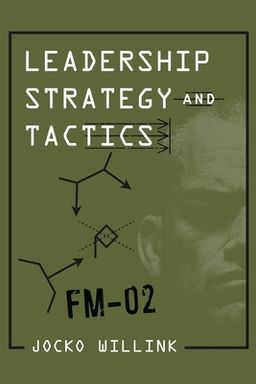
Leadership Strategy and Tactics cover

Leadership Strategy and Tactics

by Jocko Willink

Leadership Strategy and Tactics by Jocko Willink offers actionable insights from Navy SEAL operations to elevate your leadership skills. Discover the power of Extreme Ownership, decentralized command, and humility to foster trust and motivation, transforming your team and workplace dynamics for unparalleled success.

Leadership as Ownership and Balance

How do you lead people who are smarter, stronger, or more experienced than you—and get them to follow? In Leadership Strategy and Tactics, former Navy SEAL commander Jocko Willink argues that true leadership is neither about domination nor charisma, but about balance, humility, and responsibility. Leadership, he insists, is about owning everything in your world while remembering that it’s not about you.

Drawing from two decades as a U.S. Navy SEAL and later as co-founder of Echelon Front, Willink distills a lifetime of combat-tested lessons into practical guidance for leaders at every level—from frontline supervisors to CEOs. He expands on the core teachings introduced in his bestselling work, Extreme Ownership, blending strategic mindset with step-by-step tactics for execution. The result feels like a hybrid between a battle-tested field manual and a personal coaching session.

Leadership Is Universal—but Complex

At first glance, leadership seems simple: get people to do what needs to be done. But Willink argues that the practice of leadership is far more nuanced because it involves the most unpredictable variable of all—human beings. Every team member has a different personality, ego, and threshold for challenge or support. Your job as a leader is to recognize those patterns of behavior and adapt with precision.

He learned this firsthand in SEAL Team One, then while commanding Task Unit Bruiser, the most decorated special operations unit of the Iraq War. In Ramadi’s chaos, Willink realized that leadership principles forged under fire—clarity, simplicity, detachment, and ownership—translate directly to boardrooms and classrooms.

Extreme Ownership and the Dichotomy of Leadership

The foundation of Willink’s entire philosophy is the principle of Extreme Ownership: leaders must take full responsibility for everything in their universe. There’s no room for excuses, blame, or finger-pointing. If a subordinate fails, it’s the leader’s fault—for not training, supporting, or clarifying the mission. This mindset, while tough, creates empowerment across the chain of command. When leaders own everything, subordinates begin owning their parts too.

But ownership must be balanced—too much control becomes micromanagement, too little leads to chaos. This “Dichotomy of Leadership” is the art of staying centered between extremes. Leaders must be aggressive but not reckless, confident but not arrogant, detached but not disengaged. In Willink’s words, “Leadership is a dichotomy. Every quality a leader has can go too far.”

From Combat to Corporate: Why These Lessons Matter

The book moves beyond war stories to universal applications. Whether you’re running a sales team or teaching a class, leadership failures follow predictable patterns: unclear communication, unchecked ego, and poor relationships. Through vivid SEAL anecdotes—like learning to detach during chaos, watching arrogance destroy a platoon, or witnessing humility unite a team—Willink shows how these same dynamics unfold in business and everyday life.

The key takeaway isn’t to become a “tough guy” commander but to understand what Willink calls the “long game.” Leadership isn’t about winning short-term skirmishes or pleasing your ego. It’s about building trust, respect, and relationships up and down the chain of command so that the team—not the individual—wins repeatedly over time.

The Structure of Leadership Mastery

Willink divides the playbook into two major parts: Leadership Strategies and Leadership Tactics. Strategies define the timeless mindset—it’s how you think about leadership. Tactics define what you actually say and do in the trenches: how to lead peers, talk to a toxic boss, correct someone’s mistakes, or admit your own. Across both, he threads the same message: leadership is learned, practiced, and earned every single day.

By combining strategic vision and tactical execution, Willink offers a comprehensive system for leading through chaos without losing your humanity. The book’s ultimate argument is both empowering and humbling: as a leader, everything is on you—but it’s never about you.


Detach to Lead Under Pressure

One of the first and most powerful lessons Jocko Willink learned in his early SEAL platoons was to detach—both physically and mentally—from chaos. In one of his earliest training missions aboard an oil platform in the Persian Gulf, the team froze when confronted with a maze of threats. As a new recruit, Willink stepped back—literally—and saw what no one else could: the whole picture. His simple command, “Hold left, move right,” broke the paralysis and restored order.

That half step backward became a lifelong strategy. Detachment isn’t emotional coldness; it’s tactical vision. When everyone else focuses on the immediate fight, the leader must rise above the tunnel vision and assess the field.

The Mechanics of Detachment

Willink teaches that detachment starts with awareness. When your breathing speeds up, your voice rises, or your jaw tightens, it’s your body signaling that emotion is taking control. His advice: physically step back, lift your chin, look left and right, and take a slow breath. That simple action triggers mental calm and resets your perspective. It’s leadership’s version of climbing a hill to see the whole battlefield.

Detachment also prevents what combat psychologists call “tactical fixation”—the inability to zoom out when overwhelmed (not unlike Daniel Kahneman’s discussion of cognitive overload in decision-making systems). By observing instead of reacting, you regain clarity and can make better calls faster.

The Dichotomy of Detachment

Too much distance, however, breaks connection. Leaders who detach completely become aloof and unreachable, losing the trust and emotional intelligence required to motivate teams. The goal isn’t to remove yourself from the fight entirely—it’s to pull back just enough to see the fight clearly. If you find yourself disengaged or “out of touch,” Willink recommends taking a step closer again, re-engaging with the frontline details until balance returns.

Real-Life Application

Detachment applies far beyond combat. In a business crisis, it’s the CEO who takes a breath before sending the angry email or the teacher who pauses before calling out a student. In relationships, it’s the ability to read both your own emotions and others’ reactions. Willink argues that detachment lets you operate from discipline instead of impulse—an echo of Stoic philosophy and cognitive behavioral principles alike.

“Detach. See everything. Make good decisions.” —Jocko Willink

That deceptively simple mantra, learned on a rig full of smoke and confusion, sits at the foundation of Willink’s approach to every leadership situation—from firefights in Ramadi to boardroom negotiations. Detachment is what separates those who merely react from those who truly lead.


Lead with Humility, Kill Arrogance

Arrogance kills teams. Humility builds them. This truth hit Willink early when he experienced two radically different platoon commanders—one arrogant and blind to feedback, the other humble yet decisive. The first clashed with his men, ignored his senior enlisted advisors, and ultimately got fired after trying to punch a subordinate. The second, known as Delta Charlie, led with earned respect. Despite decades of experience, he swept floors, took out the trash, and invited his team to make plans collaboratively.

The contrast between the two commanders transformed Willink’s understanding of leadership. Delta Charlie’s humility created what Willink calls “ownership from the bottom up.” When subordinates made the plans, they naturally took responsibility for the outcomes. In contrast, the arrogant leader hoarded control, alienated his team, and destroyed morale.

The Power of Humility

Being humble doesn’t mean passive—it means open and confident enough to learn. Delta Charlie’s simple act of taking out the trash symbolized mutual respect and servant leadership long before that term was fashionable. Willink argues that humility is contagious: subordinates mirror their leader’s attitude. When a leader demonstrates vulnerability and curiosity, others step up creatively rather than defensively.

From this example, Willink learned to balance boldness with teachability: to lead strongly while remaining a perpetual student. (This echoes Jim Collins’s idea of the “Level 5 Leader,” whose success rests on humility paired with fierce resolve.)

Arrogance and the Cost of Ego

Ego drives short-term compliance but long-term collapse. When leaders lose humility, they stop listening upward or downward, closing all channels of feedback. Willink recalls seeing commanders so sure of their tactical genius that they ignored their advisors, made disastrous calls, and blamed their teams. Their confidence wasn’t strength—it was fragility posing as certainty.

“Leaders who lack humility cannot improve because they can’t admit their weaknesses.”

By watching arrogance fail catastrophically and humility inspire total dedication, Willink adopted a lifelong rule: lead with confidence, but never believe your own legend. Teams follow leaders who respect them, not those who demand respect by rank.


The Laws of Combat

When Willink took over tactical training for the West Coast SEAL Teams after Ramadi, he distilled years of hard lessons into four universal Laws of Combat. These laws became the structural backbone not only of SEAL operations but of his leadership doctrine. They are timeless, simple, and wildly transferable to every organization.

Cover and Move: Teamwork Above Ego

Cover and Move means mutual support. On the battlefield, one team provides suppressive fire so another can maneuver. In business, departments must protect each other instead of competing. Failure here usually stems from ego—when teams hoard information or resources, they lose the broader fight. The principle reminds you that your mission always depends on someone else’s success.

Keep It Simple

Complex plans fail under stress. In an FTX (field training exercise), Willink watched a task unit disintegrate because their multipronged assault turned to chaos. The cure: simplify. Clear, concise commands keep a team aligned even when communication breaks down. Simplicity also applies to language—speak plainly so your intent is unmistakable up and down the chain.

Prioritize and Execute

In crisis, multiple fires will burn at once. Trying to solve them all simultaneously guarantees failure. Willink’s mantra: relax, look around, make a call on the biggest problem first, and execute. Then move to the next. (This principle aligns with Stephen Covey’s “First Things First,” but under combat pressure.) Discipline-guided focus turns chaos into order.

Decentralized Command

The final and often hardest rule: empower everyone to lead. Subordinate leaders must understand the mission’s intent so they can make decisions without asking permission. Micromanagement stifles initiative; abdication breeds confusion. The cure is shared understanding and trust. When everyone knows the “why,” the “how” can flex as conditions change.

Together, these four laws form a chain reaction: clear communication enables teamwork; teamwork allows focus; focus breeds confident autonomy. Ignore any one law, and the rest collapse. Whether in firefights or board meetings, these remain the operational DNA of effective leadership.


Extreme Ownership in Action

Extreme Ownership is Willink’s signature principle—and his nonnegotiable rule for every leader. It means taking absolute responsibility for everything in your world. If your team misses a deadline or fails a mission, the problem is you. Maybe you didn’t train them properly, provide clarity, or recognize their burnout. As he drills into clients at Echelon Front, “There are no bad teams, only bad leaders.”

From Conflict to Growth

This mindset transforms anger and blame into learning. When a subordinate messes up, you ask, “Where did I fail to lead?” Instead of shaming others, you problem-solve. Paradoxically, owning everything earns more respect. When a boss boldly says, “This is my fault,” it compels the team to mirror accountability downward. Ownership cascades just like blame—but builds instead of destroys.

Preemptive Ownership

The highest form is preemptive ownership—preventing problems before they occur. If weather, equipment, or human error could derail the mission, anticipate and mitigate. Like good chess, leadership happens three moves ahead. In Willink’s war-tested view, you can’t control the weather, but you can control your readiness for it.

Taking Blame Gracefully

Ironically, the hardest time to take ownership is when others are blaming you. Willink insists that’s when it matters most. By calmly accepting responsibility and offering solutions—“Yes, this is my fault. Here’s how I’ll fix it.”—you turn confrontation into progress. Defensive reactions, by contrast, trigger ego wars that stall momentum.

“When you take ownership, you empower everyone around you to do the same.”

Extreme Ownership may sound militant, but it’s really about humility, accountability, and growth. It turns excuses into opportunities and transforms a group of individuals into a team that wins together—and learns together when it doesn’t.


Play the Long Game

Leadership isn’t about torching obstacles with brute force. It’s about playing the long game—building relationships up and down the chain of command so future missions run smoother. Willink confesses that many people want him to advocate the “battle-axe” approach: crush anyone who disagrees, take no prisoners, dominate every meeting. It might feel satisfying short-term, but it’s unsustainable. Burned bridges never rebuild easily.

Playing the game, as he defines it, means storing up leadership capital: credibility and trust you earn through consistent performance, humility, and supportiveness. When your boss sees you execute without complaint—even when their plan seems inefficient—they’ll trust you later when you raise concerns about something that truly matters.

Building Influence Up and Down

Up the chain, play the long game by performing relentlessly and objecting sparingly. Down the chain, empower subordinates by occasionally saying yes to their ideas—even imperfect ones. Let them experiment, learn, and own results. Every “yes” you give earns loyalty, so when you must say “no,” it lands with credibility instead of resentment.

This approach echoes Dale Carnegie’s philosophy in How to Win Friends and Influence People: influence stems from respect and empathy, not coercion. But Willink grounds it in pure pragmatism—relationships make missions succeed.

Mutiny, Ego, and Restraint

Sometimes, subordinates must even resist a superior’s order—but only as a last resort. Willink warns of “career mutinies” where egos outweigh ethics. True defiance, he argues, should happen only when the directive is illegal, immoral, or catastrophic. Before open rebellion, you exhaust every diplomatic option: question the mission tactfully, propose alternatives, and make your concerns about execution—not authority. Should you ever draw that line, accept the consequences with clarity and humility.

Playing the long game requires patience, restraint, and immense ego control. But it’s the only way to build a lasting reputation for trust and reliability—the currency of leadership that compounds over time.


Discipline Equals Freedom

For Willink, discipline is the ultimate act of caring. “If you truly care about your people,” he insists, “you train them hard.” Discipline, both self-imposed and shared, isn’t punishment; it’s preparation for freedom—the freedom to operate confidently under pressure and the freedom from chaos that undisciplined teams create.

Self-Discipline vs. Imposed Discipline

In the SEAL Teams, discipline starts external—commands, checklists, inspections—but its true power emerges when it becomes internal. When a team chooses discipline voluntarily, they no longer need enforcement. They clean their weapons, check their gear, and hold each other accountable because discipline has become pride.

Yet, when self-discipline stalls, leaders may need to impose structure temporarily. The trick is doing so with tact: explain why, show the benefits, and aim for voluntary adoption. The goal is never compliance—it’s conversion.

Taking Care Through Standards

Many new leaders misunderstand “taking care of their people” as providing comfort. Willink flips that idea. Taking care of your team means demanding excellence because real compassion prepares people to survive and succeed, not to relax. In the military, that might mean extra drills; in business, more role-play before client calls.

“The path to freedom is through discipline.”

This ethic of disciplined preparation undergirds every part of Willink’s philosophy. Whether motivating a burnt-out employee or a young SEAL, he argues that true leadership doesn’t coddle—it demands. Because in training rigor, whether physical or mental, lies the only real freedom: competence under chaos.


Communication as the Tool of Leadership

If leadership is about influence, communication is its weapon. In Willink’s view, poor communication explains almost every failure he’s ever seen—on missions or in management. You can’t lead if your people don’t understand where they are, why they’re there, or where they’re going next.

Keep the Troops Informed

Drawing from grueling SEAL patrols, Willink recalls that the soldiers at the back of the line—furthest from command—are always the most demoralized because they lack information. A leader’s job is to ensure every member knows the plan, not just the frontline decision-makers. When uncertainty grows, rumors fill the vacuum. Be transparent early and often, even when sharing bad news.

Explain the Why

“Because I said so” is for parents and tyrants, not leaders. Willink saw how explaining the “why” transforms obedience into belief. When he trained civilian executives, he advised threading the “why” back to each individual’s stake. Profit might motivate the shareholders, but job security and growth motivate employees. When people see how their work serves a larger mission—and their personal interest—they engage.

Reflect, Don’t React

Willink’s technique called “Reflect and Diminish” teaches emotional control in conversations. When someone on your team is angry or anxious, reflect their emotion slightly but dial it down—acknowledge their frustration, then redirect to problem-solving. This emotional mirroring builds trust without feeding chaos. (The approach parallels emotional intelligence models by Daniel Goleman but from a warrior’s lens.)

Above all, Willink warns: your team is always watching. Every sigh, word, and tone teaches them how to act. Speak with calm, precision, and purpose—and never forget that as the leader, you set the example every time you open your mouth.


Leadership Is All on You, But Not About You

Jocko Willink closes with a profound paradox: leadership means everything depends on you—but none of it is for you. As commander, every mistake traced back up the chain to him, yet every success belonged to his team. This dual awareness—absolute ownership without ego—is the essence of effective leadership.

When leaders make it about themselves—their recognition, their advancement, their pride—they poison the culture. Teams begin competing against each other instead of coordinating. But when leaders make it about the mission, ownership becomes collective, and victories multiply.

This principle resonates far beyond military contexts. In startups, classrooms, kitchen staffs—any setting where performance relies on cooperation—the leader’s mindset sets the moral weather. Great leaders absorb blame, deflect praise, and relentlessly protect their people from bureaucratic fire while exposing them to credit.

“When the team wins, you win. When you win at their expense, you lose forever.”

Ultimately, Leadership Strategy and Tactics is not a book about commanding others—it’s a manual for commanding yourself. The methods—detachment, ownership, humility, discipline—are all means to a single end: creating teams that can lead themselves. Leadership is on you, but it’s never about you.

Dig Deeper

Get personalized prompts to apply these lessons to your life and deepen your understanding.

Go Deeper

Get the Full Experience

Download Insight Books for AI-powered reflections, quizzes, and more.