
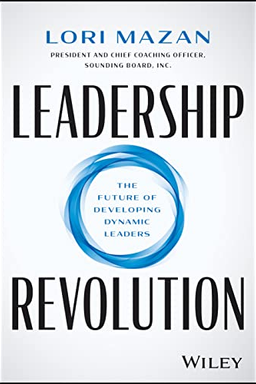
Idea 1
The Leadership Revolution: Coaching for a Dynamic Future
What does it really mean to lead in a world of constant change? According to Lori Mazan, co-founder and president of Sounding Board Inc., leadership in the twenty-first century is not about memorizing a checklist of traits or mastering a static model. It's about embracing *dynamic development*—the ability to grow, adapt, and evolve within unpredictable contexts. In her book Leadership Revolution: The Future of Developing Dynamic Leaders, she argues that both individuals and organizations must abandon outdated management paradigms and instead cultivate *capacity*, not just *skills*—the mental, emotional, and strategic agility to thrive amid uncertainty.
For decades, leadership books promised easy-to-follow formulas: Five traits of success. Ten habits of great managers. But Mazan found that these prescriptive methods rarely work. Through her career coaching executives—from Fortune 100 leaders to start-up founders—she discovered that rigid frameworks often push people into roles that conflict with their authentic selves. The result? Burnout, disconnection, and stagnation. Her model, inspired by decades of executive coaching and her practice of Tai Chi Chuan, reframes leadership as a *living practice*—one built on awareness, balance, and contextual understanding.
From Checklists to Capacity
Mazan calls this shift a move from *horizontal* to *vertical* development. Horizontal growth means adding more tools and skills—more things you can “do.” Vertical growth, on the other hand, means expanding your capacity—how you *think,* *decide,* and *respond* to complex situations. (In similar fashion, Harvard researcher Robert Kegan also described “transformational” learning as expanding one’s meaning-making capacity rather than just adding knowledge.) Leadership, Mazan insists, is no longer about what you know—it’s about how you use what you know when the rules change mid-game.
The book unfolds like a coaching engagement—each chapter representing a “session” that moves you further along the journey. You don’t just *learn about* leadership—you *experience* the psychology of change. Part I (“Clarity”) dismantles the myths of leadership and helps you identify your *Big Leap*—the bold transformation you need to make. Part II (“Challenge”) explores the uncomfortable middle: letting go of old thinking, breaking through fear, and learning through failure. And Part III (“Impact”) ties it all together, showing how to create lasting change and build cultures that promote continuous growth, alignment, and self-reliance.
The Coaching Mindset Revolution
At the heart of Mazan’s revolution is the belief that everyone—not just the C-suite—deserves the benefits of executive coaching. She and her co-founder Christine Tao built Sounding Board around this premise: democratizing leadership development through virtual, scalable technology while preserving the human partnership between coach and coachee. Coaching, in this view, is not about giving answers but about becoming a *thinking partner*—someone who helps you challenge assumptions, reframe problems, and get clarity on what truly matters. “Everyone needs a sounding board,” Tao writes in the foreword, capturing the ethos that leadership development must be accessible, contextual, and individualized.
Mindset, Movement, and Modernization
Mazan frequently compares leadership growth to Tai Chi, highlighting concepts such as “the unity of opposites”—balancing authenticity with adaptability, confidence with humility, doing with being. For her, leading is an embodied practice: it requires awareness, presence, and willingness to enter the unknown. Like a martial artist adjusting to each unique sparring partner, a modern leader must read the context and select from a repertoire of strategies—not rely on a single winning move.
This metaphor underpins the book’s structure. Each coaching “session” begins with a snippet of dialogue and ends with reflective questions you can apply immediately. The message is always actionable: transformation doesn’t happen during meetings but in between them—in the choices you make, the habits you unlearn, the risks you take. Mazan’s approach bridges the personal and the organizational, showing how your inner growth directly shapes your team’s resilience and innovation.
Why This Revolution Matters
Why does this matter now? Because the workplace has changed forever. The pandemic accelerated remote work and shattered traditional hierarchies. Generational diversity, digital transformation, and rising expectations for inclusivity have made old leadership models obsolete. Leaders now face complexity previously reserved for CEOs—ethical dilemmas, hybrid teams, constant disruption. Mazan calls this the “democratization of complexity”: everyone must think and act like a leader. The Leadership Revolution, then, isn’t a single person’s transformation—it’s an organizational evolution. It’s about designing ecosystems of coaching, alignment, and capacity-building that make leadership a collective, continuous practice. In short, Mazan argues, the future belongs to leaders who can think dynamically, act courageously, and learn endlessly—leaders who are ready to take the Big Leap.