
Idea 1
Leadership as Influence and Growth
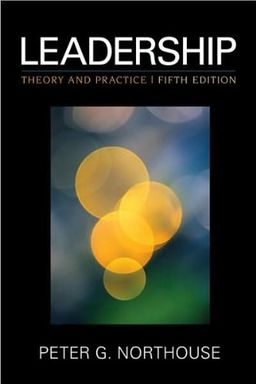
What makes leadership effective—and ethical—in a changing world? Peter Northouse’s Leadership: Theory and Practice invites you to see leadership not as a fixed personality trait or hierarchical role, but as a dynamic influence process that you can learn, shape, and apply. Across its chapters, the book traces how leadership evolves from internal traits and competencies to behaviors, relationships, and systems. You’ll discover that leadership is not a singular style but an adaptive practice grounded in self-awareness, ethics, and human connection.
The Multiple Lenses of Leadership
Northouse starts by showing that how you define leadership determines how you act. He offers six perspectives: leadership as a trait, ability, skill, behavior, relationship, and influence process. Each lens changes the way you hire, train, and evaluate leaders. If leadership is a trait, you recruit for it; if it’s a skill, you train for it; if it’s influence, you build connection. This opening framework sets up the book’s main argument: leadership can be developed and must be practiced consciously across both structure and culture.
He distinguishes leadership from management: managers maintain systems, while leaders influence change. Yet both overlap. You can be doing management tasks and still lead if you make human influence your focus (as Barnard suggested decades ago). This integration approach—structure plus inspiration—runs throughout the book.
Ethics, Context, and Responsibility
From the start, Northouse warns that leadership also has a dark side. The same charisma that electrifies followers can also manipulate them. He uses the Toxic Triangle—destructive leaders, susceptible followers, and conducive environments—to show how unethical power can take root. The implication is clear: to lead is to accept moral responsibility. Ethical reflection, transparent structures, and inclusive practices must accompany influence.
The Book’s Developmental Path
Each chapter then explores a level of development. You begin with self-awareness—identifying traits and emotional patterns. You later focus on skills (administrative, interpersonal, conceptual) that transform potential into performance. From there, you learn to adjust philosophy and style to followership, navigate the task–relationship continuum, set vision, shape climate, include diverse voices, manage conflict, and address obstacles. By the book’s end, the journey is circular: you return to ethics and system awareness, understanding that leadership expands outward—from self to others, to the organization, and finally to society.
Core insight
Leadership is learned competence driven by moral purpose. It requires that you examine your assumptions, practice influence responsibly, and adapt continually to people and context.
Throughout examples such as Michelle Obama’s integrative leadership, Kakenya Ntaiya’s community transformation, and Kristen Hadeed’s evolving business model, you see leadership as a living experiment—one that combines vision with practice, heart with structure, and courage with humility.