
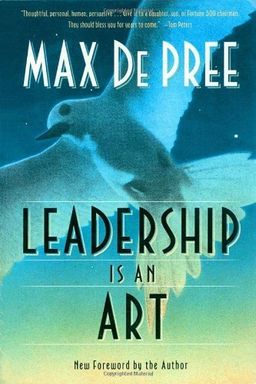
Leadership Is an Art cover

Leadership Is an Art

by Max De Pree

Leadership Is An Art teaches leaders how to create a compassionate and productive workplace by prioritizing empathy and elegance. By fostering respectful relationships and shared missions, it provides a blueprint for leading benevolently and effectively, transforming both the company and its people.

The Power of Discovering Your Next Great Read

What would happen if the next book you picked up completely changed how you see the world? That’s the idea explored in Discover Your Next Great Read—a short, promotional yet thought-provoking guide created by Penguin Random House to inspire readers to think deeply about the books they choose. While on the surface this text promotes finding new reads, it also captures the heart of reading itself: discovery, personal transformation, and connection to ideas beyond our everyday lives.

At its core, this book reminds us that reading isn’t simply consumption—it’s conversation. When you discover your next great read, you’re not just entertaining yourself; you’re entering a space where stories reshape your understanding of self, empathy, and creativity. The authors and publishers behind it contend that every reading choice opens a window into a deeper version of yourself, pushing you toward curiosity and lifelong learning.

Books as Bridges Between Worlds

Think of the last time you got lost in a novel. You weren’t just reading words; you were living someone’s experience. The premise here is that discovering your next great read is about connecting across boundaries—reading stories that place you in unfamiliar situations and expose you to ideas you wouldn’t otherwise encounter. Just as philosophers like Martha Nussbaum argue that literature builds moral imagination, this guide positions reading as an act of empathy and exploration.

A Call to Intentional Reading

The book’s call to ‘discover’ implies action—intentionality rather than passive intake. We’re invited to approach reading not as a checklist, but as a dialogue between ourselves and the material. It suggests asking, “What story would challenge me?” or “Which ideas could expand my understanding?” This push toward discovery reflects broader research on active learning; when you engage with content actively, you internalize it more deeply (as researchers like Daniel Willingham have shown).

The Role of Personalization

The recurring invitation in the text—“Get personalized book picks”—touches on a powerful modern concept: the curation of knowledge. In an age of information overload, guided discovery helps you find what matters most. This isn’t just marketing; it’s psychology. Personalization speaks to your identity and interests, making reading feel tailor-made. By finding your next great read, you create a roadmap for personal growth that matches your evolving curiosity.

Why This Matters

What makes this simple phrase—discover your next great read—so powerful is that it reframes how we see reading: not as pastime, but as pathway. Every new book can shift your worldview, heal emotional wounds, or expand your inner horizons. It’s not just about literacy; it’s about transformation. Penguin Random House’s encouragement resonates beyond marketing—it’s a reminder that in the right story, you might just rediscover yourself.


Reading as Exploration

The text evokes reading as a form of exploration—a journey rather than a destination. When you ‘discover’ your next great read, you are actively searching for new terrain. The act of exploration makes reading adventurous and dynamic, where every new author is a guide and every theme a new country.

The Explorer’s Mindset

An explorer doesn’t simply travel; they seek discovery and insight. Similarly, the best readers cultivate curiosity—approaching every text with questions. This framework encourages treating books not as static objects but as unfolding landscapes filled with ideas and emotional terrain. (Note: This concept echoes the approach in Annie Dillard’s Pilgrim at Tinker Creek, where observation and curiosity lead to revelation.)

Navigating Genres as Territories

Just like explorers cross mountains and seas, readers cross genres—fiction to philosophy, memoir to science. Each genre expands your worldview differently. Exploring beyond your comfort zone brings balance and breadth to your intellectual map. Those who read broadly often develop better empathy and creativity, supported by cognitive science on combinational thinking.

Curiosity as Compass

Your compass in this journey is curiosity. Following what piques your interest—rather than what you ought to read—sustains engagement. Like in Elizabeth Gilbert’s philosophy in Big Magic, curiosity fuels creativity and authenticity. The book’s invitation to discover aligns perfectly with this: read with wonder, not obligation.


The Psychology of Choice in Reading

‘Discover your next great read’ also invites reflection on how we choose books. Choice is central to reading culture: it shapes not only what we read, but how we grow from those readings. This brief text implicitly speaks to autonomy and identity—the freedom to select narratives that resonate with who you are or aspire to become.

Autonomy and Meaning

Psychologists like Edward Deci and Richard Ryan (developers of Self-Determination Theory) argue that autonomy creates intrinsic motivation. When you choose your own books, you invest meaning into your reading experience. You’re no longer told what to read; you discover what matters to you.

Identity in Book Selection

Every choice reveals something about your identity. The stories you gravitate toward reflect inner questions—love, justice, transformation, belonging. This insight redefines reading as self-expression. Each selected book becomes a mirror reflecting your evolving narrative. (In similar spirit, Susan Cain’s Quiet links reading preferences to introversion and reflective depth.)

The Paradox of Infinite Options

We live in abundance—too many titles, too little time. The challenge is not finding any book, but finding your book. That’s where personalization helps narrow choices to those that resonate most deeply. Choice thus becomes a tool of discernment, helping you balance curiosity with meaning.


Connection Through Story

Stories are the heart of reading and the reason discovery matters. They connect you to others—real or imagined—across time and culture. The book’s invitation encourages you to find narratives that speak to universal emotions: love, fear, hope, transformation.

Empathy as Literary Power

When you read widely, you build empathy. Fiction lets you experience life through different perspectives—pain, joy, struggle—without leaving your chair. Research by psychologist Raymond Mar suggests that reading literary fiction enhances empathy and theory of mind. Discovery, therefore, becomes an act of compassion.

The Shared Human Story

Across all cultures, storytelling ties us together. Discovering new voices expands this shared story. It reminds you that literature is humanity speaking to itself. Every book recommendation is an invitation into someone’s lived truth.

Community and Conversation

Part of discovery also involves sharing your finds. Book clubs, reviews, or discussions transform solitary reading into communal engagement. Through these exchanges, stories multiply their meaning. You don’t just find your next great read—you help others find theirs.


The Habit of Lifelong Reading

Behind the appeal of discovery lies the deeper habit—the lifelong relationship with reading. The idea is not just about one book, but a lifetime of curiosity and learning. Developing this habit enriches both mind and soul.

Consistency Over Quantity

The secret to being a lifelong reader is consistency, not volume. Reading even a little daily builds connection and rhythm. It fosters sustained intellectual and emotional development.

Growth Through Variation

Great readers vary their diet—balancing fiction with fact, depth with entertainment. This variation prevents cognitive stagnation and keeps curiosity alive. Each new discovery becomes nourishment for growth.

Reading as Reflection

Finally, lifelong reading becomes reflective. You start relating what you read to your own experiences, lessons, and aspirations. The act of discovery slowly becomes self-understanding.

Dig Deeper

Get personalized prompts to apply these lessons to your life and deepen your understanding.

Go Deeper

Get the Full Experience

Download Insight Books for AI-powered reflections, quizzes, and more.