
Idea 1
Leadership in the Algorithmic Age
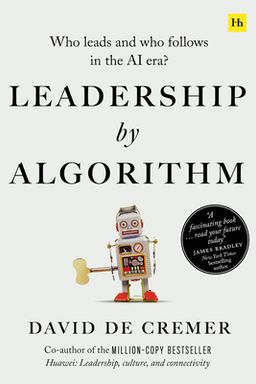
What happens when your boss isn’t a person but an algorithm? In Leadership by Algorithm: Who Leads and Who Follows in the AI Era, David De Cremer, a global thinker in business and AI ethics, explores this provocative question. His central argument is simple but profound: while algorithms might soon manage us, only humans can truly lead. As artificial intelligence becomes embedded in our economies and organizations, our challenge isn’t to compete with machines but to redefine what leadership means in a world where data—not intuition—often makes decisions.
De Cremer argues that algorithms are brilliant at consistency, prediction, and control—the trademarks of management. But leadership, he contends, stems from human traits machines cannot replicate: empathy, curiosity, ethical reasoning, imagination, and moral judgment. As we automate more of what humans do, we risk automating the very soul out of leadership unless we consciously design technology to serve—not replace—our humanity.
From Management to Leadership
Drawing on decades of research and vivid examples—from Google’s AlphaGo triumph to Amazon’s automated HR systems—De Cremer distinguishes management (control and stability) from leadership (vision and transformation). Algorithms can handle management with precision: they analyze massive datasets, optimize efficiency, and minimize errors. But leadership, he insists, is about meaning-making. It is about connecting what we do to why we do it. Machines may predict human behavior, but they can’t inspire human purpose.
The Threat and the Opportunity
The book opens with a dinner story where a young executive confidently proclaims that technology will solve all problems—and De Cremer wonders: could such blind faith make humans obsolete? Today’s AI systems learn, reason, and decide faster than any human. Algorithms decide what you watch, how doctors diagnose patients, and even when employees are promoted or fired. The risk, De Cremer warns, is not just job displacement—it’s the erosion of human agency. Will humans remain the decision makers, or will we simply follow machine logic disguised as optimization?
Despite this fear, De Cremer is no Luddite. He believes AI can and should augment humanity if guided by authentic, ethical leadership. The goal, he writes, is not for humans to race against algorithms but to cooperate with them—to build organizations where humans lead with values while algorithms manage data. This approach, he calls “co-creation,” envisions technology and humanity working symphonically, each amplifying the other's strengths.
A Map of the Book
De Cremer’s exploration unfolds in ten chapters that move from the rise of algorithmic decision-making to an entirely new vision of leadership. The early chapters reveal how automation has reshaped management—from hiring algorithms at Unilever to autonomous compliance systems at JPMorgan Chase. He shows how this data obsession fuels what he calls the “us versus them” mentality—humans fearing replacement by machines. He then dissects why such fear exists: because algorithms replicate what we do, but not who we are. Later chapters draw a powerful contrast between a machine’s rational efficiency and a leader’s irrational but essential human wisdom.
By mid-book, De Cremer turns teacher, outlining how leadership must evolve. He introduces the concept of “authentic intelligence” to balance the rise of artificial intelligence. Leadership must shift from “being smart” to “being wise.” Wise leaders, he says, recognize that data does not decide—it informs. They use technology not as replacement but as a reflective mirror to deepen human judgment.
In the final chapters, he reimagines corporate life around purpose, inclusion, and co-creation. Drawing on examples from Hyundai’s robotics program and Huawei’s AI symphony project, he illustrates what human–machine collaboration can look like when trust, transparency, and empathy guide design. The book closes with a warning that technology without humanity leads to dehumanization, not progress. But if humans lead and algorithms manage—as he proposes—we can build a more ethical, adaptive, and truly intelligent world.
“Humans lead, algorithms manage.” De Cremer’s statement might become the defining mantra of the 21st-century organization—one that balances technological brilliance with moral clarity.
In short, Leadership by Algorithm is both a diagnosis and a prescription. It shows how we got addicted to technological control and offers a human-centric alternative for leading in the age of AI. Whether you’re a manager, data scientist, or policy maker, De Cremer invites you to ask a crucial question: not what can AI do, but what should humans still do? And it’s in that question where true leadership begins.