
Idea 1
Seeing People as People: Escaping the Box of Self-Deception
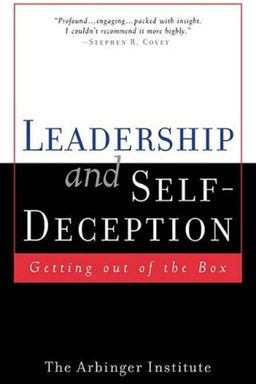
Have you ever wondered why some relationships—at work, at home, or in leadership—seem to spiral into frustration even when you’re trying your best? That’s the central question behind Leadership and Self-Deception: Getting Out of the Box by The Arbinger Institute. The book presents an astonishing insight: most of our interpersonal and leadership problems come from one source—self-deception, or what the authors call being “in the box.”
When you’re in the box, you don’t see others clearly. You see them as objects, obstacles, or means to an end instead of as people with hopes, needs, and fears as legitimate as your own. You justify your behaviors, blame others, and feel victimized—all while being blind to the fact that you are the one creating the problem. This blindness is self-deception. The metaphor of the “box” vividly captures that closing-off of perspective that keeps us focused on proving our own virtue rather than truly seeing others.
The Disease Beneath People Problems
The book parallels this problem to the medical discovery of germs by Ignaz Semmelweis. Before germ theory, doctors treated symptoms of “childbed fever” individually—fever, inflammation, pain—without knowing they were all caused by one unseen source. Likewise, the authors argue that the various symptoms in organizations—poor communication, conflict, low engagement, lack of accountability—stem from one invisible disease: self-deception. It’s the “germ” that infects leadership and relationships alike.
When leaders don’t see that they’re the problem, their efforts only reinforce the very dysfunction they are trying to fix. Leadership, the book claims, fails not because of lack of skill but because of blindness. Real influence and motivation come not from tactics or techniques but from how you “see” others—whether you view them as people or as objects to control.
The Journey into the Box
The narrative unfolds through Tom Callum, a newly hired executive at Zagrum Company. His orientation meeting with Bud Jefferson and later Lou Herbert (Zagrum’s legendary founder) becomes a journey of self-discovery. Through stories, diagrams, and reflections, Tom learns that being “in the box” often starts with a subtle act of self-betrayal—when you fail to act on an inner sense of what you should do for someone. Bud illustrates this with a simple moment: hearing his baby crying in the night and choosing not to get up to help his wife. That single act—betraying a feeling of care—launches a chain reaction of justification. He begins seeing his wife as lazy and himself as hardworking and fair. He feels irritated and blames her, losing sight of her humanity. He’s now in the box.
This process repeats in everyday life. Once in the box, we distort reality to justify our self-betrayal. We inflate others' faults, exaggerate our own virtue, and give disproportionate importance to anything that supports our self-justification. Over time we carry self-justifying images—such as “I’m a good spouse,” “I’m hardworking,” or “I’m the smartest”—into new situations. People who challenge those images become threats; those who support them become allies. Everyone else becomes irrelevant. Thus we walk through life seeing ourselves and others not as they are but as our boxes dictate.
Why Getting Out of the Box Matters
The authors contend that being in the box is a silent killer of leadership, teamwork, and happiness. It creates a self-perpetuating loop called collusion, where two or more people, each in their boxes, provoke and justify each other’s bad behavior. A boss who thinks his team is lazy and treats them with suspicion provokes disengagement; employees respond defensively, which justifies the boss’s cynicism. The result is mutual failure. Organizations become networks of boxes, each person blaming others while being blind to their own role.
So what’s the alternative? Getting “out of the box” means seeing others as people. It doesn’t mean becoming soft or permissive—it means dropping the need for justification. Leaders out of the box can still be tough and demanding, but their toughness has integrity and invites cooperation rather than resistance. As the story of Lou Herbert shows, his transformation from a domineering executive to an empathetic leader saved both his company and his family. The ripple effects of his change created a culture where people saw and treated one another as people—a rare achievement in corporate life.
Previewing What Follows
The rest of the book answers the questions: How do we get in the box? What keeps us there? And how do we get out? These lead to practical implications for leadership, relationships, and organizational results. You’ll learn how self-betrayal is the “germ” behind every people problem, how box-focused leadership destroys trust and results, and how ceasing resistance to others—rather than trying to change them—becomes the only way out.
Ultimately, Leadership and Self-Deception offers not just a business philosophy but a human one: it’s a call to see others clearly, to stop defending your own virtue, and to lead from authenticity instead of justification. The change begins whenever you stop asking, “How can I fix others?” and start asking, “How can I see others as people?”