
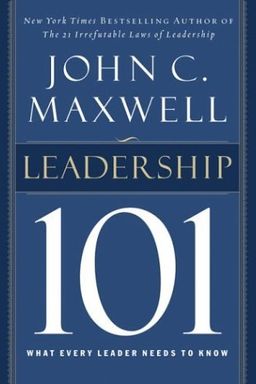
Leadership 101 cover

Leadership 101

by John C Maxwell

Leadership 101 by John C. Maxwell distills decades of leadership wisdom into actionable insights. Explore how trust, lifelong learning, and strategic focus shape effective leadership, empowering you to inspire and influence in any field. Perfect for aspiring leaders ready to elevate their impact.

The Lifelong Journey of Intentional Growth

What would your life look like if every single day you became just a little better? John C. Maxwell begins Self-Improvement 101: What Every Leader Needs to Know with that simple challenge—and it’s one that cuts to the heart of leadership and personal development. He argues that no one improves by accident. Growth is not automatic, nor is it guaranteed by age, experience, or success. It must be intentional. It must be chosen.

Maxwell, one of the world’s most influential leadership experts, contends that true progress requires self-awareness, discipline, and relentless curiosity. He dismantles the myth that wisdom automatically accompanies age, reminding readers that “sometimes age comes alone.” His central message is that improvement demands deliberate effort—growth must become a daily habit, an ongoing process, not a one-time event.

Why Leaders Must Prioritize Personal Growth

According to Maxwell, leadership and self-improvement are inseparable. A leader cannot grow their organization, team, or relationships without first growing themselves. The book’s introduction establishes this premise clearly: you don’t just stumble into becoming your best self; you choose growth deliberately. Leadership magnifies this truth—those who lead must commit to becoming better every day or risk stagnation. “The happiest people I know are growing every day,” he says, emphasizing that growth fuels not only success but also contentment.

This idea echoes other thought leaders who tie success to intentional development (for instance, Stephen Covey’s “Sharpen the Saw” principle in The 7 Habits of Highly Effective People). Like Covey, Maxwell urges us to make growth a lifestyle, not a checklist.

The Core Argument: Growth Is a Choice—and a Responsibility

The book’s core argument revolves around personal responsibility. Growth doesn’t happen automatically just because time passes. Maxwell points out that many adults stop learning after graduation—they see education as an event described by diplomas rather than as a lifelong process. But those who want to reach their potential reject this mentality. They make a conscious choice to grow. This requires surrendering comfort, risking change, and facing challenges head-on. “Growth demands a temporary surrender of security,” he reminds us, borrowing from Gail Sheehy’s insight that without change, we do not grow—and without growth, we are not truly living.

Growth is uncomfortable because it forces people to let go of the familiar. But Maxwell warns that avoiding growth is far more painful in the long run. Stagnation, not struggle, is the real danger.

The Structure of Growth: A Blueprint for Lifelong Improvement

The book is divided into two major sections: “Laying a Foundation for Self-Improvement” and “The Ongoing Process of Improvement.” Part One introduces mindset shifts—choosing growth, maintaining teachability, leveraging mentors, and embracing lifelong learning. Part Two moves into applied strategies—focusing on strengths, overcoming obstacles, gaining wisdom through experience, and accepting the tradeoffs required for higher achievement.

Together these sections describe growth as a cycle—not a ladder. You don’t just “finish” developing yourself; you continue evolving by evaluating experiences, learning from discomfort, and making deliberate choices to move beyond your current plateau. This is what Maxwell calls “climbing the mountain of personal potential,” a process that never ends but continually enriches life.

Why This Matters Now

Maxwell wrote this book in an age of information overload—a time when more data is produced in a single day than people once encountered in a lifetime. In such a world, growth can seem overwhelming. Yet, he insists that simplicity and consistency win the day. Reading one book, learning one lesson, applying one insight—all of these compound like interest over time.

The message resonates deeply in the modern world where distractions and busyness often replace meaningful development. You may finish your to-do list each night but never take time to grow into the person you want to become. Maxwell’s call is simple but profound: stop drifting, start deciding. Personal growth is not found in spontaneous epiphanies—it is forged in daily intention.

What You’ll Discover

Throughout Self-Improvement 101, Maxwell guides you through the essential disciplines of growth. You’ll learn how to cultivate a teachable attitude (Chapter 3), find mentors (Chapter 4), focus your time and energy on your strengths (Chapter 5), transform setbacks into stepping stones (Chapter 6), mine experience for wisdom (Chapter 7), and make the tough tradeoffs necessary to reach new levels of success (Chapter 8).

Each idea builds on the previous one like a staircase. Growth starts with choosing to climb, continues with learning how to climb, and never truly ends. It’s this journey—not the destination—that defines successful people. If you make growth intentional, Maxwell argues, you’ll find success not in accomplishments but in the person you become along the way.

“Growth today will provide a better tomorrow.” — John C. Maxwell

Ultimately, this book is not about theory—it’s about application. Maxwell gives you principles, yes, but also stories, systems, and disciplines to put those principles into practice. At its heart lies one timeless question: What will it take for you to improve? The answer, as he makes clear, is both simple and demanding: Intentionality. Action. And the courage to change.


Choosing a Life of Growth

Maxwell opens with a vital distinction that defines the rest of his book: change is inevitable, but growth is optional. Everyone deals with change—relationships shift, jobs evolve, technology advances—but only those who embrace growth use change as a catalyst for transformation. “Growth must be intentional,” he writes; it will never happen by accident.

Commitment Over Comfort

Most people resist change because it threatens their sense of security. They celebrate milestones like graduation, convinced their learning days are done. Maxwell contrasts this attitude with his own life—decades spent pursuing growth plans every year. He insists that we must choose continual improvement as a way of life, much like cellist Pablo Casals who, at ninety-five, still practiced six hours daily because he believed he was “making progress.”

Living a life of growth means rejecting stagnation and committing to forward motion. Maxwell quotes General George Patton’s exhortation to “always take the offensive—never dig in.” For leaders, this mindset translates into relentless personal development and accountability. You can’t expect your team, your organization, or your family to rise above the level of your own growth.

Start Growing Today

Maxwell warns against what he calls “someday sickness.” This is the disease of postponing self-improvement—telling yourself you’ll start reading, learning, or changing later. He counters this with the reminder that “one of these days” means “none of these days.” Growth delayed is growth denied. Success depends on beginning now, no matter your starting point.

Growth doesn’t unfold automatically with age. He compares humans to crustaceans like crabs or lobsters that shed shells as they grow; we, on the other hand, often remain trapped inside old habits. To break free, we need to treat growth as a responsibility. It’s not our parents’ or our employer’s job anymore—it’s ours.

Focusing on Self-Development, Not Self-Fulfillment

In a world obsessed with “finding yourself,” Maxwell redirects the conversation from self-fulfillment to self-development. Fulfillment seeks happiness and ease; development seeks purpose and contribution. True growth often feels uncomfortable, but it aligns you with your destiny. Rabbi Samuel M. Silver’s words capture this idea: “The greatest miracle is that we need not be tomorrow what we are today.”

The Danger of Destination Disease

Once people taste success, they often stop striving. Maxwell calls this “destination disease”—the belief that you’ve arrived. His friend Rick Warren warns that “today’s success can be tomorrow’s downfall.” Wins are temporary; so are losses. Winners recognize this and stay hungry. They know, as Sydney Harris put it, that an expert is someone who understands “how much he still has to learn.”

Becoming a Continual Learner

To maintain momentum, you must cultivate lifelong learning. Maxwell cites studies showing that even many physicians fall years behind in their own fields because they stop learning actively. He counters this by using every spare moment—reading at airports, listening to podcasts, and keeping learning materials nearby. He echoes Henry Ford’s observation that successful people advance “during the time others waste.”

Consistent learning refreshes your thinking and keeps you from complacency. Frank A. Clark said we must “learn a great deal every day to keep ahead of what we forget.” Lifelong learners expand not just knowledge but capacity—the ability to adapt, innovate, and lead through change.

A Daily Growth Plan

Growth requires structure. Maxwell recommends dedicating one hour a day, five days a week to personal development—a system inspired by Earl Nightingale’s insight that five years of daily study on one subject can make you an expert. His proposed routine includes devotional reading, leadership study, reflection, book reading, and integrating wisdom into practice. Whether you follow his exact schedule or adapt your own, the secret lies in daily consistency.

Paying the Price and Applying What You Learn

Growth comes with costs—time, money, risk, and discomfort. It might mean trading leisure for learning or facing failures bravely. Theodore Roosevelt reminded us that “no person who led a life of ease is worth remembering.” The price may feel steep, but the reward is an expanded life filled with meaning and potential. The final step, according to Maxwell, is application. Jim Rohn put it succinctly: “Don’t let your learning lead to knowledge; let it lead to action.”

“It’s never too late to be what you might have become.” — George Eliot, quoted by Maxwell

Maxwell closes this principle with a challenge: don’t settle on any plateau, no matter how comfortable. Growth means climbing again and again throughout your life. Whether in leadership, family, or career, progress depends not on circumstance but on choice—the choice to keep improving even when success tempts you to stay put.

Dig Deeper

Get personalized prompts to apply these lessons to your life and deepen your understanding.

Go Deeper

Get the Full Experience

Download Insight Books for AI-powered reflections, quizzes, and more.