
Idea 1
Forging Leadership from Character and Circumstance
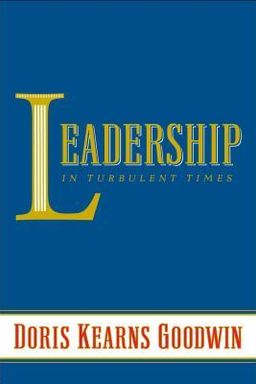
Why do some individuals rise to the summit of leadership while others falter in the same conditions? Doris Kearns Goodwin’s study of Lincoln, Theodore Roosevelt, Franklin Roosevelt, and Lyndon Johnson answers this through a narrative that blends character, habit, crisis, ambition, and historical timing. Each man began with outsized drive—ambition to master craft and shape the nation—but it was adversity, discipline, and moral evolution that turned drive into lasting leadership.
Ambition as Genesis
The book opens by showing ambition’s dual face. You meet young Lincoln desiring the “esteem of his fellow men,” Roosevelt chasing strenuous life, Franklin absorbing politics through charm, and Johnson hustling from janitor’s son to congressional aide. Ambition pushes them toward craft mastery and public purpose—but its test is direction. Goodwin insists that ambition becomes leadership only when coupled with civic ethic: esteem sought through service, not domination.
Habit as Foundation
Talent alone never carried them; each built daily disciplines that created margin for excellence. Lincoln read aloud to engrave argument in memory. Theodore Roosevelt’s gym training created courage through repetition. Franklin cultivated listening as leadership data collection. Johnson’s relentless presence and note-taking transformed memory into power. Goodwin’s universal application: leadership grows from repeated, embodied practice, not inspiration.
Adversity as Crucible
Every figure hits ruins—Lincoln’s depression, Theodore’s double bereavement, Franklin’s paralysis, Johnson’s electoral humiliation or heart attack—and every crisis forces redefinition. The pattern is clear: recovery occurs through structured work and deliberate exposure to new trials. Adversity refines purpose, produces humility, and fuses empathy with discipline. Roosevelt’s Badlands, Lincoln’s solitude, and Franklin’s Warm Springs all illustrate hardship as the forge of transformation.
Fit Between Leader and Time
Goodwin’s leitmotif is the key-and-lock relationship between personal qualities and historical challenges. Lincoln’s moral patience fit civil war and unity’s repair. Theodore’s audacity matched an industrializing, corrupt era needing public conscience. Franklin’s experimental calm fit Depression and world war; Lyndon’s legislative mastery fit the civil rights revolution. You can’t pick your time, but you can broaden your range to fit when history’s door opens. (Note: Similar to Machiavelli’s idea of “virtù and fortuna,” fit joins character with circumstance.)
Leadership Tools
Storytelling, coalition building, and management define Goodwin’s next layer. Lincoln persuades through moral parables; Theodore galvanizes through vivid anecdote and directness; Franklin leads by conversation and narrative empathy; Lyndon governs through personal memory and relentless persuasion. Each develops a management style suited to temperament: Lincoln’s patient timing, Theodore’s visible enforcement, FDR’s team orchestration, and Johnson’s legislative conveyor belt that parallels industrial efficiency.
Crisis and Moral Awakening
Each later career replays this structure in national crises. Lincoln’s Emancipation emerges from deliberate timing and moral clarity. Theodore’s Coal Strike mediation fuses fact, force, and fairness. Franklin’s Hundred Days transform panic into trust by pairing communication with action. Johnson’s civil rights acts—1964, 1965—show power turned toward justice through disciplined coalition management. Each proves that effective leadership unites strategy with moral vision.
Experiment and Renewal
Roosevelt’s New Deal and Johnson’s Great Society show governance as organized experimentation. FDR prototypes policy from the statehouse to the presidency, integrating feedback loops, pilot programs, and stories as data. Johnson industrializes the process—task forces, timing, persuasion dinners, tracking charts—to push unprecedented legislation. Yet both pair structure with narrative: programs are moral chapters, not technical memos.
The Shadow of Excess and Failure
With success came overreach. Johnson’s Vietnam escalation reveals the limits of domestic expertise applied to foreign complexity. His secrecy and incremental drift contrast with earlier transparency and persuasion. The warning: methods that yield triumph in one sphere—control, momentum, secrecy—become liabilities where candor and restraint are required. Leadership’s tools are context-dependent.
Endings and Legacy
Goodwin closes with reflection on mortality and memory. Lincoln’s compassion immortalized him, Theodore’s restless striving consumed him, Franklin institutionalized himself through the presidential library, and Johnson wrestled with regret yet reaffirmed civil rights as his living testament. A leader’s last acts—what cause they return to, what records they leave, how they share credit—shape enduring moral meaning. (Note: This parallels Churchill’s view that history will treat him kindly because he intends to write it.)
Across these intertwined lives, Goodwin makes a usable history. Leadership, she argues, is a practice of ambition disciplined by empathy, courage trained by habit, and power guided by conscience. The lesson for you is simple but lifelong: cultivate skills and moral imagination before the crisis arrives, because when moment and character align, history opens the door only once.