
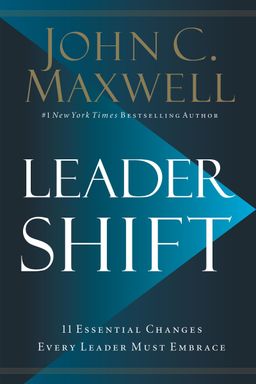
Leadershift cover

Leadershift

by John C Maxwell

In ''Leadershift,'' John C. Maxwell reveals the essential changes leaders must embrace to drive growth and innovation. By adopting a mindset of agility, connection, and moral authority, leaders can transform their organizations and inspire lasting impact in a rapidly changing world.

Leadershift: The Power of Continuous Change

How can you stay effective when the world around you is changing faster than ever? In Leadershift: The 11 Essential Changes Every Leader Must Embrace, John C. Maxwell argues that the only way to remain relevant as a leader is to continually change yourself — not just your strategies or goals, but how you think, act, and lead. He contends that leadership in the twenty-first century is defined by agility and adaptability, not authority or tenure. In short, those who leadershift — pivot their mindset, their methods, and even their identity when necessary — will thrive. Those who don’t will fade.

Maxwell believes leadership today is no longer about maintaining stability. Instead, it demands constant movement, reflection, and renewal. You can’t be the same, think the same, and act the same if you hope to succeed in a world that refuses to remain the same. He urges leaders to embrace a fluid approach to leadership — one that resembles water itself, responding to obstacles by flowing around them while still maintaining force and direction. The idea of “leadershift” isn’t just about reacting to change; it’s about proactively creating it.

From Management to Leadership

Maxwell begins by contrasting the old management mindset — linear, predictable, and stable — with leadership, which thrives on complexity and uncertainty. Management assumes consistent inputs produce consistent outputs. Leadership deals with people, whose behavior is nonlinear, emotional, and adaptive. Where management systems depend on sameness, leadership must embrace flux. As the author Eric McNulty (quoted in the book) points out, when the human element enters the equation, the system becomes complex and adaptive. Maxwell calls this the leader’s reality: success depends not on control but on agility.

The Acceleration of Change

When Maxwell looks back to his early career in the 1970s and 1980s, he describes how business once valued stability above all. Today, with globalization, technology, and social media accelerating life, stability is a luxury none of us can afford. “Fast is faster, forward is shorter,” he says. Ten-year plans are absurd; even two years can feel long-term. Leaders must continually reassess, reposition, and reinvent. A cheetah’s success comes not from speed but agility, and so must yours. When you learn to adjust quickly—leaping sideways, slowing down abruptly, or changing direction mid-course—you can outmaneuver uncertainty instead of being consumed by it.

Adaptability and Mental Floss

Maxwell calls adaptability the master skill of modern leadership. Quoting Dave Martin, he distinguishes adaptability from conformity: conformity fears rejection and blends in; adaptability is courageous, confident, and self-directed. To lead well, you must learn to contradict yourself regularly, as Malcolm Gladwell says — otherwise, you’re not thinking. Maxwell likens this flexibility to “mental floss”: cleaning out old thinking to make room for fresh insights. Leaders who floss their minds stay sharp; those who don’t get stuck with plaque-like rigidity that eats away at creativity.

The Practice of Leadershifting

To develop this capacity for transformation, Maxwell shares seven foundational habits: continually learn, unlearn, and relearn; value yesterday but live in today; rely on speed but thrive on timing; see the big picture as it keeps getting bigger; live in today but think about tomorrow; move forward courageously amid uncertainty; and realize that today’s best will not meet tomorrow’s challenges. Each is a mindset designed to create momentum for adaptability. Together, they form the foundation for the eleven major shifts he explores throughout the book—from “soloist to conductor” and “career to calling.”

The Personal Invitation to Change

Maxwell’s tone throughout is both pastoral and pragmatic. He reminds you that leadershifting is not easy. It means letting go of what worked yesterday to pursue something untested, managing the tension between stability and adaptability, and learning to be “like water”—fluid but purposeful. Yet he’s emphatic that the rewards justify the discomfort. Every advance in your leadership, he writes, “will require a leadershift that changes the way you think, act, and lead.” It’s less about changing others and more about evolving yourself to serve them better.

Ultimately, Leadershift isn’t a manual for surviving change—it’s an invitation to embody it. It teaches leaders how to dance gracefully between the familiar and the unknown, between yesterday’s wisdom and tomorrow’s possibility. You’ll learn to lead not by standing firm but by stretching forward, and not by being certain but by being curious. Maxwell promises that if you make small shifts in this direction every day, you won’t just keep up with change—you’ll become its architect.


From Soloist to Conductor

The first major shift Maxwell urges is moving from leading alone to leading as part of—and through—a team. He calls this the transition from soloist to conductor. You can be successful as an individual, but not as a leader, because leadership multiplies through others. When Maxwell first heard Zig Ziglar say, “You can get everything you want if you help enough other people get what they want,” he realized that his leadership focus was wrong. He was directing an orchestra so everyone would follow him, when he should have been the conductor helping his team play their best music.

From Individual Success to Shared Achievement

Maxwell’s insight reshaped his leadership style. Early on, he led like a “soloist”—charming, driven, and self-centered. But when he focused on helping others succeed first, the collective performance improved, morale soared, and his own energy expanded. He realized that true success was not when people helped him, but when he helped his people. The conductor doesn’t play an instrument but ensures every player contributes their best to create harmony. This metaphor reflects Maxwell’s broader philosophy: leadership is less about performance and more about composition.

Five Realities of the Shift

  • You must go slower to go farther. Leaving people behind means leading no one. Maxwell jokes that if you’re at the top alone, you’re not a leader—you’re just a hiker.
  • You must recognize you need others. Leadership isn’t one person’s performance; it’s collective completion, not competition. Teams thrive when members complete each other instead of outshining each other.
  • You must understand others. Communication requires empathy. Maxwell compares this to tango dancing—true leadership means knowing how it feels to be led.
  • You must want others to shine more than you do. The best leaders highlight others. When Maxwell’s coaches told him, “You highlight our lives,” he realized recognition was the highest reward of leadership.
  • You must help others become better every day. Leadership means sowing seeds of growth constantly. Maxwell urges leaders to focus not on reaping reward but on planting value.

From Competing to Completing

A culture of competition operates on scarcity—it makes you compare, chase credit, and play defense. A culture of completion operates on abundance—it lets you celebrate others, elevate standards, and multiply success. Maxwell’s organizations deliberately practice completion by connecting every team member’s strengths to someone else’s weaknesses. It’s a strategic symphony rather than a scramble for solos.

Leadership as Energy Exchange

Maxwell closes by reminding leaders that value is energy—it flows from leader to follower. “Sowing precedes reaping,” he says. Stop asking if you’ll reap a harvest; instead ask, “Have I sown today?” Give without keeping score. Sow for growth, not gain. When leaders become conductors rather than soloists, they move from ego to empathy—from spotlighting themselves to illuminating everyone else. As he puts it, “Healthy organizations are not about the one person who leads them. They are about everyone who’s in them.”

This shift redefines success. Your legacy isn’t the solo you play—it’s the orchestra you build. By helping others reach their potential, you make leadership not a performance, but a masterpiece.


From Goals to Growth

Most people chase goals—hit the numbers, make the sale, complete the project—and then celebrate. But in Leadershift, Maxwell insists that leaders should pursue something deeper: growth. Goals help you do better; growth helps you become better. In the 1970s, Maxwell bought a $799 personal growth kit that taught him goal setting, but he eventually realized the lessons learned while achieving a goal mattered more than the goal itself. Growth, not accomplishment, was what expanded his capacity.

From External Motivation to Internal Drive

Goal chasing is outward—the rewards are measurable but fleeting. Growth begins inward—it transforms your thinking, habits, and spirit. Maxwell notes that “growth on the inside fuels growth on the outside.” Instead of asking, “What can I get?” he learned to ask, “Who am I becoming?” Changing that question changed his life. It’s similar to Carol Dweck’s idea of growth mindset: progress means seeing challenges not as obstacles but invitations to evolve.

Focus on Vital, Not Vast Growth

When he was young, Maxwell tried to grow everywhere all at once. That diluted his focus. Through experience, he identified four lifelong disciplines of growth—Relationships, Equipping, Attitude, and Leadership (R-E-A-L). These became the pillars of his learning and teaching. Instead of dabbling broadly, he dug deeply. Like a tree growing steadily, layer by layer (“layered learning,” he calls it), a leader’s wisdom compounds only when each ring builds on the last.

Growth Is Continuous: No Finish Line

Goal-oriented leaders think in timelines. Growth-oriented leaders think in lifetimes. Success doesn’t end at the finish line—it compounds past it. Maxwell cites Truett Cathy of Chick-fil-A: “If we get better, our customers will demand that we get bigger.” Improvement naturally expands impact. Growth is the only guarantee that tomorrow will be better than today. For Maxwell, even writing books became a journey in improvement: his first sold few copies; years later, when he’d sold millions, he realized it happened because growth, not goals, drove the process.

The Seven Habits of Growth-Oriented Leaders

  • Embrace change daily.
  • Stay teachable—keep learning intentionally.
  • Love learning more than you fear failure.
  • Surround yourself with growing people.
  • Remain humble and self-aware.
  • Believe in yourself enough to invest in yourself.
  • Practice “layered learning”—accumulate lessons over time for depth.

Making the shift from goals to growth means trading short-term wins for lifelong transformation. You move from arrival to advancement, from achievement to evolution. Success, Maxwell reminds us, is not what you get from growth—it’s what you become through it.


From Perks to Price

Many dream of leading for the perks: the title, office, salary, or spotlight. But Maxwell’s fourth shift—from perks to price—exposes the truth behind leadership glamour: everything worthwhile in leadership is uphill. Success requires sacrifice. When leaders seek privilege instead of responsibility, they lose credibility. He writes, “The choice to lead because of benefits benefits no one.”

Everything Worthwhile Is Uphill

Maxwell cites the Stockdale Paradox, named for Navy Vice Admiral James Stockdale, who survived years of captivity during the Vietnam War. Stockdale distinguished between naive optimism and resilient realism: never lose faith that you will prevail, but confront brutal realities. Maxwell translates this into leadership terms as “hope and hard.” You must stay hopeful but expect the climb to be hard. “When you don’t prepare for the worst,” he warns, “the worst wins.”

Climb First, Lead First

Leaders can’t delegate the first step. They must climb first and say “follow me.” Great leaders act before others, not just speak before them. Maxwell’s metaphor of “uphill leaders” parallels Simon Sinek’s concept of “leaders eat last”—the best leaders sacrifice first to model courage.

Continuous Sacrifice

“Destination disease,” as Maxwell calls it, happens when leaders think they can stop paying the price once they’ve arrived. True leaders never stop climbing. They consistently trade comfort for growth. Dwight Eisenhower said, “There is no victory at bargain basement prices.” Maxwell adds, “The best leaders give up to go up—and have to give up even more to stay up.”

The Rewards of Consistency

  • Consistency provides security: people can count on you.
  • Consistency establishes reputation: reliability becomes respect.
  • Consistency compounds results: small steps practiced long-term become extraordinary.
  • Consistency keeps you in the game: it’s the opposite of burnout; it’s sustainable momentum.

To illustrate, Maxwell invokes baseball legend Cal Ripken Jr., who played 2,632 consecutive games—more than any player in history. Ripken’s record wasn’t about talent; it was about showing up every day, playing hurt, giving his best. Talent ignites opportunity, but consistency creates legacy.

This shift demands a mindset reversal: leadership isn’t about privileges you earn—it’s about the burdens you embrace. The higher you climb, the more you must lift others. Pay the price today so you can raise the standard tomorrow.


From Pleasing People to Challenging People

You can’t lead people if you need people—that’s Maxwell’s blunt warning in his fifth shift: from pleasing people to challenging people. He learned this lesson the hard way as a young pastor who believed good leadership meant making everyone happy. After years of exhausting himself trying to satisfy every complaint, he realized that pleasing isn’t leading—it’s pandering.

The Trap of Approval

Early in his career, Maxwell worked tirelessly to keep everyone happy—from restoring a disliked painting to appeasing a disgruntled coach—and he felt successful only when people approved. But that addiction to affirmation kept him from making progress. A mentor helped him see the flaw: “Always separate what’s best for you from what’s best for the organization.” From then on, he asked three questions in order: What’s best for the organization? What’s best for others? What’s best for me?

Shifting from Consensus to Commitment

Maxwell’s turning point came when he stopped asking “Is everyone happy?” and began asking “Is everyone committed?” Pleasing people leads to stagnation; challenging them leads to transformation. Respect is earned not on easy ground but on difficult ground. Once he began asking for commitment, he lost followers who were uncommitted but gained those who were invested—the right people.

Managing Healthy Tension

Challenging people doesn’t mean being harsh—it means balancing care and candor. Care without candor creates dysfunction; candor without care creates distance. Together, they create development. Like a plane with two wings, leaders need both to fly. When you say “I love you too much to let you stay where you are,” you cultivate growth, not resentment.

The 25-50-25 Principle

When you cast vision, 25% will support you, 50% will be uncertain, and 25% will resist. Stop spending all your energy on the dissenters—give credibility and voice to your supporters, and help the undecided see the vision’s value. As Casey Stengel said, “The secret of managing is to keep the guys who hate your guts away from the guys who haven’t made up their minds yet.”

Leadership isn’t a popularity contest. It’s a courage contest. By shifting from seeking approval to offering direction, you start transforming followers into partners—and discomfort into growth.


From Positional Authority to Moral Authority

Titles don’t make leaders; trust does. In what Maxwell calls the Influence Shift—moving from positional authority to moral authority—he reveals the secret behind authentic influence: people follow you because of who you are, not because of what’s on your business card. Moral authority isn’t granted from above; it’s earned from below.

Claude’s Lesson: The Farmer Who Led Without a Title

Maxwell tells the story of his first leadership position in a small rural Indiana church, where he technically held the title of chairman—but in reality, everyone followed Claude, a middle-aged farmer. Claude led not with credentials but with consistency. He was honest, fair, and dependable, and people trusted him instinctively. Maxwell realized in that moment that “a leadership position does not give someone leadership authority.”

The Nine Types of Authority

Positional power is only one of many forms—and it’s the weakest. Maxwell lists natural, positional, knowledge, situational, relational, proximity, success, mentoring, and seniority authority; the highest among them is moral authority. It results from integrity, competence, and courage sustained over time. Moral authority can’t be claimed—it’s conferred by others when they trust not only your ability but your character.

The Four Pillars of Moral Authority

  • Competence: The ability to lead well and produce results. Leaders earn respect through excellence—even in small tasks, completed with care.
  • Courage: Moving forward in the face of fear. Maxwell recalls stories of leaders—from David facing Goliath to Winston Churchill defying Nazi Germany—whose bravery inspired nations.
  • Consistency: Doing well all the time, not just sometimes. Moral authority compounds through decades of integrity. “Consistency,” he says, “makes you relevant.”
  • Character: Being bigger on the inside than the outside. Integrity, authenticity, humility, and love are essential. As Rick Warren reminds, “Humility is not denying your strengths; it’s being honest about your weaknesses.”

The Price and the Reward

Moral authority is slow-cooked leadership—it takes years of small right decisions. You can’t proclaim it; others must recognize it. Maxwell himself lives by five guiding commitments: always put people first, live to make a difference not to make money, be his best self, express gratitude without entitlement, and be willing to be misunderstood for the right reasons. These habits sustain trust when power fades.

The influence shift redefines success: your greatest power isn’t positional leverage but moral legacy. Titles expire; trust endures. If you want to lead hearts, not just hands, strive for moral authority—it’s leadership’s highest form.


From Trained Leaders to Transformational Leaders

Training teaches people how to lead; transformation teaches them why they lead. In Maxwell’s tenth shift—the Impact Shift—leaders move from skill-based leadership to soul-based leadership. The heart of transformation, he says, began for him when selfishness cost him the chance to help someone—and that person died. That tragedy broke his heart and remade his mission: to value people above achievement.

What Makes Transformational Leadership Different

Trained leaders know how to lead; transformational leaders know why. They’re contagious, not just competent. Maxwell summarizes their differences—trained leaders ask people to follow; transformational leaders ask people to make a difference. They love people more than they love leadership itself. They move people from action to awakening.

Five Traits of Transformational Leaders

  • Vision: They see what others do not. Like Martin Luther King Jr. declaring “I have a dream,” they see possibility where others see problems.
  • Voice: They speak truths others fear to say—driving change through conviction.
  • Belief: They believe they can make a difference and make others believe it too. “A different world cannot be built by indifferent people,” Maxwell quotes Peter Marshall.
  • Passion: They feel deeply. Their energy is contagious; their enthusiasm lights others’ fires.
  • Action: They act boldly. Transformation, like Gandhi’s long march for freedom, demands perseverance and courage every day.

Transformation Begins Within

Maxwell emphasizes that change starts with you—“We teach what we know, but we reproduce who we are.” Leaders must first experience transformation in their own lives before guiding others. He uses the parable of his nonprofit EQUIP, which trains global leaders to facilitate roundtables focused on values like integrity, forgiveness, and initiative. Participants must first host their own roundtable at home before training abroad—because transformation has to be lived, not just taught.

Building Environments for Change

Transformational movements begin where leaders share good values in small groups. Maxwell describes how teaching forgiveness and character in Colombian prisons through the La Red organization reduced murders from one per day to one per year. The ripple effect turned chaos into compassion—and proved that transformation scales when leaders model values consistently.

Transformation leadership is not a career; it’s a calling. It doesn’t just improve organizations—it changes lives. Train skills to build competence, but transform hearts to build legacies.


From Career to Calling

The final shift in Maxwell’s journey—the Passion Shift—is from building a career to fulfilling a calling. A career, he says, is something you choose; a calling is something chosen for you. Many executives wake up to alarms; few wake up to purpose. Maxwell invites you to be among the few.

Three Levels of Work

  • Job: You work for a paycheck, and satisfaction comes after hours.
  • Career: You build achievement and reputation, setting goals and milestones.
  • Calling: You merge gifts, character, experience, and passion to serve a purpose bigger than yourself.

A career measures success by progress; a calling measures significance by impact. “When you find your why,” Maxwell says, “you find your way.” (Comparable to Simon Sinek’s Start With Why).

Characteristics of a Calling

  • It matches who you are—your talents, passions, and lived experiences.
  • It taps into your deepest passion—the thing that keeps you awake at night.
  • It matters to you but isn’t about you—it’s about serving others.
  • It’s bigger than you—it stretches your imagination beyond comfort.
  • It gives you perspective—you start seeing obligations as opportunities.
  • It fuels perseverance—calling helps you overcome obstacles with purpose.
  • It results in fulfillment—you wake each day saying, “I was born for this.”

Finding and Living Your Calling

To discern calling, Maxwell offers three questions: What do you sing about? What do you cry about? What do you dream about? Where these overlap lies your calling. He also distinguishes ego from calling: ego drives, calling draws. Ego needs anxiety; calling needs silence. One exhausts; the other fulfills. Maxwell urges everyone to pursue a “cathedral calling”—work that may outlive you but enriches others for generations.

By shifting from career to calling, you stop working for profit and start living for purpose. Leadership becomes legacy, not livelihood—and passion replaces position as your true north.

Dig Deeper

Get personalized prompts to apply these lessons to your life and deepen your understanding.

Go Deeper

Get the Full Experience

Download Insight Books for AI-powered reflections, quizzes, and more.